
 E-Paper



Wildbuzz: Iris, the rainbow goddess
The Iris enjoys a pre-eminent position as a flower of art, possibly second only to the rose.

 Prefer HTon Google


Iris is such a lovely, teasing word. It rolls over your tongue with poise and eloquence, each alphabet merges perfectly and finesses the vocalisation. The word traces its origins to the mythological Greek goddess of rainbows, Iris, depicted in some statues as equipped with a tool to water plants.
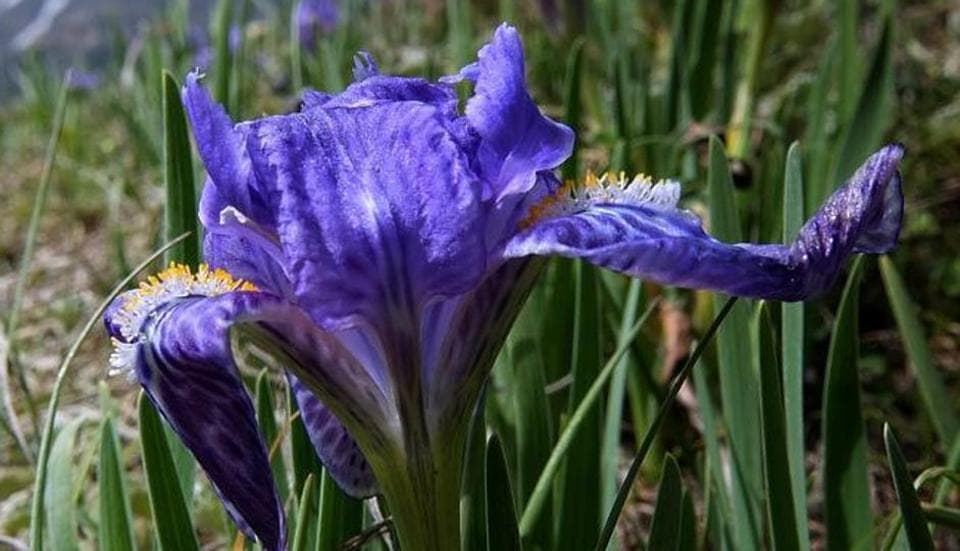
Painters would show the goddess as a beautiful maiden with wings and liberate her, via the viewer’s imagination, as a mermaid of the endless, blue skies. Iris also denotes the coloured part of the eye, is a popular name for daughters of the West and, coming to our subject of particular interest here, a flowering plant loved over history and across cultures.
Most plant groups have flowers in several but not all the colours but the estimated 300 global species of Iris enjoy the rainbow spectrum in having red, orange, yellow, blue, purple and even green flowers. Irises also occur in white, black, brown and multiple colours, going beyond the rainbow. The Iris enjoys a pre-eminent position as a flower of art, possibly second only to the rose. Irises appear in paintings by Leonardo da Vinci, A Durer, Renoir, P Cezanne, van Gogh, (whose painting ‘Irises’ is one of the most expensive single paintings, auctioning for $54 million in 1987), Paul Gauguin and Claude Monet.
So, when software engineer, passionate trekker and flower lover Thimmarayaswamy Krishnappa was resting after an 18 km trudge through the Byans valley (Uttarakhand), it was the Kumaon iris (Iris kemaonensis) that lit a gentle glow in his weary soul and relieved him of his sloth.
“After taking a small break lying flat on our backs in a grassland at 3,750 m, I started looking around to find Himalayan jewels, ie, wild flowers. My eye chanced upon irises in full bloom ringing the grassland. The petals and stigma were so very intriguing. I felt calm and energetic after observing and photographing irises. Really, blessed are those who live in these wind-stirred meadows brimming with blooms and watched over by the eternal snows”, Krishnappa told this writer.
Blessings of the mute
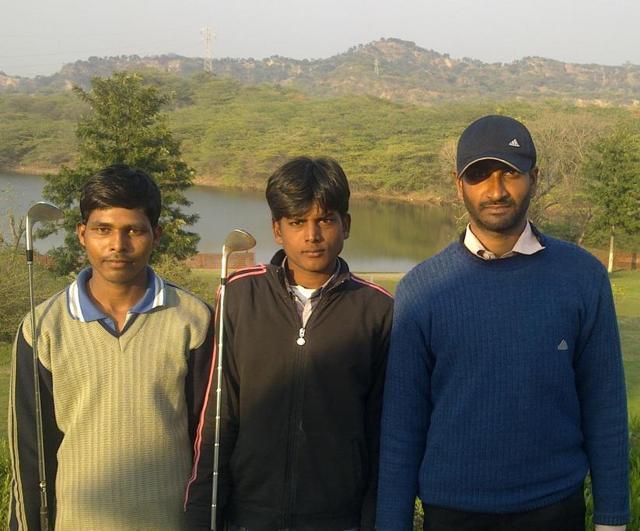
Caddie boy Chandarjeet Yadav has come a long way. He has evolved from earning Rs 50 a day at the Shivalik Golf Club (SGC), Chandimandir, when he started lugging golf bags 11 years ago, to a professional player who won his maiden championship on the PGTI’s Feeder Tour in Lucknow on July 6. He earned more than a lakh of rupees in prize money. But the humble native of Amethi district also nurtures a “wild side”. Yadav has rescued dozens of sambar fawns from stray dogs at the SGC water bodies, on occasion abandoning his round of golf to assist the mute and hounded creatures.
Dogs have set up camp at the water bodies and lie in patient wait for thirsty fawns. So masterly is this pack of killers that it cuts off all escape routes for the fawn, and then grips it from the neck and hind legs and rips tender flesh even as the fawn lets out heart-wrenching shrieks.
Of all the caddie boys at the SGC, it is Yadav, his brother, Hemant Kumar ‘Paramjeet’, and Om Prakash who rush to battle dogs with wildly swinging golf sticks in their hands, emitting loud war cries to rattle the blood-thirsty fiends. The trio is assisted by Pargat Singh from the 120 Engineers Regiment, who is deployed at the 11th tee gazebo overlooking the SGC’s largest water body.
Not all caddies are so compassionate, most are indifferent. Yadav and his mates stand in stark contrast to another lot of caddies, who are poachers of wild boars, Red junglefowl and Grey partridges. “I am an extremely soft-hearted person. I do not eat meat or eggs and my insides churn at the sight of raw flesh. I think that the blessings of the fawns contributed to my golfing success,” Yadav told this writer.
(The author can be contacted at vjswild1@gmail.com)


