
 E-Paper



PM Modi likely to hold more rallies as BJP gains ground in poll-bound Rajasthan
Rajasthan assembly election 2018: People within the Bharatiya Janata Party say the party has regained lost ground in the state and improved its position in the two-way race from what it was just a month ago, and that it is now in a “fighting position”.

 Prefer HTon Google


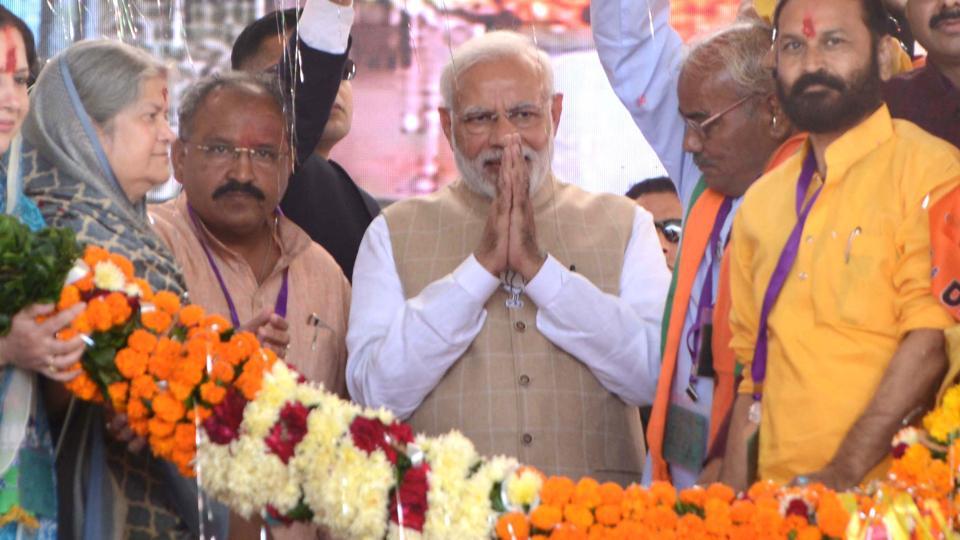
Enthused by the significant public response to Prime Minister Narendra Modi’s four rallies in the state, the Rajasthan unit of the Bharatiya Janata Party (BJP) wants him to participate in a total of eight rallies, two more than the initial plan of six. Meanwhile, the party’s president Amit Shah has decided to spend all his time from now on till election day, December 7, in Rajasthan. He and chief minister Vasundhara Raje will address, independently, several meetings across the state as the party seeks to fight off anti-incumbency.
Even the party’s ideological parent the Rashtriya Swayamsevak Sangh (RSS) is now fully backing its chief ministerial candidate Vasudhara Raje after the Congress threat to ban the Sangh’s shakhas in neighbouring Madhya Pradesh, where voting is taking place on November 28, if it comes to power.
People within the party say the BJP has regained lost ground and improved its position in the two-way race from what it was just a month ago, and that it is now in a “fighting position”.
The involvement of the RSS cadre has helped, a senior state BJP functionary admitted. “It is now a survival issue for them. The RSS cadre has now given up its indifference towards CM Raje and plunged headlong into the election battle.” Other leaders say the party has benefited from the fact that it has been able to manage dissidence better. Both the BJP and the Congress have had to deal with leaders disappointed at not being fielded in the elections, and who have threatened, sometimes, to contest as independents.
On Tuesday, Union finance minister Arun Jaitley and Raje released the party’s manifesto. Talking to the Hindustan Times after releasing the state party manifesto, finance minister Arun Jaitley said: “The party is all set to turn anti-incumbency to pro-incumbency with Congress not even declaring its chief ministerial candidate for a fear of caste backlash. The BJP has been able to control dissidence better with lesser number of rebels than the Congress. The divisions within the Congress leadership and suspicion among caste leaders will help the BJP.”
BJP’s Rajasthan election in-charge and Union human resource development minister Prakash Javadekar says that the party has recovered lost ground in the past weeks and is now fighting for a number in the three digits (the Rajasthan assembly has 200 seats). “PM Modi’s election rallies have been big and have managed to lift the election for the party,” he told Hindustan Times.
Bikaner MP and minister of state for water resources Arjun Meghwal also said that the party had gained rapid ground in the past weeks and was back in the reckoning to return to power in the state.
Click here for complete coverage of Rajasthan Assembly Election 2018


