
 E-Paper



Women’s water woes spells trouble for Vasundhara Raje
Water is a dominant poll issue, especially among the 22 million women voters in Rajasthan’s 43-million-strong electorate, who will vote on December 7.

 Prefer HTon Google


“Pani Chaeja (want water),” says Rehana Khan of Bani Ki Basti, the last India village on the border with Pakistan, about 145 km west of Rajasthan’s Barmer town. Her family’s two cows recently died of thirst. They pay ₹4,000 for 10,000 litres of water supplied by a tanker that comes to the village once a week. Her family epitomises the struggle of women in western Rajasthan, which sends 53 legislators to the state assembly.
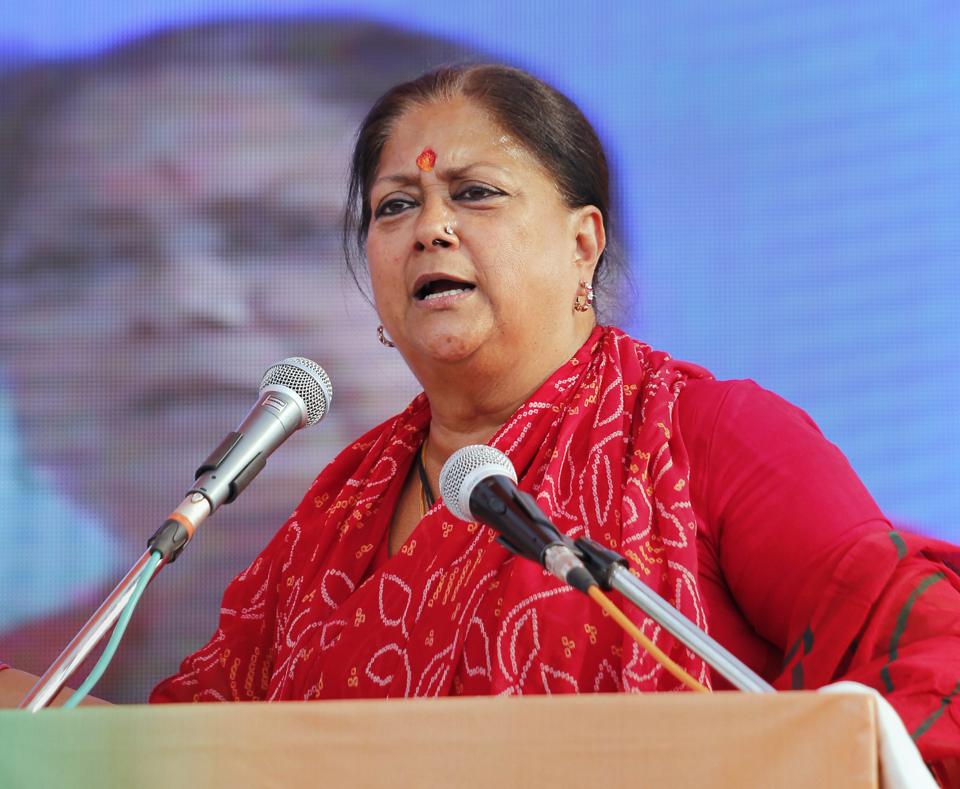
Water is a dominant poll issue, especially among the 22 million women voters in Rajasthan’s 43-million-strong electorate, who will vote on December 7. Urban centres like Udaipur and Jodhpur, and rural parts in Dholpur and Bhilwara, which witnessed violent protests over water this summer, face a similar crisis.
Women were thought to have backed Raje in the 2013 elections when the ruling Bharatiya Janata party won 162 of the Rajasthan assembly’s 200 seats. This time around, they claim that a woman CM has not changed their lives for the better. “No arrangements have been made for water this year despite the drought,” Khan said.
“Half of my day goes in fetching water for family and the few surviving animals,” said Rohini Devi in Kirani ki Dhani, about 340 km away from Rehana Khan’s village, pointing to the 10 acres of dry field owned by her family.
“Her appeal that we give her a chance and she will improve our lives touched our hearts,” said Meghi Mehgwal at Chandi Ka Paar village in Barmer. “I don’t want my granddaughter to waste her life fetching water as I did,” she added.
Women like Meghwal, Khan and Devi, are unhappy with Raje and lack of water is one of the main reasons.
The western region has seen consecutive droughts in the last four years, the worst being in 2018, with rainfall of just 128 mm.
The Rajasthan revenue department has declared all villages in Barmer and Jaisalmar districts, and parts of Bikaner and Udaipur districts as severely drought-hit. About 75% of the crop in these villages was damaged due to scanty rainfall this year. According to a report by the Comptroller and Auditor General submitted to the state assembly in March, Rajasthan is the driest state in India, having just 1% of the country’s total surface water resources although it makes up 5.66% of the country’s population.
“Excessive use of ground water for irrigation and drinking purposes has caused depletion of ground water. The available water also suffers from chemical contamination such as fluoride, nitrate, salinity etc., which makes water unsafe for drinking purposes,” the report said.
Amin Khan, the Congress candidate for the Sheo assembly seat in Barmer, from where former foreign minister Jaswant Singh’s son Manvendra Singh won on the BJP ticket in 2013 and is now Congress candidate against Raje in Jhalrapatan, alleged that there was no expansion of the piped drinking water network under Raje’s government. No maintenance work has been done on the water infrastructure in the last four years, he claimed.
Colonel (retired) Sonaram Chaudhary, Barmer’s Lok Sabha member and the BJP candidate from Barmer town, countered the allegation, saying the government had ensured supply of drinking water through tankers. “We have tried our best. But because of the election code of conduct, our efforts got hampered,” he said.


