E-Paper



Mumbai can become slum free in the next 10 years, I'm very confident, says Maharashtra CM Devendra Fadnavis
Maharashtra Chief Minister Devendra Fadnavis sets January 2029 target to complete first phase having 10,000 homes of Asia's largest slum cluster Dharavi

 Prefer HTon Google


Maharashtra chief minister Devendra Fadnavis said on Thursday he is very confident of making Mumbai slum-free in the next 10 years. His remarks came at a conference of real estate apex body National Real Estate Development Council (NAREDCO) Maharashtra, in Mumbai.
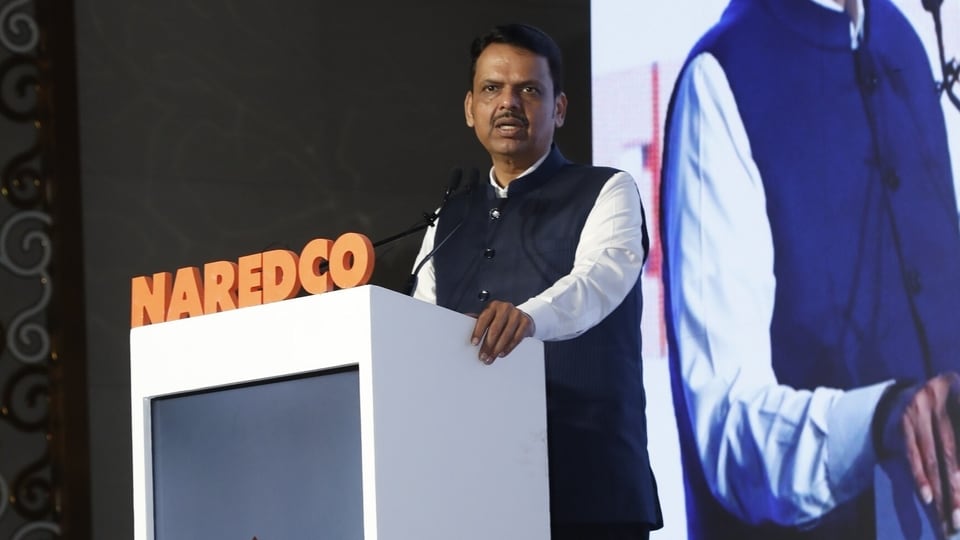
Fadnavis said the government’s broader plan to make Mumbai slum-free would centre on the redevelopment of Asia's largest slum settlement Dharavi and a cluster-based approach to ageing settlements.
Fadnavis said the government was now moving ahead with a cluster-based redevelopment model for Mumbai, aimed at transforming areas that were largely developed decades ago and have since become increasingly constrained by ageing buildings, informal settlements and inadequate use of land.
“We want to enter Mumbai’s development in a big way. I am very confident that with the measures we have taken, we will make Mumbai slum-free in the next 10 years," Fadnavis said.
He said the government had divided Mumbai into several clusters and would use the approach to push redevelopment and ultimately make the city slum-free. The strategy, he added, would also allow Mumbai’s land resources to be used more efficiently while creating new opportunities for the real estate industry.
The chief minister said redevelopment would not be restricted to residential construction. The government plans mixed-use developments on prime land, including commercial spaces, museums, playgrounds and recreational areas, while also creating better transport infrastructure.
Dharavi first phase by 2029
“For Dharavi, we have set a deadline of readying 10,000 houses ready. I want to bring the honourable Prime Minister in early 2029 and give 10,000 houses, which will be the rehab houses of Dharavi,” Fadnavis said.
Also Read: Dharavi project to follow Singapore and Hong Kong housing development model: Fadnavis
Old depot lands for redevelopment
Fadnavis also highlighted the redevelopment of Mumbai’s old depots, saying the government had prepared plans and reports for their transformation. Such redevelopment, he said, would create modern transport facilities as well as unlock valuable land for mixed-use development.
The chief minister positioned the redevelopment push within Maharashtra’s larger urban growth strategy. He said Mumbai Metropolitan Region (MMR), Pune Metropolitan Region and Nagpur would be the major engines of the state’s next phase of urbanisation, with significant opportunities expected in real estate, data centres, advanced manufacturing and frontier technologies.
According to Fadnavis, Maharashtra recorded an 8.8% growth rate in the first quarter, higher than India’s 7.8% growth during the same period. He also said Mumbai’s real estate market had continued to demonstrate strong demand. Property registrations in Maharashtra crossed 1.06 million during the first eight months of the year, generating around ₹9,365 crore in revenue for the government, he said.
Fadnavis further outlined his vision for Mumbai 3.0, saying the development of new urban centres around major infrastructure projects was already underway. He cited the proposed offshore airport near Virar, the Mumbai-Nagpur connectivity network, the bullet train corridor and the development of a major new port as projects that would create new economic hubs outside the existing Mumbai urban core.
He said the proposed port, which would be significantly larger than Jawaharlal Nehru Port, could create employment opportunities for around one million people in Palghar district alone.
Fadnavis also urged developers to adopt newer construction technologies and artificial intelligence in approvals and construction, saying technology could improve predictability and accountability in the development process.
The chief minister said the government’s objective was not merely to expand Mumbai but to create a better-managed urban ecosystem, with redevelopment, housing, infrastructure and new economic centres progressing simultaneously.
Mumbai Metropolitan Region
Fadnavis said that MMR's economy will be $1.5 trillion by 2047.
"Urbanisation is inevitable in every growth story. It is imperative that when urbanisation happens we need to manage. MMR has become data centres hub. 60% data centre capacity is in MMR. In the next 10 years, entire region will be most populated, one of most properly developed planned region of India."