E-Paper



Weather Bee: Bihar, UP, MP floods in six charts
To be sure, the proportion is much higher (60%) in Bihar and much lower (24%) in Madhya Pradesh. As expected, this affects how much danger can be tracked

 Prefer HTon Google


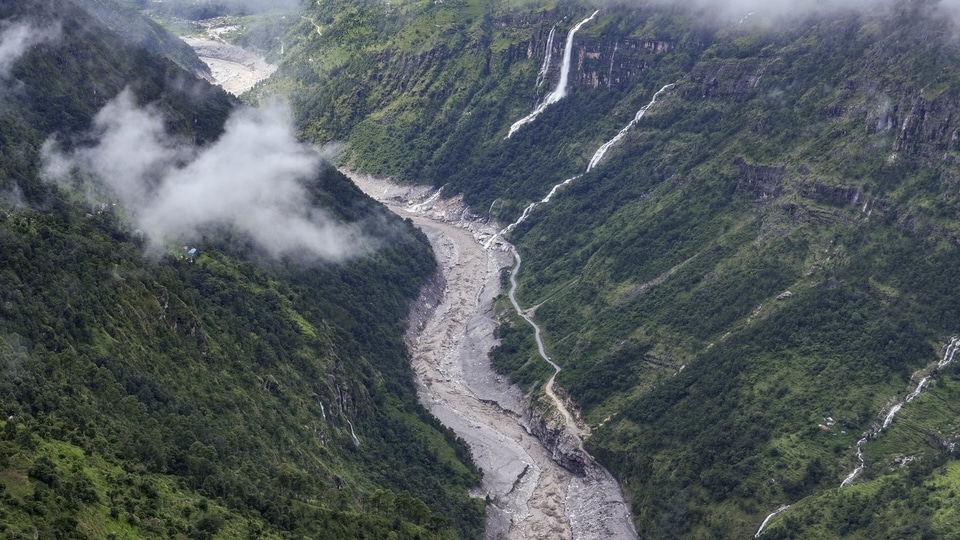
Last week, Nepal experienced one of the deadliest fluvial floods in its recent history. However, Nepal rivers overflowing last week, some of which also flow down to India, had nothing to do with rain. No extreme rainfall event preceded the flood, although rain after the flood made rescue efforts difficult. This week, northern India is facing floods or flood-like situation in rivers precisely because of rain. How bad is it? What are the rivers and regions affected? Here are six charts that answer these questions.
Most of the anecdotal reports of fluvial floods (a flood caused by a river overflowing) in India in the past week have emerged from Bihar, Uttar Pradesh, and Madhya Pradesh. Because Ganga, the biggest river flowing through these states, also flows through Jharkhand and West Bengal, HT has also considered the latter two states for tracking fluvial floods of the past week.
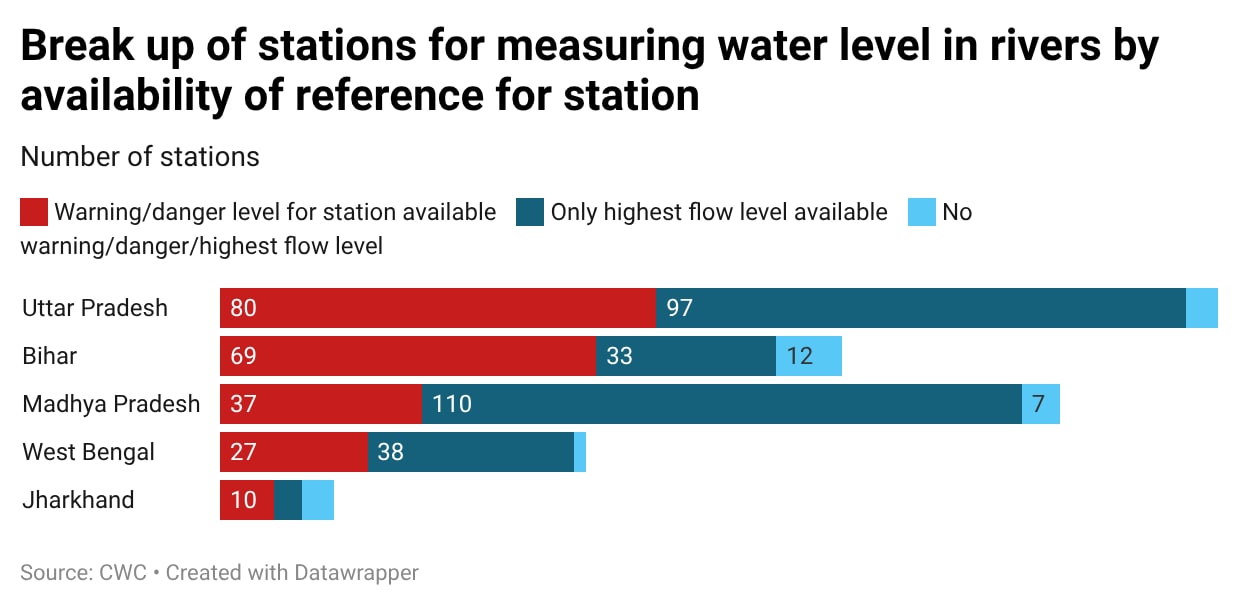
To be sure, tracking even fluvial floods – which are relatively easily observed because of stations placed on rivers for measuring water level -- comes with a challenge in India. The data published on river levels by the Central Water Commission (CWC) doesn’t always come with a benchmark against which to test the level. Of the 539 stations in the five states listed above, only 223 (41%) come with a warning and danger level specified. To be sure, the proportion is much higher (60%) in Bihar and much lower (24%) in Madhya Pradesh. As expected, this affects how much danger can be tracked.
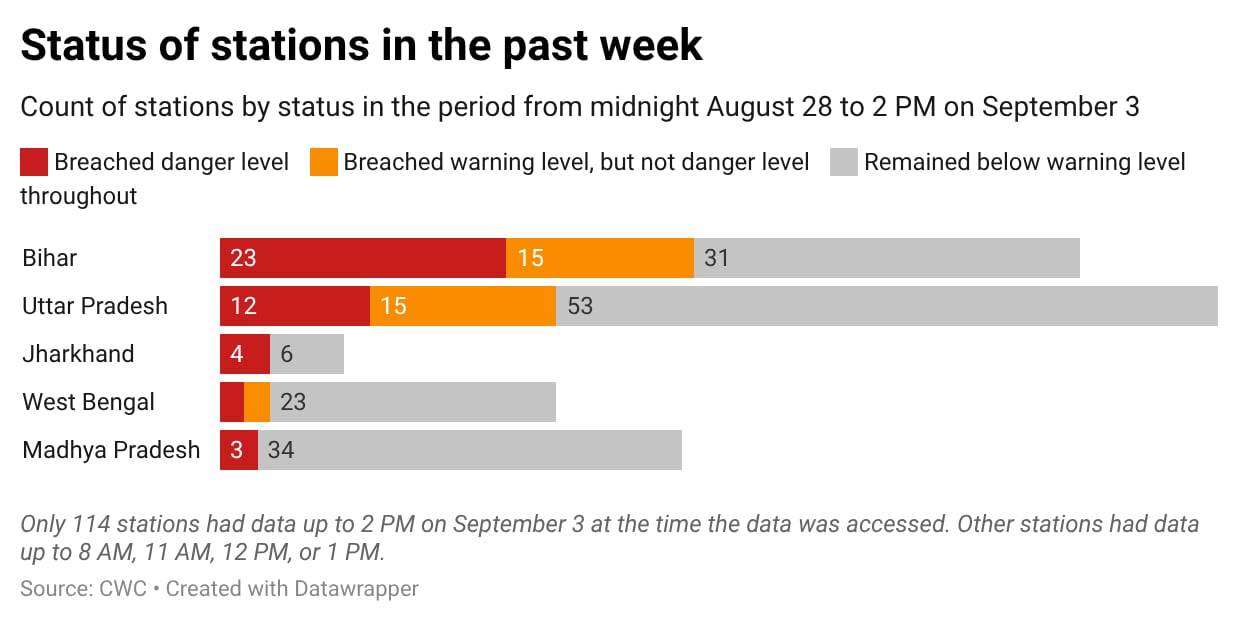
Of the 223 stations that do come with a warning and danger level, 44 (19.7%) breached the danger level in the past week (from August 28 to September 3) and another 32 (14.3%) breached the warning level. These proportions are also higher in Bihar than in other states and lower in Madhya Pradesh. However, part of this trend might have to do with the abundance and lack of useful stations described above.
To be sure, water levels had gone down by September 3 in at least some places where it had breached the warning or danger level in the past week. Only 37 and 28 stations were flowing above the danger and waring levels respectively around 2 PM on September 3. Most of the decline in this number came from Uttar Pradesh.
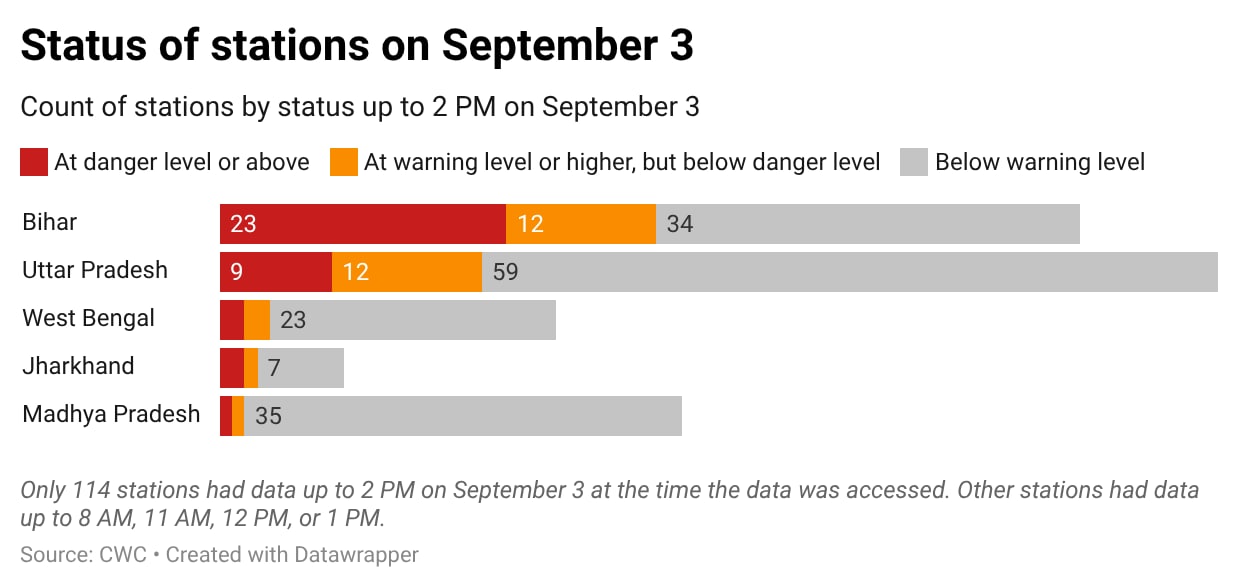
What rivers are flowing above warning or danger level? With the caveats described above, Ganga accounts for most of the stations where either the warning or danger level was being breached on September 3, followed by Ghagra, Gandak, Sone, and Kosi (also called Saptakoshi). This also explains why Bihar and Uttar Pradesh feature prominently among the stations recording a breach in the two benchmark levels.
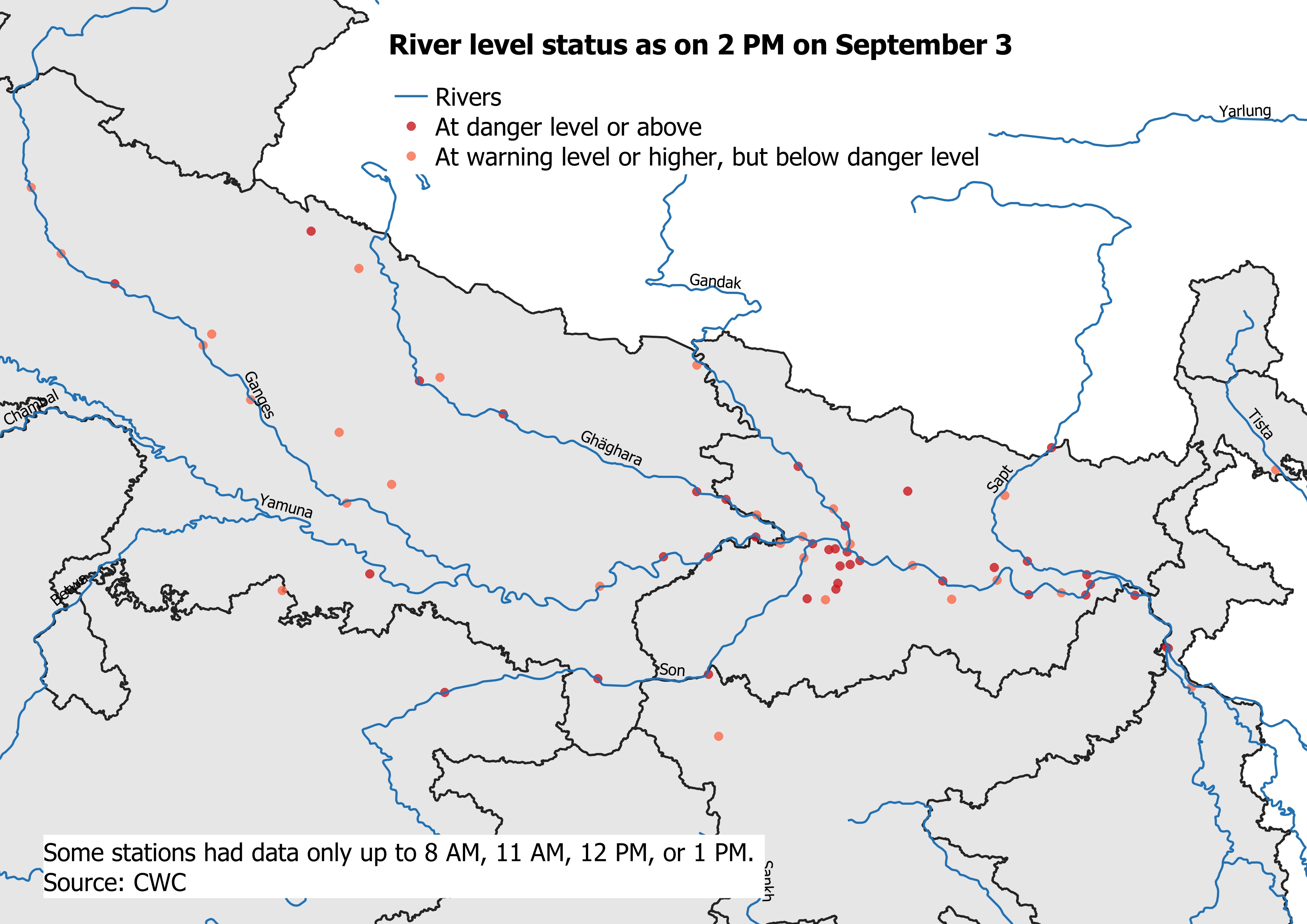
To be sure, while Ganga appears the most likely to overflow at many places currently, it is quite possible that some of this has to do with rainfall also along its tributaries, such as the Yamuna in Uttar Pradesh or Sone in Madhya Pradesh and Uttar Pradesh, or Gandak that joins the Ganga from Nepal. This can be seen by looking at the river flow station data along with rainfall data. The Madhya Pradesh-Uttar Pradesh border region has been rainier in the past week than the part of Bihar where Ganga flows.
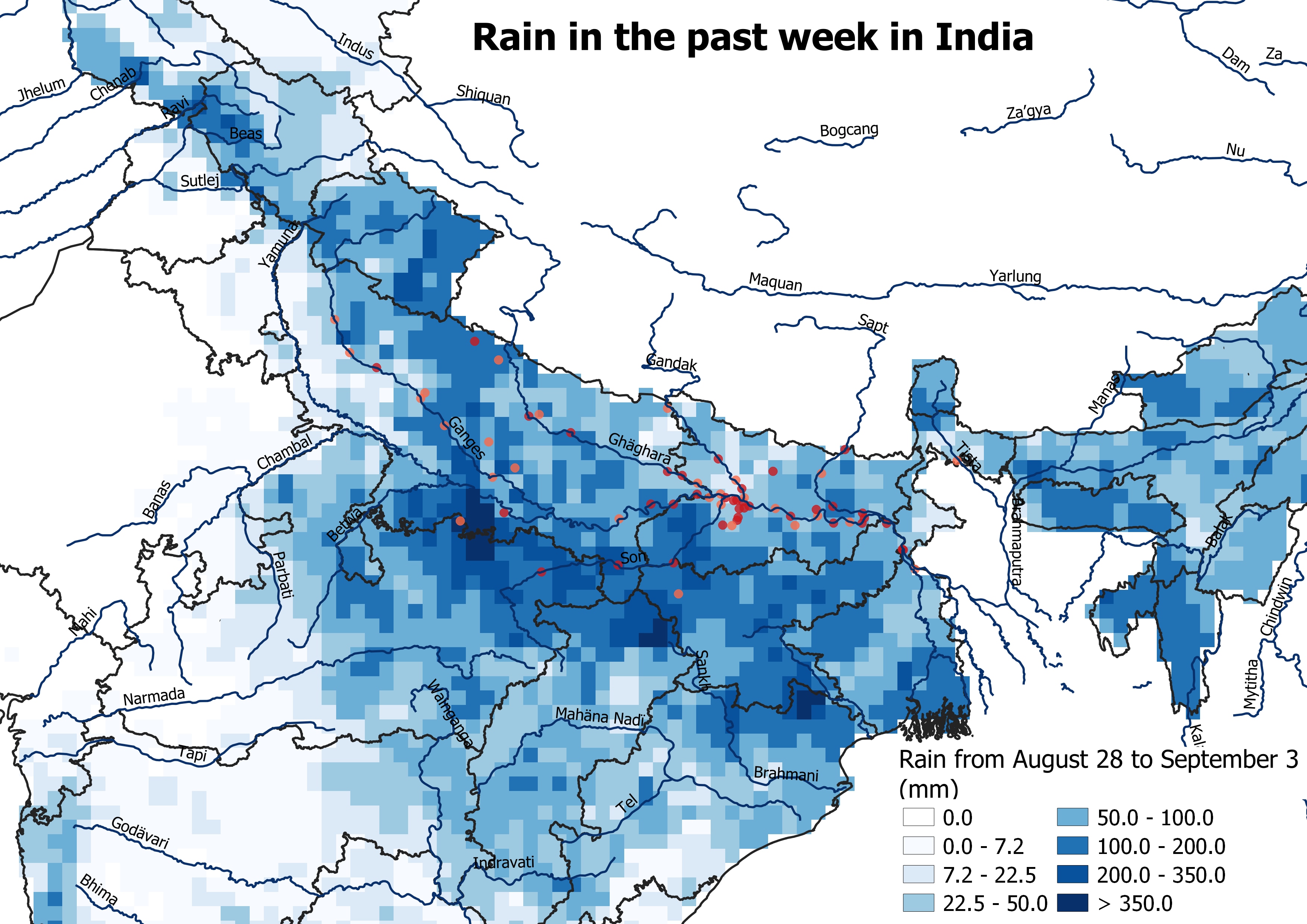
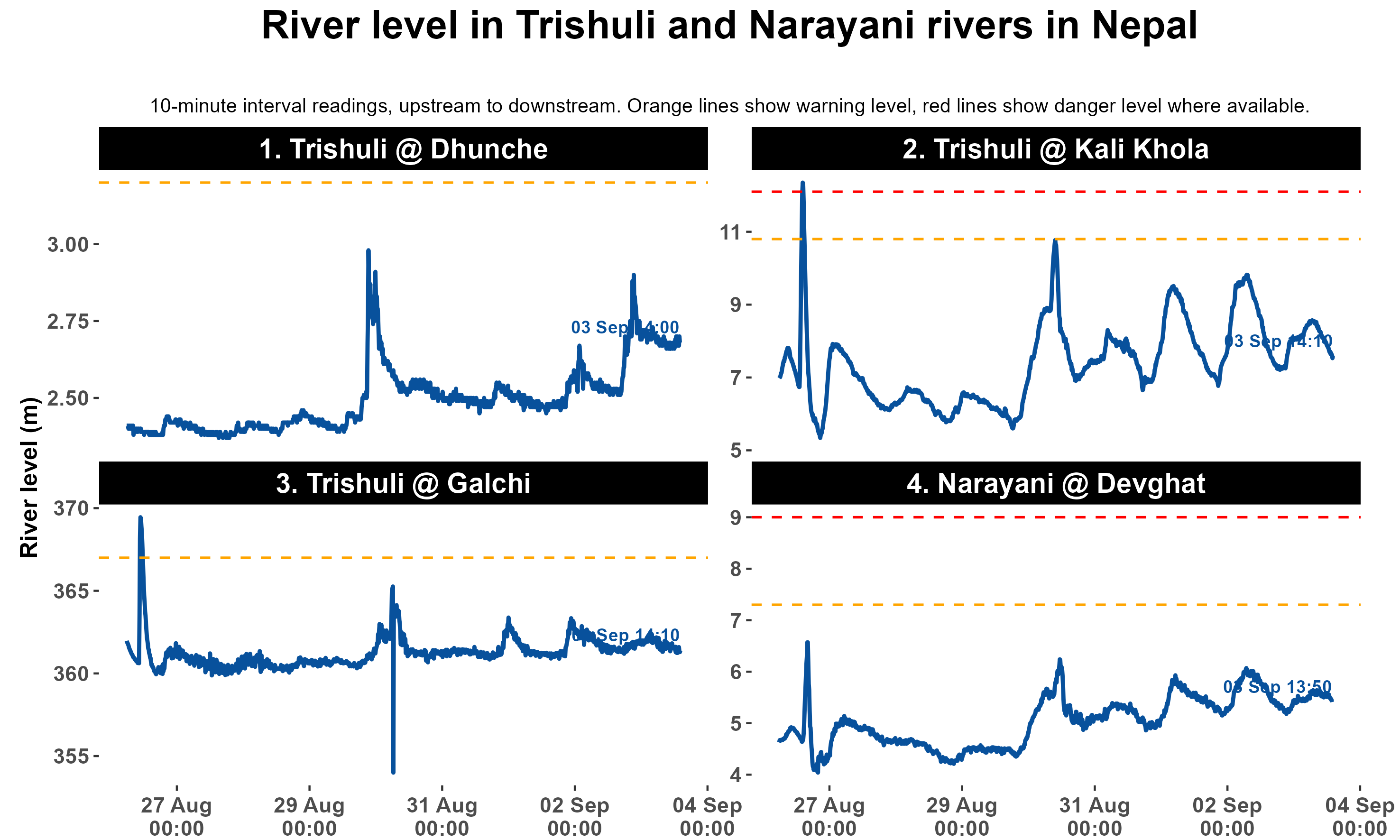
It is also quite possible that some of the flood seen in Bihar is the secondary impact of the flood in Nepal. The Gandak, which is called Narayani in Nepal, and is fed by Trishuli and Bhote Koshi (all rivers affected by the past week’s floods in Nepal), has been flowing at an elevated level after the floods last week in Nepal. This could be due to silting from the August 26 floods or the rainfall in Nepal itself.