E-Paper



CREDAI to persist with demand for new affordable housing definition, says president Shekhar Patel
Realtors will continue to engage with the government on key affordable housing issues, including revising its definition, said CREDAI president Shekhar Patel

 Prefer HTon Google


Shekhar Patel, president of the Confederation of Real Estate Developers’ Associations of India (CREDAI), has said the real estate sector had high expectations from Budget 2026, particularly for stronger support for affordable housing, but these were not met. He said that the developers’ body will continue engaging with the central government on key affordable housing issues, including revising its definition by removing the ₹45 lakh price cap, Patel told HT Real Estate.
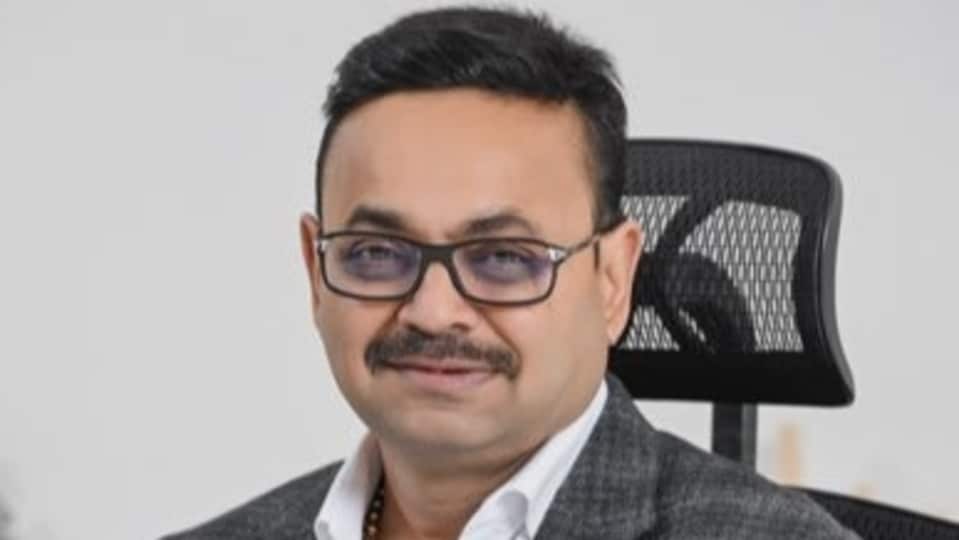
"For real estate, and especially for affordable housing, we had a lot of expectations from the Budget, which have not been fulfilled. But we will continue our work to make the government understand that affordable housing is for the industry, and especially for the lower middle class, for the middle class people," Patel said while speaking on the sidelines of a reforestation event organised by CREDAI in Nashik on February 7.
The affordable housing definition has remained unchanged for nine years.
According to Patel, CREDAI is discussing three to four key issues with the government and NITI Aayog, including affordable housing. Introduced in 2017, the definition caps unit sizes at 60 sq metres in metro cities and 90 sq metres in non-metros, with a price ceiling of ₹45 lakh. Homes priced above ₹45 lakh attract 5% GST, while those below the threshold are taxed at 1%, a framework that has been in place for nine years.
"We are saying that in this definition, there should be no cap of ₹45 lakh. We believe that, in India, the definition of affordable housing in any state is set by size, not by price. The reason is that inflation increases each year. Even today, if you increase the cap of ₹45 lakhs to ₹65 lakhs or ₹70 lakhs, then again the same issue arises after five years," Patel said.
CREDAI seeks an MSME-style credit guarantee scheme for affordable housing
According to Patel, a credit guarantee scheme for affordable housing should be introduced on the lines of the one available to MSMEs.
"The issue is that, for example, the middle class and the lower middle class get a loan of a certain level as per their income documents. But suppose they are getting a loan of Rs. 20 lakhs, expect to buy a house for Rs. 40 lakhs, and need a loan of Rs. 30 lakhs. For this, they do not have enough documents, and the bank does not give them a loan. As a result, to get a loan, they have to go to a private financier or an NBFC. There, the loan is between 14 per cent and 18 per cent,” he said.
“We believe that if the central government can offer a credit guarantee scheme for MSMEs, it should also consider a similar scheme for affordable housing. This would benefit the lower middle class and the middle class the most,” Patel said.
Ratio of affordable housing may fall below 10%
According to Patel, affordable housing accounted for nearly 50% of overall housing supply and demand in 2022, benefiting a large number of buyers. However, its share has steadily declined due to the current definition, falling to about 18% last year. He warned that if the definition remains unchanged, the share could drop below 10%, leaving neither adequate supply nor demand for affordable housing.
"Another demand we have is that the homebuyer who pays for the housing loan has to pay, which is an expense for him or her. But if I buy a house in the company's name and pay the interest, I get a deduction on my income tax. But when I buy a house in my name, I pay interest, for which I do not get any deduction. Earlier, I used to get Rs. 2 lakh under the old regime, but most people have shifted to the new regime, where there is no exemption on interest. We believe that interest should be treated as an expense and that one should be able to deduct it from income for income tax purposes,” he told HT Real Estate.
Infra investments expected to drive Gujarat realty growth ahead of Commonwealth Games, says Patel
According to Patel, estimates suggest that by 2030, public and government-led infrastructure investments across several Gujarat cities, including Ahmedabad and other growth centres, could reach ₹1 lakh crore, driving growth in housing, hotels, malls and urban infrastructure. Overall, he said, the real estate ecosystem is set to receive a significant boost from the Commonwealth Games.
"Right now, new stadiums are being planned. For which contracts will be given, and they will be ready by 2027 or 2028. Before the Commonwealth Games, in 2030, there will be the World Police Games in 2029 in Gujarat, in which 12,000 athletes will participate all over the world, and 6,000 athletes in the Commonwealth Games and again 12,000 in the Olympics, for which Ahmedabad, Gujarat, and India have bid," Patel said.
"Overall, there is an estimate that infrastructure, including public and private infrastructure like hotels, malls, and restaurants, will be worth Rs. 1 lakh crore. In this, Ahmedabad's GDP will increase by Rs. 1 lakh crore. The economies of Ahmedabad and Gujarat will improve, and so will the real estate sector,” he added.