E-Paper



World Environment Day 2025: Bengaluru RWAs lead the way with rainwater harvesting, solar power, and eco-friendly cutlery
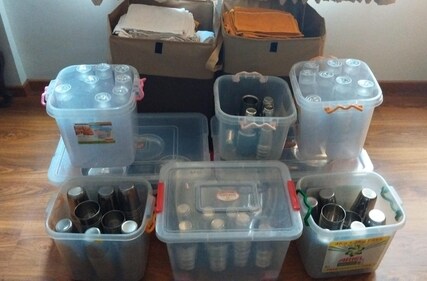
Bengaluru RWAs are demonstrating that grassroots action can drive environmental change. One association reuses cutlery through its initiative Rent-a-Cutlery

 Prefer HTon Google


As the world marks World Environment Day on June 5, communities across the globe are being urged to take action under the 2025 theme 'Ending Global Plastic Pollution'. In Bengaluru, several Resident Welfare Associations (RWAs) are setting examples of sustainable urban living through innovative, community-led green initiatives.

One such RWA stands out for its holistic approach to environmental stewardship. By harnessing rainwater harvesting, the community meets at least one month’s water requirement for all 128 apartments during the monsoon season, eliminating dependence on borewells and conserving groundwater.
Another RWA operates one of the largest residential solar power systems in the city, with a capacity of 178 kW. The clean energy generated caters to common area needs and offsets nearly 50% of the total electricity consumption, substantially reducing the community’s carbon footprint.
Yet another residential community is focusing on waste management. Garden, floral, and electronic waste are segregated and processed. The community also reuses cutlery, under its in-house initiative, ‘Rent-a-Cutlery’, which provides reusable utensils for eco-friendly events organized by other residential complexes.
In a notable case, one resident has designed an aerated apartment model that impressed the Bangalore Water Supply and Sewerage Board (BWSSB), which is now considering replicating the idea in other developments, Vikram Ray, president of Bengaluru Apartment Federation (BAF), told HT.com.
The model uses water aerator taps that reduce the flow of water and also decrease water consumption.
"BAF is supporting the BBMP (Bruhat Bengaluru Mahanagara Palike) Climate Action Cell in celebrating World Environment Day by curating the Bengaluru BluGreen Showcase 2025, an event on June 6, which is a coming together of various RWAs and homebuyer initiatives to display a variety of climate impact initiatives undertaken by them," Ray said.
In a North Bengaluru project, residents harvest a month’s worth of water from rainfall
At Century Saras Apartments, residents can meet the water needs of all 128 units for at least one month during the 3–4 month monsoon season without tapping into borewell resources.
"'Every three days, our 1-lakh-litre rainwater tank fills up. This water is then filtered and used for drinking purposes. We also collect greywater, which is treated in our Sewage Treatment Plant (STP), aerated, and purified before being redirected into our water tanks," Shivananda Prabhu, president of Century Saras Apartment Association, told HT.com.
Through these efforts, the residents save around 1.25 crore litres of water annually compared to other apartments. Considering that, as per BBMP guidelines, each apartment typically consumes 3 lakh litres of water per year, we are saving nearly 30% of our water usage across the entire apartment complex," he said.
Also Read: Act against environment laws violating projects: NGT to Greater Noida authority
In another housing project, solar power harvesting contributes to 50% of the common area usage
Sowmya Raghavan, who oversees waste management at White House Apartments, shared that the project has one of the largest residential solar plants in the city with a capacity of 178 kW. The power generated is used for common areas and contributes around 50% of the total power consumption.
"Beyond power, the residents have also implemented a comprehensive waste management system. Garden, floral, and electronic waste are segregated and processed separately. We use reusable cutlery, supported by their in-house brand, Rent-a-Cutlery, which provides reusable utensils to other communities organizing eco-friendly gatherings and replaces the disposable ones,” said Raghavan.
The cutlery initiative, originally run by the RWA, was later shifted under a trust set up during the COVID-19 period for better accounting and fund management. Revenue from the initiative is directed toward welfare activities. For instance, the community recently purchased laptops worth ₹36,000 for underprivileged children, partially funded through the ₹25,000 raised from renting and selling cutlery. Their cutlery bank has even supported sustainable weddings, powering two such events so far in Bengaluru.
From water tanks to wetlands: RWAs should expand their environmental vision
Environmental experts say that resident welfare associations (RWAs) are playing an important role in driving change at the community level in terms of environmental conservation.
"However, it is essential for RWAs to not only focus on what they are already doing but also to educate members about traditional practices and their long-term benefits. Their vision must go beyond the boundaries of their housing societies. Instead of limiting their efforts to internal water harvesting systems, which are often minimal, they should become active stakeholders in preserving larger ecological assets like wetlands, lakes, and reservoirs," Akash Vashisht, advocate, National Green Tribunal (NGT) said.
Experts say that RWAs, by virtue of their representative structure, have access to skilled individuals, committed leadership, and a sizable population. Their participation is urgently needed, especially as Indian cities continue to struggle with ecosystem degradation and increasing pressure on natural resources, Vashisht said.