
 E-Paper



NASA monitoring this asteroid taller than Empire State Building, capable of generating 1,200 megatons of energy
Asteroid Bennu makes relatively frequent close approaches to Earth, occurring approximately once every six years.

 Prefer HTon Google


Astronomers from NASA are closely monitoring ‘Bennu,’ a massive cosmic object measuring 1,610 feet in width. There is a concern that this asteroid, first identified in 1999, might potentially enter Earth's orbit and pose a threat by colliding with our planet on September 24, 2182.
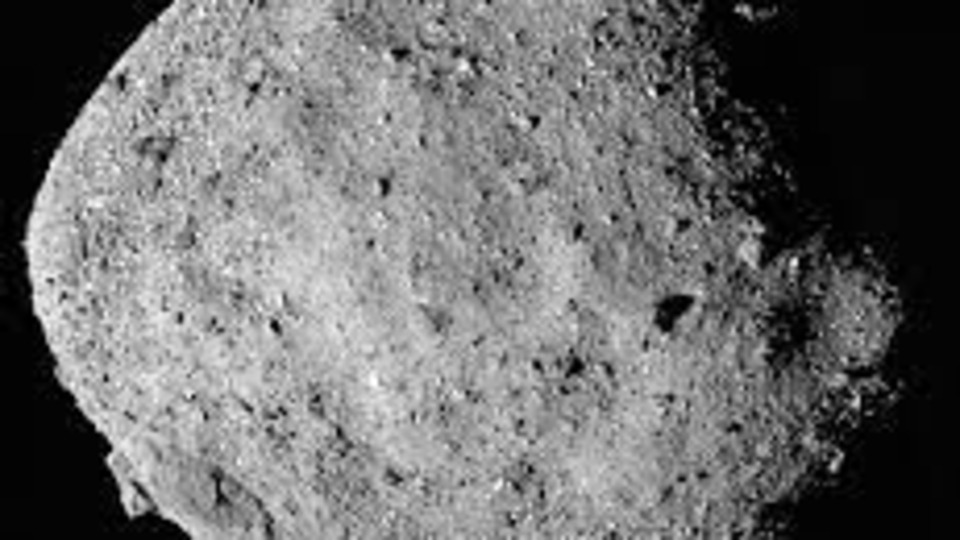
Bennu is estimated to be taller than the Empire State Building in New York City and, if it were to impact Earth, it could release a staggering 1,200 megatons of energy. This impact would be approximately 24 times more powerful than the most potent nuclear weapon ever constructed.
Asteroid ‘Bennu’ makes relatively frequent close approaches to Earth, occurring approximately once every six years, a study says. Notably, it had three such close encounters with Earth in 1999, 2005, and 2011. However, the current assessment by scientists suggests that there is a relatively low probability of Bennu colliding with our planet, estimated at 1 in 2,700, which translates to a 0.037% chance of impact occurring by the year 2182.
"During the flyby, there is an extremely small chance that Bennu will pass through a "gravitational keyhole" - a region of space that would set it on just the right path to impact Earth, late in the 22nd century," NASA has said.
Despite NASA's assessment of a low likelihood of collision with Earth, asteroid Bennu has been classified as a "potentially hazardous asteroid." This classification is due to the fact that Bennu has the potential to approach as close as 4.65 million miles from our planet. NASA emphasises that while the chances of a collision are currently low, Bennu remains one of the two most hazardous known asteroids in our solar system, the other being asteroid 1950 DA. Continuous monitoring and research are crucial to better understand and prepare for any potential future risks associated with Bennu.
"Although the chances of it hitting Earth are very low, Bennu remains one of the two most hazardous known asteroids in our solar system, along with another asteroid called 1950 DA," NASA said.
Bennu, a carbon-rich asteroid, was initially detected in 1999 and is categorised as a "near-Earth object." This asteroid has an ancient origin, dating back to the early stages of the solar system, more than 4.5 billion years ago. Due to its ancient nature, Bennu is considered a valuable celestial body for scientists as it potentially contains critical insights into the formation and evolution of rocky planets like Earth. Researchers believe that it may even harbor organic molecules, similar to those essential for the emergence of life, making it a particularly intriguing target for scientific exploration.


