
 E-Paper



Christa Pike survives 2 doses of lethal drug: A look at botched executions in the US
Lethal injection is the most commonly used execution method in the US. However, failed executions have occurred with other methods as well.

 Prefer HTon Google


Tennessee death row inmate Christa Pike, who survived an attempt to execute her last week, is awake and speaking, her attorneys said on Tuesday, as she continues to receive critical medical care.
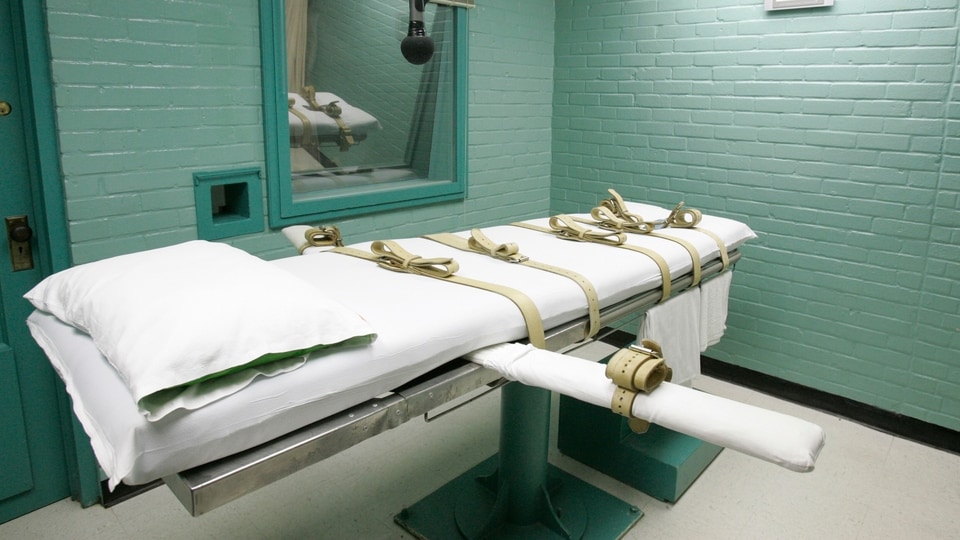
Pike’s attorneys said her prognosis remains “unclear” and that she faces a long recovery. She survived two doses of pentobarbital, a lethal drug, during the September 30 execution attempt and was taken by ambulance from a Nashville prison to a hospital.
“Against all odds, Christa Pike is conscious, speaking, and continues to receive critical medical care,” her attorneys said in a statement. They added that Pike had suffered severe damage to her arms and remains handcuffed and shackled to her hospital bed.
Pike was sentenced to death for the 1995 beating and stabbing death of her classmate Colleen Slemmer. On Tuesday, her attorneys said they continue to ask Tennessee Gov. Bill Lee to commute her sentence to life in prison without the possibility of parole.
How common are botched executions?
Notably, Pike’s failed execution is the second such case in Tennessee this year. In May, death row inmate Tony Carruthers was returned to his cell and given a one-year reprieve after medical staff struggled to secure a primary IV line to administer the lethal drug.
What happened to Pike and Carruthers is a reminder that things frequently go wrong in executions. According to a report by the BBC, it's not uncommon for lethal injections - the most frequently used form of capital punishment in the 27 US states where the penalty is legal - to be "botched".
The Death Penalty Information Centre, a think tank that does not take a stance on the death penalty, defines a botched execution as one involving “unanticipated problems or delays” that cause, or arguably cause, unnecessary agony for the prisoner or reflect gross incompetence by execution personnel. The organisation has documented 64 botched executions in the US since 1982, including 51 involving lethal injection. In at least seven cases, an execution was halted because officials could not establish an IV line.
(Also Read: ‘Swollen, burned and blistered arms’: 5 chilling details from Christa Pike’s botched execution)
Execution failures
Lethal injection is the most commonly used execution method in the US states where capital punishment remains legal. However, failed executions have occurred with other methods as well.
According to a report by The Independent, in 1833, Pennsylvania prisoner Charles Getter survived an attempted hanging after the rope around his neck broke. A second, stronger rope was then used and the execution was completed.
In 1894, Will Purvis also survived a hanging after the noose loosened. Purvis maintained his innocence and later fought attempts to execute him again. He remained in prison until Mississippi Governor Robert Lowry pardoned him in 1898, making Purvis the only known survivor of an execution attempt to receive such a pardon.
The electric chair, introduced as an alternative to hanging, also failed in at least one notable case. In 1946, Louisiana attempted to execute 16-year-old Willie Francis, who had been convicted of murdering a local sheriff. Francis survived when the electric chair failed to deliver a fatal shock. He later challenged a second execution attempt in court but was executed nearly a year later.
(Also Read: What will happen to Christa Pike now? How case could proceed now that Tennessee death row inmate is awake and talking)
Failed lethal injections in recent decades
From 2009 until May 2026, six people survived failed lethal injection attempts.
In 2009, Romell Broom became the first 21st-century prisoner to survive a lethal injection attempt after Ohio executioners spent about two hours trying to find a usable vein. The state ultimately abandoned the attempt. The Ohio Supreme Court later ruled that inserting IV lines was only a preparatory step and that a second execution would not amount to double jeopardy or cruel punishment. Broom died on death row in 2020 after contracting COVID-19 before Ohio could attempt another execution.
Doyle Hamm reached an agreement with Alabama in 2018 preventing a second execution after officials couldn’t access a vein during an attempted lethal injection. Hamm died from cancer in 2021.
Other survivors were eventually executed. Alabama executed Alan Miller and Kenneth Smith in 2024 after both had previously survived failed lethal injection attempts.
Thomas Creech remains alive on Idaho’s death row after a failed lethal injection. If the state attempts to execute him again, it plans to use a firing squad, which became Idaho’s primary execution method on July 1, 2026.
Pike’s case now adds another recent example to the history of failed execution attempts in the US, while questions remain over her medical recovery and whether Tennessee will seek to carry out another execution.


