
 E-Paper



Treesa Jolly-Gayatri Gopichand take bronze after going down in semi-finals of BWF World Championships
The Indian pair of Treesa Jolly-Gayatri Gopichand took home bronze after going down in the semi-finals of the BWF World Championships.

 Prefer HTon Google


Treesa Jolly and Gayatri Gopichand Pullela put up a performance to remember at the BWF World Championships, but their glorious run came to an end in the semifinal, and they took home a bronze medal. The Indian pair, the only ones to win a medal for the country in this edition of the World Championships, went down fighting against top seeds Liu Shengshu and Tan Ning, losing 21-18, 12-21, 8-21 in a hard-fought three-game battle.
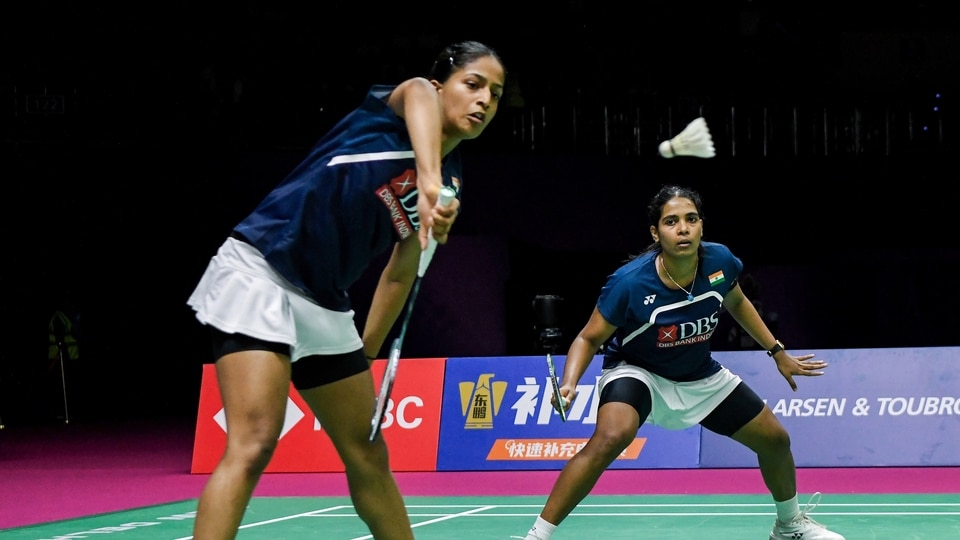
Treesa and Gayatri started the game on a positive note, taking a 3-0 lead with a jam-packed crowd firmly behind them. It was the kind of atmosphere many had been craving as the Indira Gandhi Arena erupted with claps and roars, giving the Indian pair a huge psychological boost. Every point was being greeted with deafening cheers, making it feel like India had an extra edge on court.
This World Championships has been a story of Treesa and Gayatri overcoming one hurdle after another, but the semifinal arguably presented their biggest challenge yet. Standing in their way were top seeds Liu Shengshu and Tan Ning, the world No. 1 pair.
The first game saw the Indians take an early lead and create some breathing space, but the Chinese pair were in no mood to let them settle. A quick turnaround saw Liu and Tan fight back from 2-7 down to level the score at 7-7. They carried that momentum into the interval, taking an 11-7 lead.
But Treesa and Gayatri have not come this far by giving up easily, and once again, they displayed their fighting spirit. The Indian pair came out firing after the break, slowly eating into the deficit before drawing level at 12-12. The comeback underlined their belief that they could push the world No. 1 pair all the way.
The intensity of the clash kept rising, with Treesa Jolly and Gayatri Gopichand refusing to be tamed by the top-seeded Chinese pair. The Indians kept pushing, matching Liu Shengshu and Tan Ning point for point as the first game moved towards its business end.
With the score locked at 18-18, the pressure was immense, and every rally felt like it could decide the game. Then came the defining moment. Treesa and Gayatri produced three points on the trot to move from 18-18 to 21-18 and seal the opening game. The Indira Gandhi Arena erupted as the fans jumped off their seats, roaring their approval.
The second game began with the Chinese pair knowing they had their backs against the wall, and they came out swinging, taking the opening point with a powerful smash. But the ice-and-fire combination of Treesa and Gayatri was ready for the challenge. After dropping the early points, the Indians fought back to make it 4-5 and stayed right in the contest.
Gayatri began targeting the Chinese pair's backhand, finding success with the tactic and putting them under pressure. However, Liu Shengshu and Tan Ning quickly read the change in approach and adjusted their game, stretching their lead once again.
But there were levels to this contest, and Treesa and Gayatri kept raising theirs, feeding off the energy inside the packed Indira Gandhi Arena. It was once again a neck-and-neck battle, with neither side willing to take its foot off the gas. The rallies grew longer, and the pressure kept building, before India edged ahead 11-10 at the halfway mark, taking a crucial psychological advantage.
The rotation was clearly visible in their movements as Treesa and Gayatri tried to keep their opponents guessing. But there was a reason Liu and Tan were the top seeds. The net game began to hurt India in the second half, with a string of unforced errors allowing the Chinese pair to open up an 18-12 lead. Treesa and Gayatri kept finding the net and also sent crucial shots wide, handing away valuable points. The Indians could not recover from the setback and eventually lost the second game 13-21, with the momentum firmly shifting towards Liu/Tan.
The final game started on an even footing, with both pairs trading points early on. But Liu and Tan soon found a way to adapt to the Indian pair’s game, and once they did, they began pulling away. Treesa Jolly and Gayatri Gopichand Pullela struggled to find answers as the Chinese pair took an 11-5 lead at the halfway mark.
The second half proved even tougher for the Indians, who found it increasingly difficult to hold their nerves against a pair that kept tightening the pressure. Every point slipped away painfully, and the disappointment was visible on Treesa and Gayatri’s faces as they realised the silver was moving further out of reach. They eventually lost the final game 8-21. It was a heartbreaking end, but there was no denying the glorious run they had put together.


