
 E-Paper



I’ve found the ladder. Now I have to climb again and see how far I can go: Vinesh Phogat
A year after the low at the Tokyo Olympics, seasoned wrestler Vinesh Phogat talks of finding calm again with a third Commonwealth Games medal

 Prefer HTon Google


Vinesh Phogat wants more athletes to speak up about their struggles. And not just when they’re down. “Today when I have won, everyone will listen to me. After losing, they will say she is making up excuses. So you should speak about it even after you win,” she says.
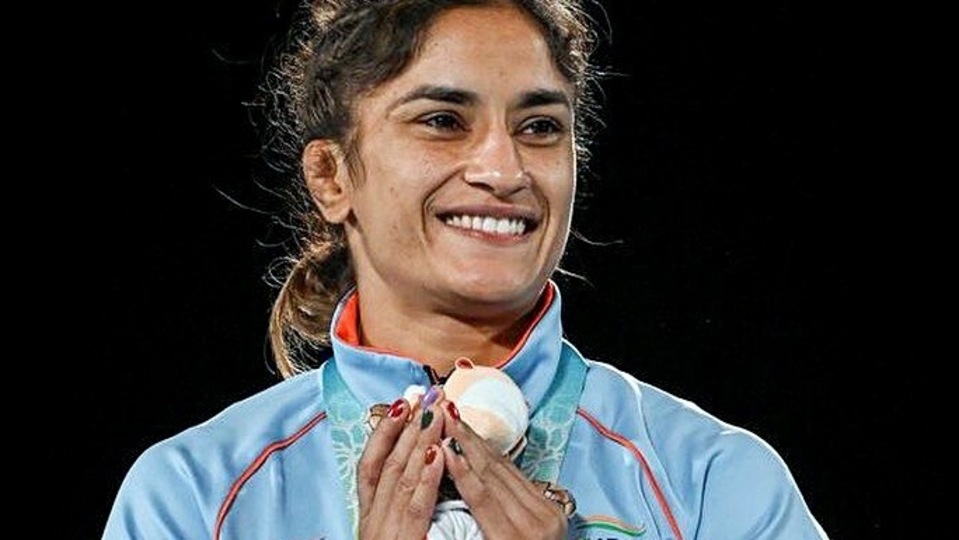
Vinesh did win in Birmingham, her third Commonwealth Games (CWG) medal. The World Championships bronze medallist hardly broke a sweat for it in a qualitatively and quantitatively depleted field, but believes it is a pleasing start to her mental rebuilding process from the scars of the Tokyo Olympics exit.
In this chat, she talks about the medal healing her self-doubts, why watching her family share her mental and emotional breakdown killed her and the only thing that gave her a semblance of joy during the phase — a long shopping list.
Excerpts:
Of your three CWG gold medals, is this more significant given how the last one year panned out for you?
I always end up coming up to the Commonwealth Games jab mera confidence tuta, muta, dagmaga raha hota hai (when my confidence is broken and shaken). But this feels like a good start. In the last one year, I didn’t even compete much—just once after the Olympics (Yasar Dogu in February) and even that didn’t go well. There were self-doubts, that I’m training for it but the results aren’t showing. Now that I’ve got one, ek sukoon sa mila hai (it’s a relief). I’ve found the ladder. Now I have to climb again and see how far I can go.
Injuries too have given you major setbacks, like in and after the 2016 Rio Olympics. Are physical or mental challenges tougher to overcome for you?
After Rio, I didn’t find it that difficult, honestly. I had a lot of confidence in myself back then in overcoming it. For a month or two it was challenging, but a lot of people supported me. After Tokyo, even people at home were like, “kya ho gaya hai isko (what has happened to her)?” They were obviously seeing things, the mental and emotional breakdown I was going through. I could carry the load of one Olympics, but how could I walk with the burden of two?
Being with family can help in such times. But even that didn’t lift your mood…
My family gives me a lot of priority—be it my in-lawns, my family or close relatives. They protect me a lot. Even they could feel it, though I don’t show it. Like when I get really angry, they know where it is coming from. They understood the kind of struggle I was going through. I hated that they were unhappy because I was unhappy. Sometimes I thought, mein hi mar jao, yeh log toh kam se kam khush rahe (I might as well die, at least they can live happily). Because even they went through it all--the self-doubt, whether I will be able to return again, what is bothering me. Hopefully, this will heal them too emotionally.
You say you didn’t show your struggles but they understood. What was it like?
I would be agitated, tell them something I shouldn’t have in anger and frustration or I wouldn’t bother about anyone else. Those who have seen me from a young age know how I behave when my mind is disturbed. So just by seeing my body language they knew something is wrong. But neither did they tell me that they know, nor did I. It was a different kind of game going on there (laughs).
What did give you that little bit of joy, then?
Shopping. If you want to make me happy, take me out shopping! I have so many things with me, so many items that I haven’t even touched for 2-3 years. Par mujhe maza aata hai paisa phookne mein (I enjoy splurging money) (laughs).
So what topped your shopping list in the last year?
It keeps changing every month. Sometimes if I get passionate about perfumes, I’ll pick up 20-25 of them. Sometimes it’s shoes. Sometimes it’s clothes. Sometimes it’s books. Sab alag alag thoughts chalte rehte hai mujhme; mein alag hi hu (I have all these different thoughts in me; I am just different).
What did this phase teach you that your past success did not?
Failure teaches you a lot. When you win, everyone is around you. After Tokyo, there was no one. Everyone said I did this, I did that, my attitude is bad. The athlete remains the same, but when you have a bad day, you will only see the attitude and such negative things. When we lose, even if there are people saying positive things about you, you tend to hear that one negative thing. It’s the same with people—if you’re winning, every mistake of yours is forgiven but if you’re losing, even your good things can turn into bad.
But top athletes usually say they learn to block the outside noise…
Look, it does affect you. If it’s normal criticism about my form and such things, it’s fine. But when you say things about my life like yeh mentally kuch bhi kar rahi hai or she has attitude problems, then it does hurt.
When you eventually did feel like coming back to it all, what triggered it?
Just my family constantly telling me, “you still have wrestling in you, you can get there again”. But no matter how much they kept repeating it, those doubts never went. That’s why my wrestling was up and down, and in India I had those tight matches. These are all phases, and I believe God put me in this. But I also sincerely worked hard towards it (making the return). If someone else is working harder, I will say give them the opportunity but if I am, then it should be me. My luck had not been working in my favour, so I thought let’s see if hard work can bring it back.
You believe your level of wrestling is there?
It’s definitely there. But sport is more mental than physical, and keeping the mind positive is important. Technique, I can do the same thing for 10-20 days and pick up again. But the mind, na seekh sakte ho na sikha sakte ho (you can neither understand nor make it understand).
How far does this medal go in easing those self-doubts?
It helps a lot. Even the smallest of medals do. Like in India when I won the (CWG) trials, it boosted my confidence. Self-doubts don’t creep in because your opponent is better. They do because you are down. That's where I was. To pick yourself up from there, physically you can do it because as athletes that’s the only thing we know from a young age. But mentally it is tougher, especially when people around you say, “haan yeh toh khatam hai (she is finished)”. There are times when I feel angry and want to show these people, but at times you can also start believing what people are saying. That happened a bit with me, but now I am fine about it.


