E-Paper



A daughter comes home, Bengalis celebrate, and the 48 minutes that mark a moment of divine power: The many emotions that make Durga Pujo special

 Prefer HTon Google


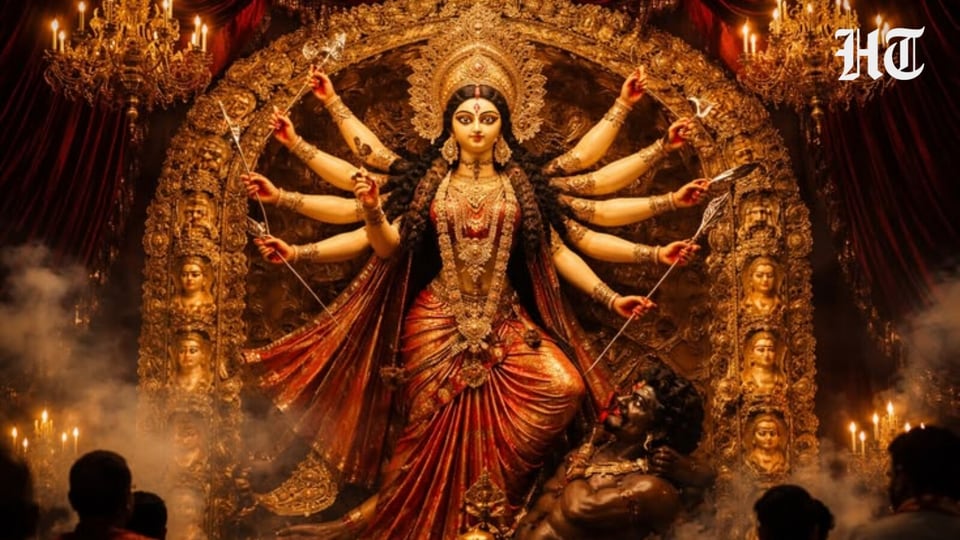
Maa Durga arrives at her maternal home with her children, Lakshmi, Saraswati, Kartik and Ganesh. Legend says Mahadev follows her secretly because he misses her.
Durga Pujo is not just a festival but a rollercoaster of emotions, with Bengalis across the world experiencing joy, nostalgia and grief all at once. It is that time of the year when devotees wait for their daughter to come home for a few days, and during those days, time seems to stop. Everything else can wait; it’s time for Pujo - “The network you are trying to reach is on a Pujo break.”
Maa Durga arrives at her maternal home with her children, Lakshmi, Saraswati, Kartik and Ganesh. There is also a popular belief that her husband, Mahadev, follows her without her knowledge because he misses her so much.
According to popular folklore, the rituals begin with Maa Durga resting under a Bel tree before continuing her journey from Kailash to her maternal home. The folklore says that during her journey, she rests under the Bel tree on Shashthi, the sixth day of Navratri. This is why the day is also known as Bel Shoshthi.
On the day of Saptami, she is welcomed with delicacies, gifts, and everything that makes a daughter’s homecoming special. Basically, it is a celebration of a daughter being home, and no stone is left unturned. Devotees also perform aarti and offer bhog to Maa Durga.
Then comes Ashtami, considered one of the most significant days of Durga Pujo. A 48-minute period, known as Sandhi Pujo, marks the transition from Maha Ashtami to Maha Navami. During this time, Maa Durga is worshipped in her fierce Chamunda form, one of the most powerful manifestations of the goddess. According to the Devi Mahatmya, when the demon generals Chanda and Munda attack the goddess, a fierce form emerges from her forehead and defeats them.
According to Bengali Shakta traditions, Sandhi Pujo is performed during the 48-minute period that includes the final 24 minutes of Maha Ashtami and the first 24 minutes of Maha Navami.
Elaborating on the same, Sidhharrth S Kumaar, Chief Astrologer at NumroVani, adds, “Sandhi Pujo reminds us that real change begins within us. As Bengalis welcome Maa Durga home as their daughter, they also look to her for strength and courage. Praying to her is not just about seeking protection, but also finding the courage to face the truth and make a change.”
Once Sandhi Pujo is over, devotees know it is time to start preparing to bid farewell to their Maa. As Navami begins, the countdown to next year’s Pujo starts. Now, isn’t that an emotional rollercoaster?
Navami Pujo concludes with a yagna, marking the end of Maa Durga’s stay at her maternal home and the beginning of her journey back to Kailash. The Kola Bou, or Nabapatrika, is immersed at a time determined each year by the tithi, according to the Bengali Phool Panjika. Yet devotees continue to worship the idol and extend the celebrations, as if they are not ready to let go of their daughter just yet. The feeling of longing is much like the emotion felt during a daughter’s bidaai.
Then comes Bijoya Dashami, when Maa Durga is prepared for her journey back to Kailash and offered sindoor and sweets before she leaves for her husband’s home. This ritual is popularly known as Sindoor Khela, during which married women apply vermilion to each other.
After Sindoor Khela, the idol is immersed in water, with the hope that, no matter what happens, Maa Durga will surely return the next year. After the immersion, everyone sits down with their loved ones, spends time together, shares good food and leaves with an unspoken promise: “Aashche bochhor abar hobe!”
ALSO READ: What tantra really teaches about Shakti, fear, and the power within, a spiritual expert explains
Disclaimer: The religious stories and rituals described in this article reflect cultural traditions and beliefs that may vary across communities. They are presented for cultural understanding and should not be taken as scientifically established claims.