
 E-Paper



Flawed, not finished: Why Brazil still needs Neymar 2.0 for World Cup 2026
Neymar returns to Brazil's World Cup squad despite injury concerns, as Carlo Ancelotti aims for balance following key player absences.

 Prefer HTon Google


Neymar is back in Brazil’s World Cup squad, and Carlo Ancelotti’s call has turned one of the tournament’s biggest selection debates into a final gamble. Brazil have named him in their 26-man list for the FIFA World Cup 2026 despite his injury history, the long absence from the national team, the uneven rhythm since his ACL setback, and the constant question of whether his body can still withstand the demands of elite tournament football. The decision carries obvious risk, but it is not a sentimental indulgence. It is a football calculation shaped by Brazil’s attacking injuries, Neymar’s national-team record and the specific kind of control he can still offer in tight games.
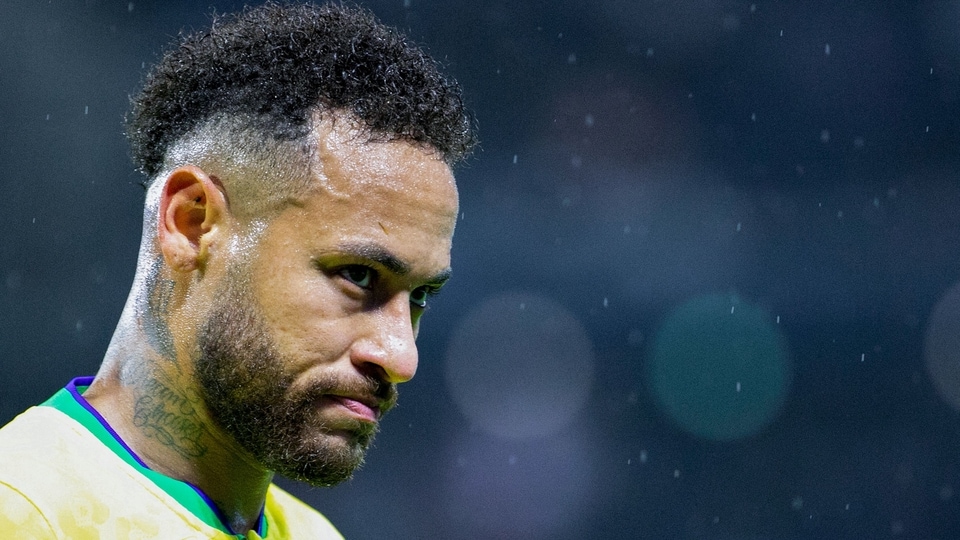
Why Ancelotti still picked Neymar
Neymar did not arrive at this squad announcement on the back of a dominant, irresistible run. That has to be the starting point. He has played too little high-level football over the last two years for this to be framed solely as a form-based selection. The knee injury in 2023 disrupted his rhythm with Brazil; his club career after that moved through recovery and limited continuity, and even his return with Santos offered more signs of survival than certainty. There were goals, assists and flashes of old imagination, but not a clean enough spell to erase concern around his fitness.
Ancelotti still picked him because Brazil’s final squad picture changed around him. Rodrygo’s injury removed one of the most flexible forwards available to Brazil. He gives balance across the front line, can operate wide or central, and can combine with Vinicius Junior without demanding that the attack be reorganised around him. Estêvão’s injury took away another profile: young, fearless, direct, capable of giving Brazil late-game chaos against tired defenders. Those two absences did not leave Brazil short of attackers, but they did leave Ancelotti with fewer ways to change the texture of a match.
That is where Neymar’s case becomes stronger. Brazil still have runners. They still have pace. They still have forwards who can press harder, stretch defences and attack space more naturally than Neymar can at this stage of his career. The missing quality is different. Neymar can receive in crowded areas, draw bodies towards him, invite fouls, delay the pass until a lane opens, and bring calm to a game that is becoming frantic. That is not a decorative skill in World Cup football. It is often the difference between possession that looks busy and possession that actually wounds the opponent.
The record and experience: Neymar 2.0
Neymar’s record protects him because it is not built solely on reputation. He is Brazil’s all-time leading scorer and has been the central attacking reference point under multiple coaches, across multiple cycles and tournaments. He has produced in World Cups, including the extra-time goal against Croatia in 2022 that briefly looked like the moment that would push Brazil towards another semi-final. Brazil still collapsed in that match, but Neymar delivered the elite action his role demanded. That memory matters because it shows something beyond technical quality. It shows temperament under the weight of the shirt.
Ancelotti’s decision also makes more sense when Neymar is judged by the role he can now play rather than the player he used to be. Brazil are not getting the explosive left-sided superstar who could carry attacks for 90 minutes. That version has been worn down by time, tackles and injuries. The current Neymar needs management. He needs the right match state, the right structure around him and a coach willing to keep the role disciplined. In that shape, the pick becomes far easier to defend. Neymar can start when Brazil expect long spells of possession, enter when opponents sit deep, operate behind quicker forwards, take set pieces and penalties, and give the attack a calmer brain when the pace of the game alone is not enough.
The risk remains heavy because Neymar’s name can easily become bigger than his function. If he slows every move, Brazil suffer. If he weakens the press without giving enough on the ball, the midfield carries the cost. If Ancelotti allows the selection to become a farewell tour, the squad loses the edge that a World Cup demands. The pick only works if Brazil treat Neymar as a weapon, not an obligation. He has to be used for moments of control, invention and nerve, not protected as a sacred figure who must play regardless of rhythm.
O Príncipe returns
Pele remains “O Rei”, the King. That crown is not Neymar’s and never needed to be. Neymar’s more fitting place in the language around Santos and Brazilian football is closer to “O Príncipe”, the Prince, a phrase that carried renewed force around his Santos return. It works because it does not pretend he is above the old throne. It places him where he belongs: brilliant, flawed, adored, debated and still unfinished.
That is the real power of this selection. Neymar has not been picked because Brazil owe him a last dance. He has been picked because, even at a diminished level, he can still do something few Brazilian attackers can do with the same authority. Vinicius Junior can break a game with speed. Raphinha can give intensity and directness. Younger forwards can run, press and stretch the pitch. Neymar can still bend the tempo of a tight match and see a final pass before the defensive line has understood the danger.
Ancelotti has taken the risk because the reward remains alive. The body may fail. The legs may not fully answer. The tournament may expose every doubt that followed Neymar into the squad. Yet Brazil’s World Cup history has rarely been shaped only by safe choices. This is not the safest selection. It is the one Ancelotti believed gave Brazil one more route through the kind of suffocating night where pace runs out of room and only imagination finds the door.


