
 E-Paper



Asian Games: How Anahat stunned world No.6 to make squash final
In the men's section, India's Abhay Singh carved out an easy win over Pakistan's Irfan Muhammad

 Prefer HTon Google


Anahat Singh placed her palm on her head and pulled her tongue out. Minutes ago, she had been on the verge of being eliminated from the Asian Games semi-final.
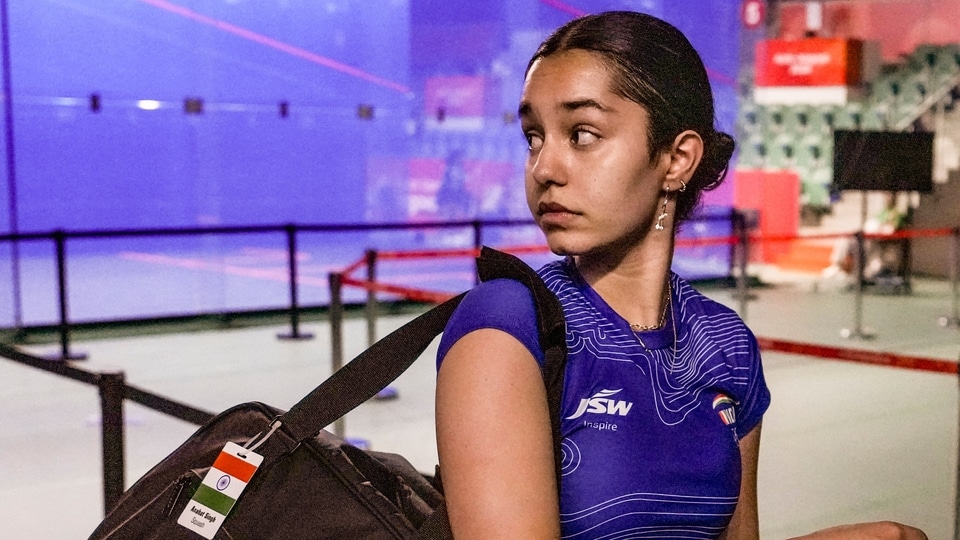
Satomi Watanabe, the world No. 6 Japanese player, had three match balls in the third game. Anahat, the world No.17 Indian, had little room for error left. Then came the opening at 10-10.
A stroke was awarded to Anahat. Suddenly, Anahat had a match ball. She took it and let out an emotional roar.
Deep Dive

The 18-year-old roared away in the next two games, turning the tide spectacularly in a semi-final that was almost gone. Instead Anahat emerged a 3-2 (9-11, 11-13, 12-10, 11-6, 11-3) winner from the women’s singles semi-final. The brilliant fightback on Saturday landed her in uncharted territory, and put her within sight of an early berth for the 2028 Los Angeles Olympics.
The 18-year-old is the first Indian female squash player to make the singles final at the Asian Games. Dipika Pallikal (2014 and 2018 bronze) and Joshana Chinappa (bronze in 2018) led the way for women's squash in the country, and Anahat is doing more than just following them.
Add Abhay Singh, who beat Pakistan's Irfan Muhammad 3-0 (11-3, 12-10, 11-6) in his men’s semi-final and will face Malaysian defending champion Ng Eain Yow, and there will be two Indians in the final. Indian squash has never had that at the Asian Games, or a gold in singles.
More than just a gold is riding on Sunday's final. The winners will be the first couple of squash pros to secure an Olympic spot.
“When I was losing, the first thought that came into my mind was you can’t let the Olympic spot go by so quickly,” Anahat said in Nagoya.
Saurav Ghosal, last edition’s singles silver medallist now mentoring Anahat, termed it a great win. The reigning world junior champion, after all, had not beaten Satomi before, or an opponent ranked as high as her.
Standing between her and history is an opponent ranked even higher. Sivasangari Subramaniam, the Malaysian world No.5 defending champion, is in blazing form, and stormed past Anahat in straight games in London earlier this month. Anahat, as Ghosal analysed, will need to be at the top of her game – tactically and mentally – against a player who has more experience and wins playing a similar game style.
"Anahat will have to be slightly braver, go in with real conviction to rattle the cage a bit, and see where that takes her," Ghosal had said.
Satomi’s game style, in contrast, was clearer to crack tactically, even though the Japanese knew what to expect from Anahat this time. She was off to a fast start before Anahat levelled up at 6-6 and, despite her saving two game balls, Satomi was up and running.
Satomi was also up 6-3 and 9-6 in the second game, until Anahat made it 9-10. A clash of shoulders and heads left Anahat bleeding and both players off the court. When they returned, a brilliant touch by Satomi gave her the game.
Satomi continued to play solidly. Anahat continued to leak errors. Satomi found more than one opportunity to shut the door. Anahat found one opening, and barged in.
Barged in and how. For the first time in the first half of a game, the Indian was in the lead at 5-4. Not for too long. The Japanese made it 6-5 to take the lead. Not for too long. And never again.
The teen upped her level from there, playing every bit like the prodigious talent she is. Anahat attacked the front corners with silky smooth touches and produced a wave of winners with the kind of game variety that makes her so dangerous.
The Indian won six straight points in that fourth game, and with momentum behind her, flew in the decider. Anahat came up with brilliant lobs, crisp volleys and sublime movement. It left Satomi in a bit of a daze, bashing herself on the head with her racquet.
The racquet of Anahat was doing all the talking, and, moments later, walking into the final.
Bronze for Joshana-Velavan
Joshana Chinappa and Velavan Senthilkumar lost a thriller to Hong Kong's Lee Ka Yi and Tang Ming Hong 1-2 (10-11, 11-2, 10-11) in the mixed doubles semi-final. It will be a bronze for India in the event that fetched gold in Hangzhou.


