
 E-Paper



Building the Beast: How Tejaswin Shankar built a decathlete’s body
Increased muscle mass, aerobic strength, and a training overhaul have been key to Tejaswin’s transition from a high jumper to a decathlete

 Prefer HTon Google


New Delhi: In the fall of 2017, when Tejaswin Shankar arrived at the Kansas State University as a freshman, his 19-year-old body weighed 78kg with a fat percentage of around eight percent. At 6'4”, his frame was lean with relatively little upper body muscle mass and he checked most of the anthropometric characteristics associated with elite high jumpers.
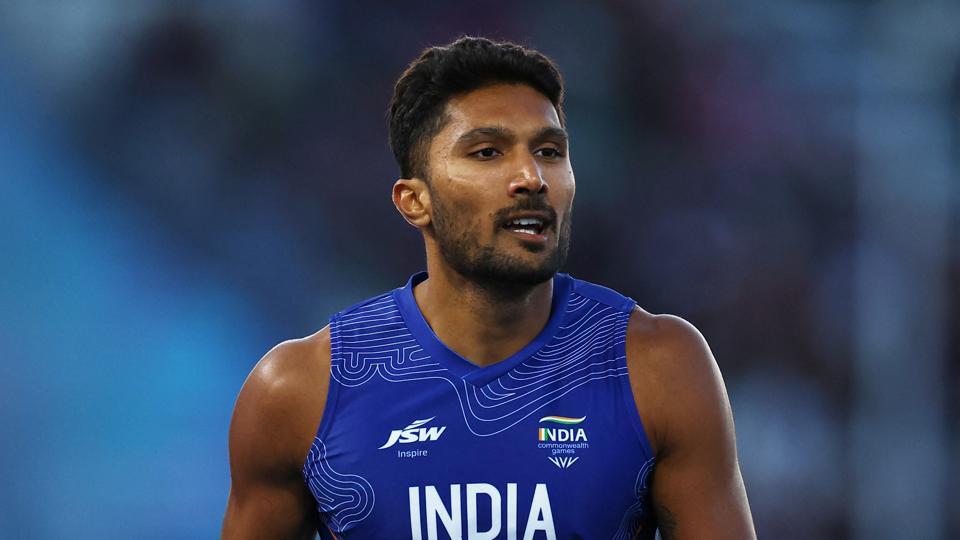
"His leg-to-torso ratio was in excess of 50 percent, and he had a high centre of mass. Those are the broad factors you'd notice in elite high jumpers," strength and conditioning expert Wayne Lombard recalled.
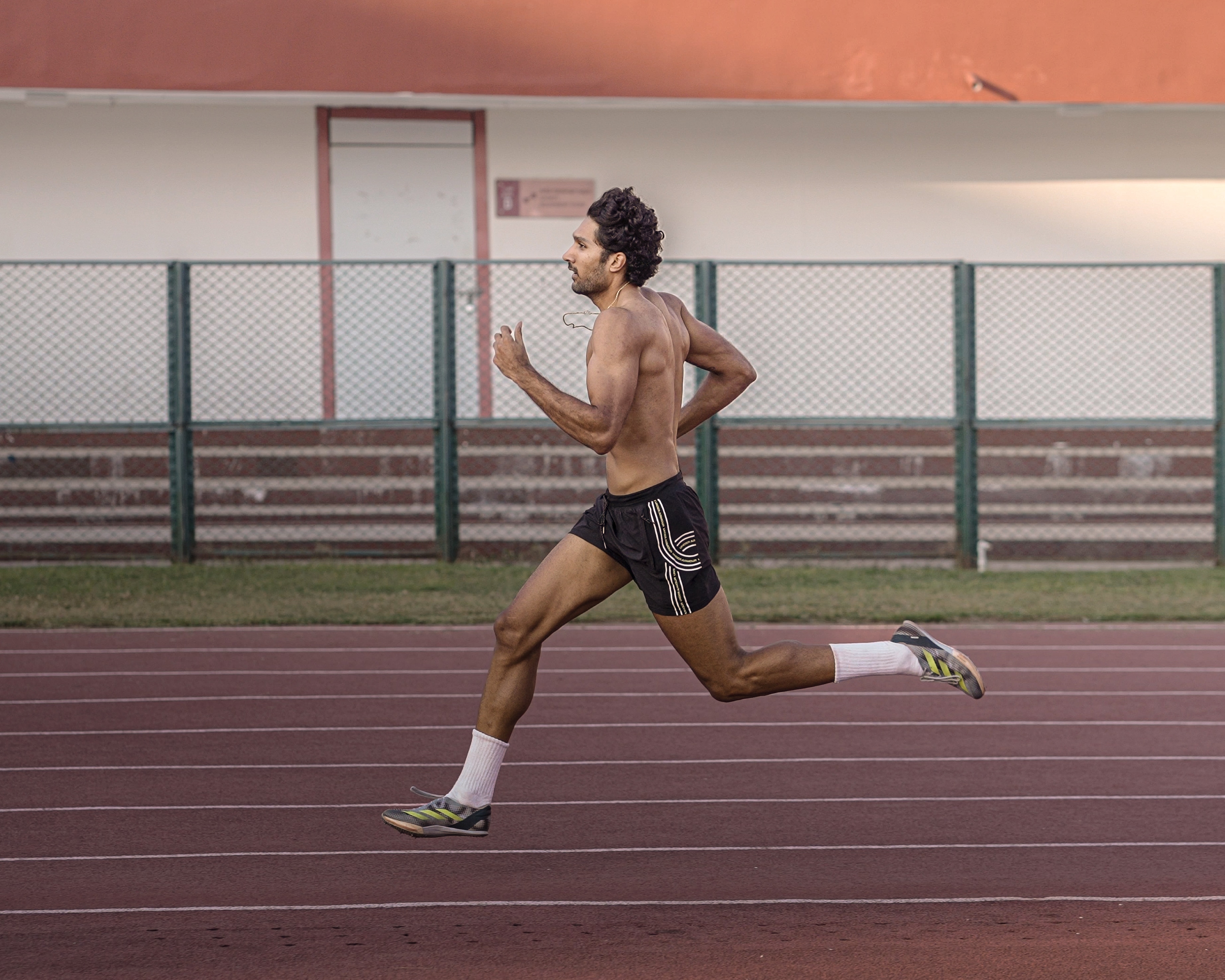
Nearly nine years on, Tejaswin weighs 90kg with a markedly more muscular build. The fat percentage has dropped to 5 percent, and his pectorals, latissimus dorsi, and deltoids are well-defined, giving him a broad, ripped, and imposing frame. The nickname 'The Beast' sits pretty on those strong shoulders.
By the looks of it, he's not your typical high jumper. Tejaswin, who is backed by Reliance Foundation, held the high jump national record for more than eight years, until Sarvesh Kushare bettered it in June. Lombard calls him an anomaly considering the sheer rarity of high jumpers who branch into decathlon, and Tejaswin describes himself as "a high jumper who also does multiple events."
That said, the only Indian to break the 8000-point barrier in decathlon has pushed his body to its limit to become a strong contender in combined events. There has been a significant mental shift too, as is the tactical understanding of managing ten events through two unforgiving days. But nothing beats what meets the eye.
"Each gram of the 12kg I have gained in these 8-9 years is pure muscle," he told HT from Kansas while preparing for the Asian Games. The decathlon event at the Aichi-Nagoya 2026 starts on Saturday.
Elite high jumpers tend to be tall and relatively light, with low levels of body fat and enough lean muscle to generate enormous take-off velocity and power that helps them clear the bar. Think Mutaz Barshim or Hamish Kerr. For Tejaswin, developing a markedly more muscular physique with significant upper body power needed a nudge from his coach Cliff Rovelto.
“Cliff believed I should try different events. He was curious to explore commonalities among various events and use them to better my high jump. That was a big shift because in India we don't really think that way," he said.
The journey began soon after with a fortuitous spot in the college 4x400m relay team when one of the runners was unavailable. A brutal mix of power and endurance, 400m is among the most testing track events considering the metabolic acidosis that kicks in the second half.
"I did alright and that piqued my interest. The next big moment came in late 2019 when we decided to try long jump as well," he recalled.
After competing in a college-level pentathlon and a short-track heptathlon, Tejaswin turned out for his first decathlon in 2022 and logged 7592 points. It was 66 points shy of the then national record, held by Bharatinder Singh. "That's when I thought that I can do this. 60-odd points can be covered if you plan well," he said.
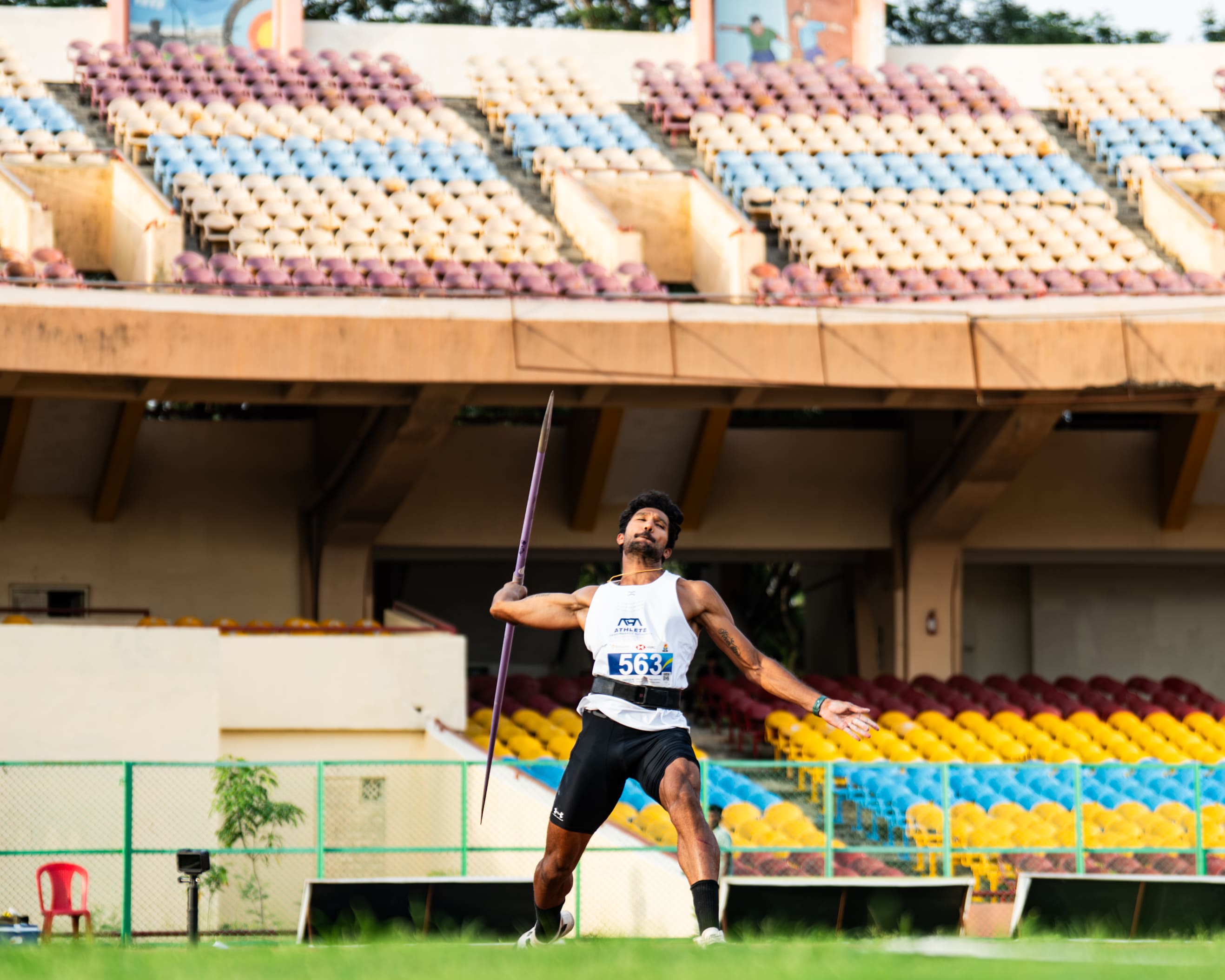
That meant turning his body into a mean machine. The throw events — shot put, discus and javelin — required him to build his upper body power and trunk strength, the 1500m needed aerobic capacity, the 400m called for significant anaerobic stimulus, and the jumps and pole vault demanded explosive power.
"As a pure high jumper, there was no need for me to work my scapula or pectoralis, and it took me some time to understand the physiology and body mechanics needed for different events," Tejaswin, 27, said.
Two Asian Championships medals, an Asian Games silver and this year a Commonwealth Games bronze—all in decathlon—mean the effort has been worth it.
His in-season training involves at least three gym sessions a week divided into upper body, lower body and stretching and mobility exercises. "The idea is to move really heavy weight in the shortest span of time. That builds power," the athlete from Delhi said.
It's a significant departure from his early years when he hated hitting the gym. "He's more of an outdoors guy, and during his pure high jump days, he'd rarely do upper body work. His best bench presses would be 60-65kg.That has now gone up to 110kg. Based on a number of testing metrics, we can say that his upper body strength has increased by about 28% over the last couple of years and his muscle mass has gone up by 15-20%," Lombard said.
"We also have to be mindful of not overtraining, because the track sessions alone can leave you fatigued. He doesn't typically practice the 1500m but does an extra 400m. That builds cumulative aerobic strength since 400m is a mix of both (anaerobic and aerobic) energy systems," Lombard added.
Tejaswin's success, Lombard believes, has shattered the myth of a standard body type of a high jumper. "He has shown that you can weigh more and still produce enough relative power to jump at the same level. What matters is not simply how much you weigh, but how effectively you can produce and apply force," he said.


