
 E-Paper



The Philippines volleyball Worlds has a lesson for India
A trip to the competition showed how sport and athletes were the only focus – world class at a real, physical level

 Prefer HTon Google


A few hours before the Asia Cup’s finale farce played out with India refusing to accept a trophy which was carried off by the head of the Asian Cricket Council/chairman of PCB/Pakistan interior minister, on the same continent a men’s World Championship trophy was handed out minus politicians, bureaucrats or federation officials.
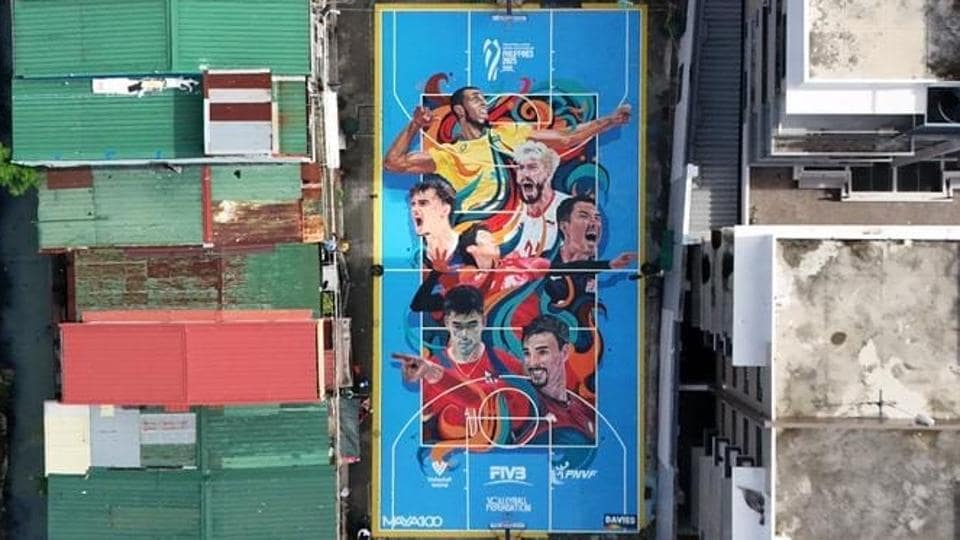
Well, there was a Brazilian senator involved but she, Leila Barros, was in Manila as a double Olympic and World Cup medallist plus local fave. At the FIVB men’s Volleyball World Championship, player medals were handed out by fellow Olympic and world championship medallists. Winners Italy received theirs from Barros, darling of the Filipino crowd as the star from the World Grand Prix events at the turn of the millennium.
The championship trophy was passed from courtside by Philippines head coach Angiolino Frigoni to his players lined up the stands – as the MC said, “on behalf of 112m Filipinos…” – all the way to a podium where the winners waited. Italian captain Simone Gianelli received it from the Philippines captain Bryan Bagunas. Athlete to athlete. It was the most beautiful and moving sporting ceremony I’d seen as a neutral. As an Indian, it came with the heavy-hearted certainty that this could never happen in my country.
A disclaimer here: I was FIVB’s guest at this event, given a journalistic superpower – the all-access pass. I could go wherever I wanted at MOA Arena. In the general stands shouting and cheering and responding to the MC yelling, “Volleyfansclapyourhands”. Or courtside watching players in the air, ballerinas at the net with hammers for hands, first seeking space and angles, and within seconds trying to cover theirs, swirling in an instinctive, synchronised athletic choreography, contorting and diving on wood like it was foam. I gossiped with local journos in the media room, explored corridors and tunnels, and listened to mixed-zone chatter where Turks spoke Bosnian, Serbs Italian, and Bulgarians English. When it ended, beyond the flashing lights and rock music and the best kind of sports-audience energy, it felt like an education.
About stuff that Indian sport is very far from. First, what it means to host a world-class, world championship event. With world class at a real, physical level. Not just the part Indian sporting hosts imagine is needed: TV pictures and fireworks. But world class from turnstile to escalator/staircase to seat to toilet to food stall to garbage bin to merchandise store to exit.
To host global sporting events is to bring the best of the sport to us and give spectators a good time and great memories. (Sorry, a $4m golf event doesn’t cover everything.) It is, as a friend put it, hosting sport for the sake of sport. Not for PR or politics. India recently staged the 104-nation World Para Athletics Championships in New Delhi and the Asian Aquatics Championships in Ahmedabad, plus CWG2030 is a sealed deal for Ahmedabad. This spurt in world events is not our organic awakening, but merely evidence collection for the 2036 Olympic bid.
The embarrassing gap between where India stands as global sports host/organiser and the world standard is not about the “we don’t have a sporting culture” whinge. It is about those in charge, and what to them sport must serve. That athlete-to-athlete presentation ceremony in Manila was not a one-off whim. It is an active FIVB policy decision set in motion in August with the women’s worlds in Thailand. It is point No.5 – athletes, history and heritage – in a seven-page, 15-point FIVB document called Strategic Vision 2024-2032 for the eight-year term of new president Fabio Azevedo and his team.
Until 2025, Japan was the only Asian nation to have hosted the volleyball worlds. The Thailand and Philippines 2025 (total population more than 183mn) events were a push for visibility and popularity in markets where volleyball has rising numbers even while ranking behind football/basketball. When Nielsen research reckoned that there were 800mn people globally connected to volleyball, Azevedo and team pitched their eight-year target to double that. Whatever number they hit, nobody’s going to die wondering. This year for the first time, China hosted the five-day Men’s Volleyball Nations League Finals, the climax of an annual league for the world’s top 18 teams.
There is no other sport in the world, Azevedo says, that can be played on any surface, indoor and outdoor, dressed in as much or as little, where points can only be scored with the team working together.
Volleyball may be outside the charmed circle of multi-billion-dollar media rights deals, but already offers a template for elite and grassroot development. FIVB’s empowerment programme works outside traditional strongholds offering national teams assistance in coaching, equipment, knowledge transfer. Their empowerment dashboard shows a $50mn spend but the results at the worlds spoke louder. Of the 16 teams that made the knockouts, seven women’s and eight men’s teams were on the empowerment programme. FIVB people laughed that the ‘surprise’ exits of giants like Brazil, Japan and France at the men’s was “not a surprise to us – but an investment paying off”.
Where’s India in this push? Currently, FIVB are involved with grassroots work – in August, the Volleyball Foundation partnered with the Abhinav Bindra Foundation and the Chandigarh government providing technical skills, coaching and teaching tools and equipment to 120 PE teachers from 108 government schools. The Foundation ran a FIVB Level 1 course for 45 grassroots coaches from Assam’s Brahmaputra Volleyball League.
But what about the empowerment for our national teams? Take a look at the Volleyball Federation of India home page and try not to laugh.


