


A tale Down Under of two semi-finals, two classics and two champions: Carlos Alcaraz and Novak Djokovic
Carlos Alcaraz and Novak Djokovic advance to Australian Open final after epic semis.

 Prefer HTon Google


To think Rod Laver Arena did not have a five-setter at the 2026 Australian Open before this. Until one followed another. Both classics, both bringing out an overriding virtue — belief.
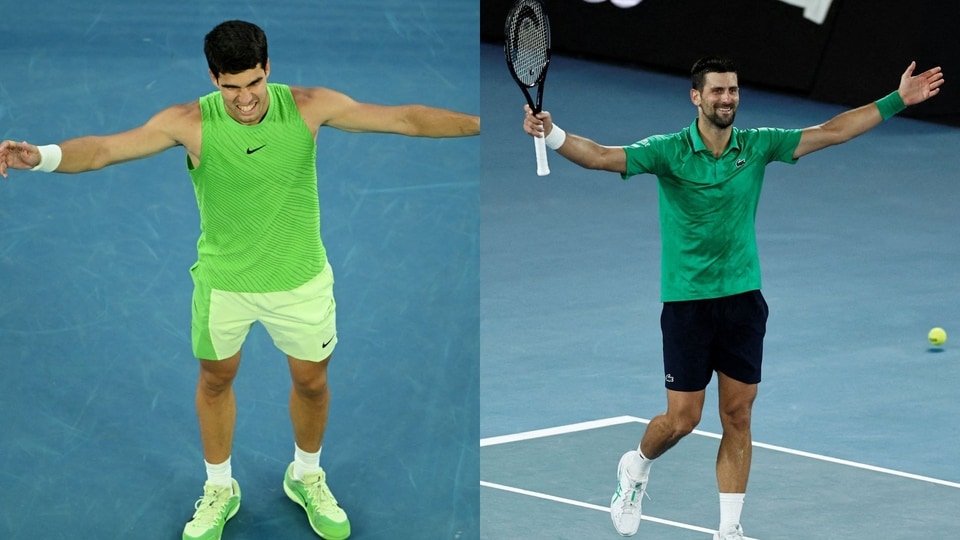
Carlos Alcaraz, 22, was limping yet not once did the thought of not crossing the line run through his mind. Alexander Zverev, 28, was down two sets but not out for the count. Novak Djokovic hadn’t beaten his opponent in five previous battles but came for the latest with an audaciously different approach at age 38. Jannik Sinner, 24, stood tall in resisting every bit of that audacity thrown at him.
At the end of it, after nine hours and 36 minutes of one unforgettable semi-final day (night, wee hours) in Melbourne, the youngest and oldest from the quartet were left standing. Well, not literally standing.
Alcaraz slumped on his back, pickle juice feeding his crippling cramps for a large part of five hours and 27 minutes, after beating Zverev 6-4, 7-6(5), 6-7(3), 6-7(4), 7-5. Djokovic sat on his knees, blood of a 24-time Grand Slam champion flowing through his veins for a large part of four hours and nine minutes, after beating Sinner 3-6, 6-3, 4-6, 6-4, 6-4.
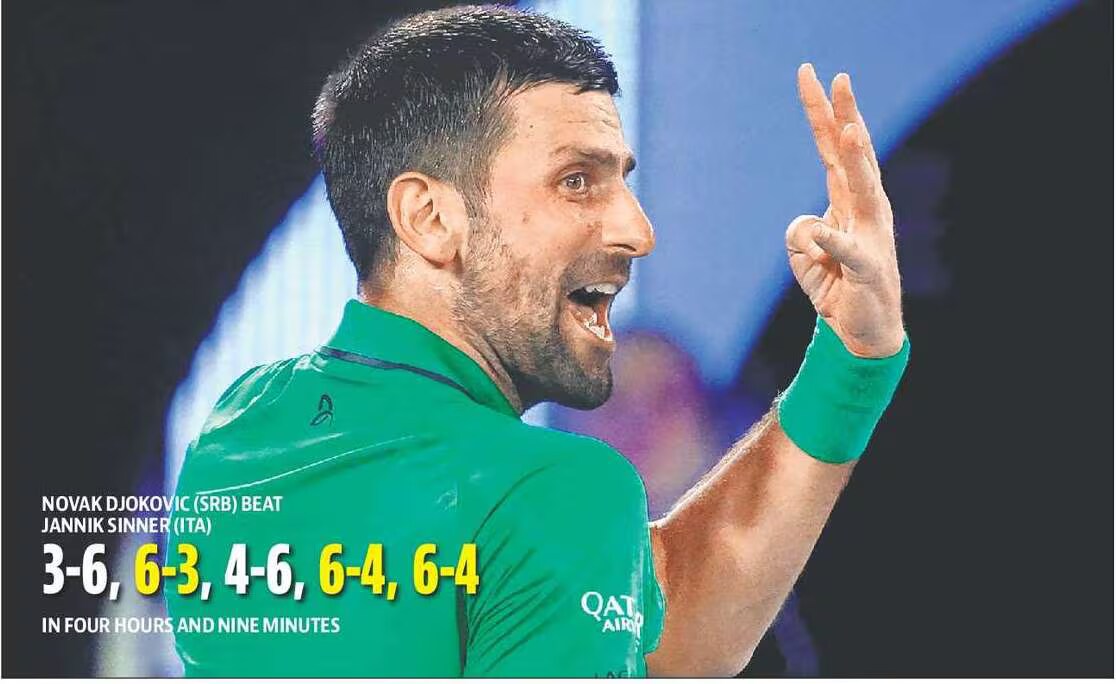
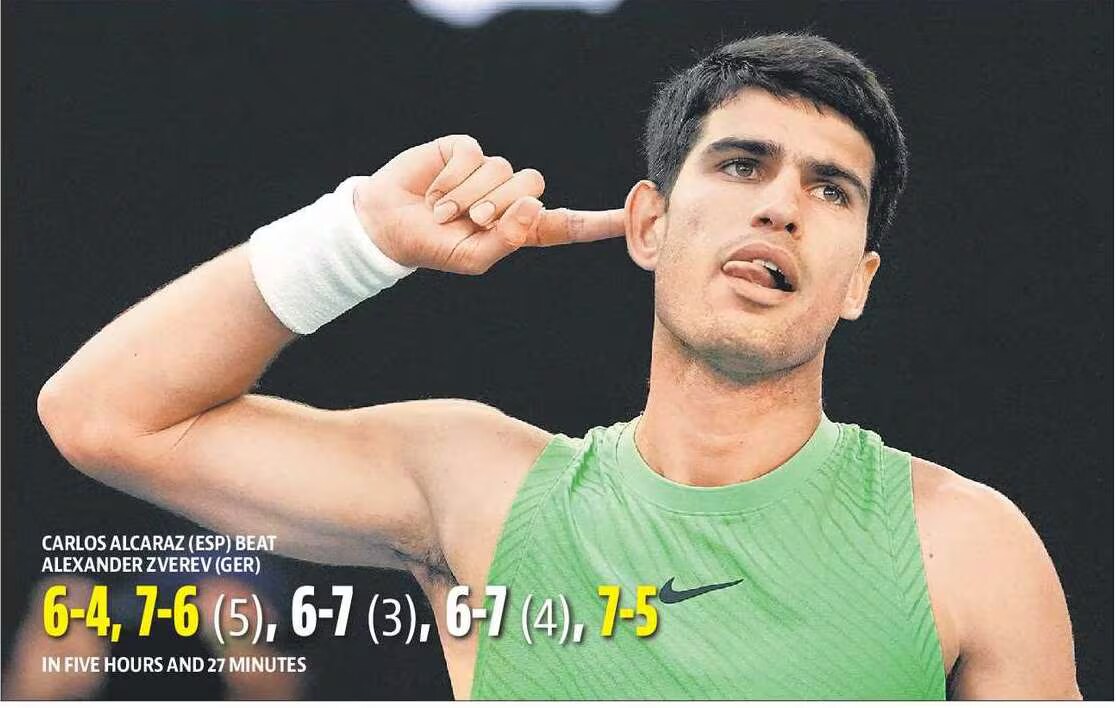
There won’t be a Sinner-Alcaraz Grand Slam final for the first time since the last Australian Open. But there will be Alcaraz in his first final in Melbourne, chasing to become the youngest man ever to complete a career Grand Slam. And there will be Djokovic in his first major final after two years, chasing the record 25th Slam that many — including himself — thought was a stiff challenge amid the current duopoly that stopped him in the semis of the past three Slams.
“I wasn’t wrong. I said it would be difficult... not impossible,” said Djokovic on court.
How about that for belief.
And some more: “I never stopped doubting, I never stopped believing in myself. (But) there’s a lot of people that doubt me, and there’s a lot of experts, all of a sudden, that wanted to retire me, or have retired me many times, in the last couple of years,” he said in the post-match press conference. “For me, it’s not a surprise, to be honest, I know what I’m capable of.”
Without a win against Sinner since 2023, Djokovic was prepared to be braver to shake the Italian’s hold on him, even if the start was slow. Eight minutes on, after four unreturned serves in his opening game, Sinner was 3-0 up with the early break dictating the set. The Serb was however settling into his rhythm, and igniting the forehand. A sign came when Djokovic dazzled in a crosscourt forehand duel and extracted an error. And a break came in the same fourth game.
That was rare: Djokovic had broken the Sinner serve just thrice in the past 68 service games.
Also rare: Djokovic unleashing a 192kph second serve, at 0-15 down serving for the second set. Or throwing a serve and volley behind the second strike, facing break point in the third. That, to go with him cranking up his forehand and not letting Sinner settle into a striking spot at the baseline, was a 38-year-old trying a different, more aggressive approach against his younger nemesis.
It gave Djokovic the second set, despite having to thwart a bunch of break points (some with brilliant first serves). And the fourth, despite Sinner taking the third after tweaking his return position to pounce on a gasping Djokovic serving to stay in the set.
Djokovic had the momentum, but Sinner had looks, and plenty of them, on the Djokovic serve through the early games of the decider.
Djokovic served and survived his way out all of eight break points in the set (and 16 out of 18 in the match). All he needed in turn was one opening, that he took in the seventh game going toe to toe in the rally until Sinner gave in.
“I came out with the right great clarity and strategy and game plan,” said Djokovic. “(It’s) one thing to imagine how you want to play, and the other thing is to deliver it and execute it on the court against Sinner, that we all know is playing an extremely high level.”
Sealing his third match point at close to 2am, the semi-final win felt like a Slam triumph for this serial winner.
Also Read: ‘I hope I have enough gas’: Novak Djokovic on going toe-to-toe with Carlos Alcaraz in Australian Open final
So it did for Alcaraz earlier in the (previous) day.
“I rank this as one of the best matches that I have ever won,” he said in the press conference.
That’s because from cruising at two sets to love, the Spaniard began to be crippled by cramps during the third set. A contentious medical timeout later, Zverev took the third set. Then the fourth, and the early break in the fifth.
All through, Alcaraz did not panic. He smiled even after missing a forehand on a break point chance in the fifth set. He knew the value of patience in the cramp to ease out. Once it did, Alcaraz was back to being closer to the Alcaraz that the world knows.
And so, with the German serving to stay in the match, a forehand pass on the run from the Spaniard died on Zverev’s racquet and into the net. That was the last act of the third-longest match ever at the Australian Open.
“I hate giving up,” said Alcaraz.
“Just one second more of suffering, one second more of fighting is always worth it. So that’s why I just fight until the last ball and always believe that I can come back in every situation.”
How about that for belief.


