
 E-Paper



Asus ROG Zephyrus G16 (2026) review: A creator friendly gaming laptop that's lighter than a MacBook Pro
The Asus ROG Zephyrus G16 blends premium design, outstanding gaming performance and excellent battery life into one of the best gaming laptops today.


Research-Backed Choices
Every product we recommend is chosen through a combination of Primary Research and Secondary Research.


The Asus ROG Zephyrus series has always been about bringing top of the line gaming hardware into a laptop that looks premium enough to carry anywhere, and the latest Asus ROG Zephyrus G16 continues that philosophy. Starting at ₹4.89 lakh for the configuration I tested, this is one of the most premium gaming laptops Asus currently makes, and naturally my expectations were pretty high.
After using it as my primary work machine, editing videos, running benchmarks and spending hours gaming on it, I can confidently say the Asus ROG Zephyrus G16 gets almost everything right. It is not perfect, and I do have a few complaints considering its asking price, but there is a reason why the Zephyrus series is often considered among the best premium gaming laptops you can buy. Here's how it performed during my time with it.
Asus ROG Zephyrus G16 (2026) specifications
| Specification | Details |
|---|---|
| Processor | Intel Core Ultra 9 386H |
| Graphics | NVIDIA GeForce RTX 5070 Ti Laptop GPU (12GB GDDR7) |
| Display | 16 inch 2.5K OLED, 240Hz, 0.2ms, Dolby Vision, G Sync |
| Memory | 32GB LPDDR5X |
| Storage | 2TB PCIe Gen4 SSD |
| Battery | 90Wh |
| Weight | 1.95kg |
| Operating System | Windows 11 Home |
| Ports | Thunderbolt 4, USB C, USB A, HDMI 2.1, SD card reader, 3.5mm audio |
| Price | ₹4,89,990 |
1. ASUS ROG Zephyrus G16 (2026),Intel Core Ultra 9 386H (Series 3),RTX 5070 Ti-12GB,32GB RAM,2TB SSD,OLED,16"(40 cm),240Hz,Win 11,M365 Basic(1Y),Office 24,Gray,1.9 Kg,GU606AR-TB039WS,Gaming Laptop
Asus ROG Zephyrus G16 (2026) design and build
The Asus ROG Zephyrus G16 is one of those laptops that completely changes your perception of what a gaming laptop should look like. If someone closed the lid and placed it on a meeting table, you would probably never guess that there's an RTX 5070 Ti hiding inside. Asus has done an incredible job balancing a professional look with just the right amount of gaming DNA, and I think this is one of the best looking gaming laptops you can buy today.
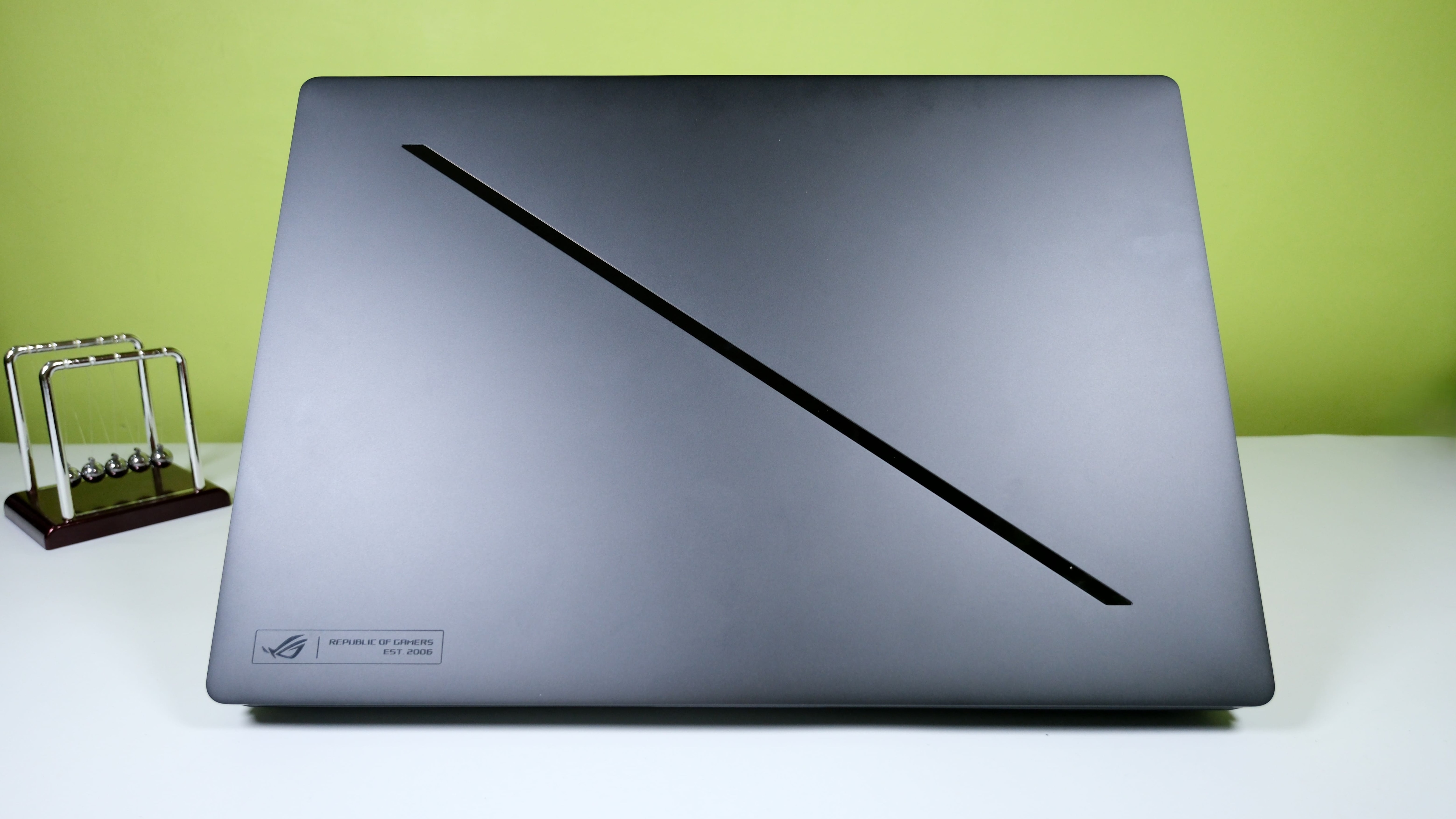
The chassis is made entirely out of metal and it feels every bit as premium as its price suggests. There is practically no flex anywhere, whether you press on the keyboard deck or twist the display. Despite packing flagship hardware, the laptop weighs under 2 kilograms, which is seriously impressive for a 16 inch gaming machine.
The lid is probably my favourite part of the design. Asus uses a diagonal Slash Light across it with a mirror finish that immediately catches your attention without looking flashy. Paired with the engraved ROG logo, it gives the laptop a unique identity while still keeping things clean. Another thing I appreciated is the finish itself. Unlike many premium aluminium laptops, it does a surprisingly good job resisting fingerprints
Flip the laptop over and you'll notice a massive air intake covering most of the bottom panel. The cooling system pulls fresh air from underneath and exhausts it through the rear vents, so your "mouse hand" never has to deal with warm air while gaming. There are also downward firing speakers integrated into the base, while the rest of the speaker setup sits beside the keyboard.
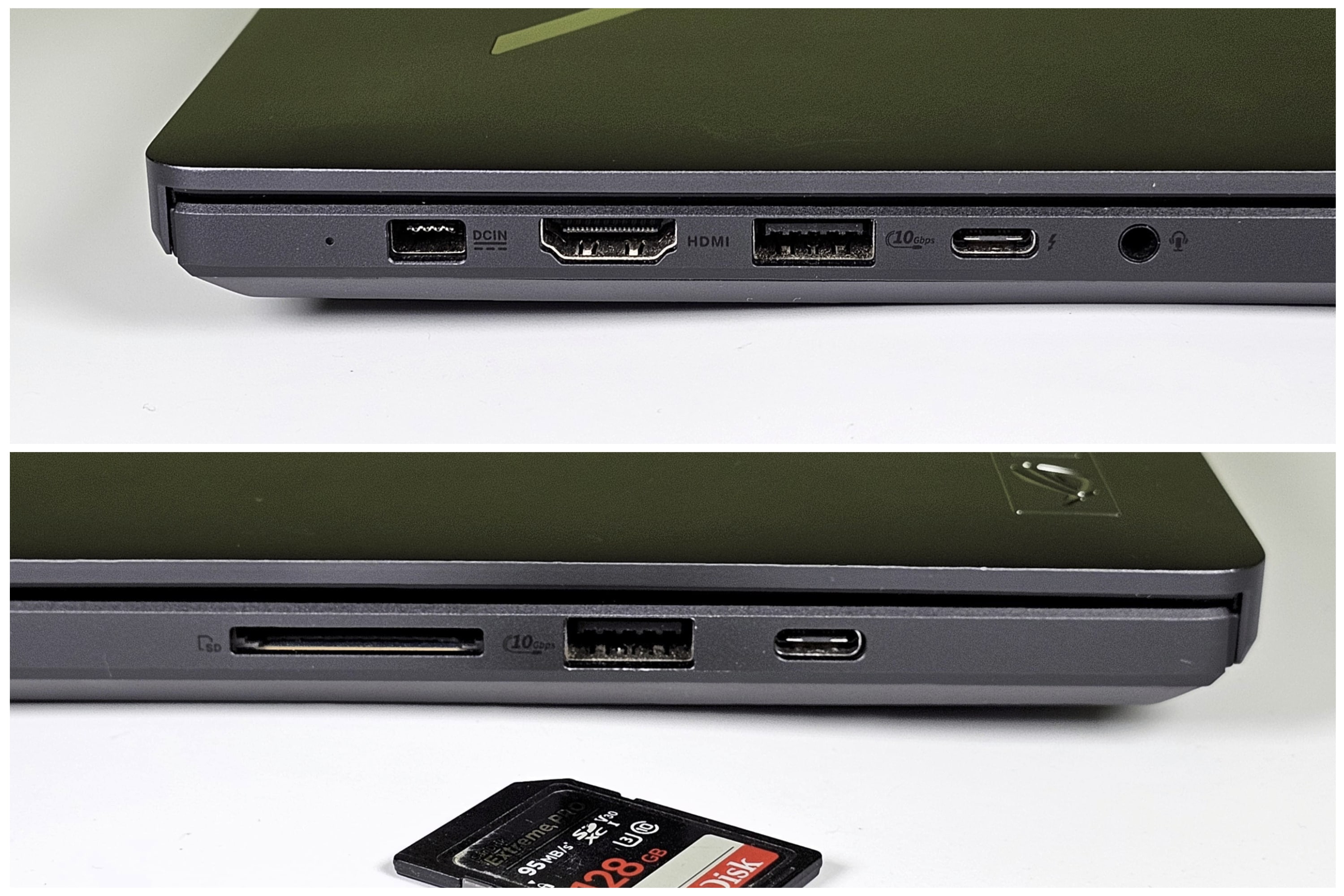
The port selection is another area where Asus got most things right. You get USB Type A, USB Type C, HDMI 2.1, Thunderbolt 4, a headphone jack and, most importantly, a full size SD card reader. Thank you, Asus, for finally giving creators what they actually want. If you're editing photos or videos, importing footage is as simple as taking the SD card out of your camera and sliding it straight into the laptop. It saves you from carrying yet another dongle in your bag.
The only thing I found missing is Thunderbolt 5. Do I personally need it right now? Not really. But when I'm spending close to ₹5 lakh on a laptop, I expect it to have the latest connectivity standards, especially when creators are among the target audience for this laptop.
Asus ROG Zephyrus G16 (2026) keyboard, trackpad and speakers
Opening the lid reveals one of my favourite keyboard layouts on a gaming laptop. Even though this is a 16 inch machine, Asus skipped the unnecessary number pad and kept the keyboard perfectly centred. It not only looks cleaner but also makes typing much more comfortable since your hands naturally rest in the middle instead of shifting to the left. The keyboard itself is excellent with decent key travel, quiet feedback and enough spacing between keys for long typing sessions. Whether I was writing articles, editing documents or chatting while gaming, I never had any complaints.
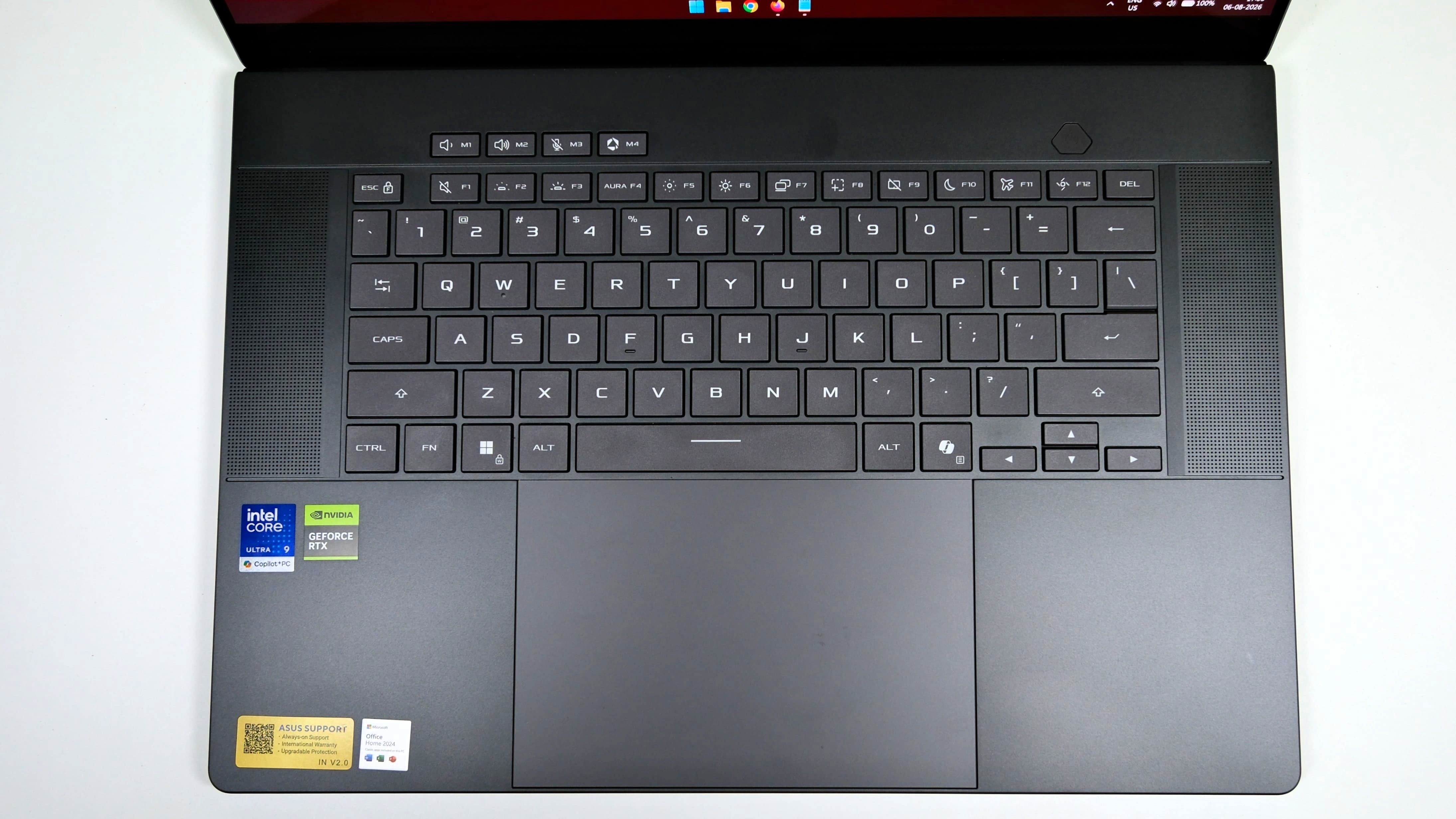
The trackpad is equally impressive. It is ridiculously large with a smooth glass surface that feels great to use, and Windows gestures work flawlessly. The only thing I wish Asus had changed this year is replacing the traditional click mechanism with a haptic trackpad. Once you've used a good haptic trackpad, it is difficult to go back, and on a laptop that costs close to ₹5 lakh, I genuinely expected one.
Another disappointment is the keyboard lighting. Asus only offers single zone RGB instead of per key RGB, which feels like an odd omission at this price when many cheaper gaming laptops already offer it.
The speaker setup, however, easily makes up for those complaints. Asus uses a combination of top firing and bottom firing speakers, and sacrificing the number pad for larger speakers was absolutely the right decision. They sound loud, rich and surprisingly full with noticeable bass and excellent stereo separation. Watching movies, playing games or simply listening to music feels far more immersive than on most Windows laptops, and I'd easily put these among the best speakers you can get on a gaming laptop today.
Asus ROG Zephyrus G16 (2026) display
The display is another area where Asus simply gets it right. Instead of chasing a 4K resolution that most gamers won't fully utilize, the Zephyrus G16 comes with a 16 inch 2.5K OLED panel running at 240Hz. Personally, I think this is the sweet spot for a gaming laptop. You get a sharp image, buttery smooth gameplay, and the RTX 5070 Ti can actually take advantage of the high refresh rate in modern games.
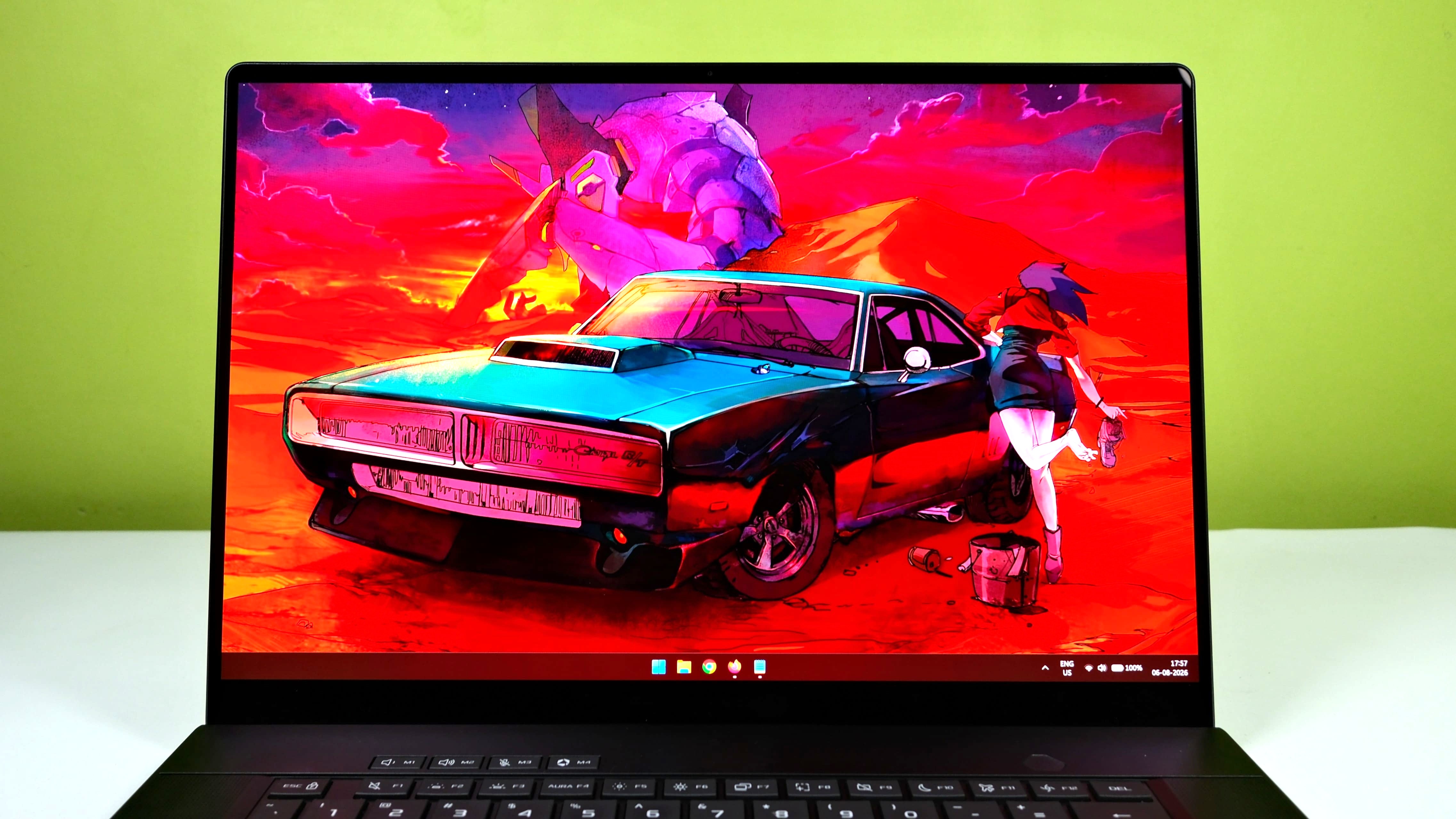
Being an OLED panel, the colours look fantastic with deep blacks and excellent contrast. Asus has loaded it with pretty much every certification you would expect on a premium display, including Dolby Vision, VESA DisplayHDR True Black and Pantone validation. HDR content looks gorgeous, and with a peak HDR brightness of around 1,100 nits, highlights really stand out while gaming or watching movies. The Gorilla Glass protection is also a nice addition, even though this isn't a touchscreen.

There is an anti reflective coating on top of the display, and while it doesn't completely eliminate reflections, it does make them less distracting than a regular glossy OLED panel. The only thing missing here is Variable Refresh Rate support, which would have been nice to have considering the price. Other than that, I genuinely have no complaints. This is easily one of the best gaming laptop displays I have used, and I honestly wouldn't change a thing about the panel Asus has chosen here.
Asus ROG Zephyrus G16 (2026) performance
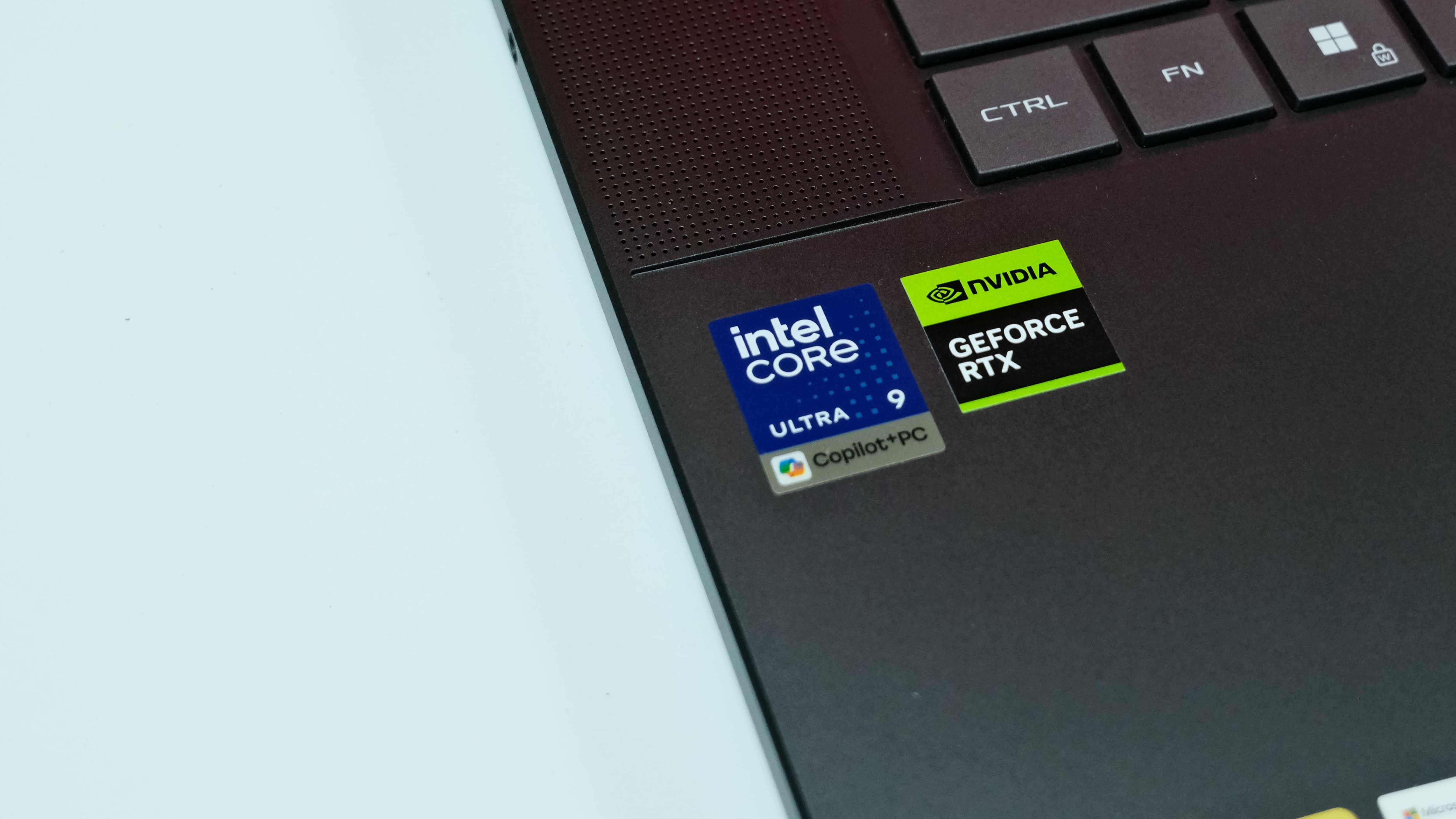
Performance is exactly what you would expect from a laptop carrying an Intel Core Ultra 9 processor and an RTX 5070 Ti. Whether it was browsing with dozens of tabs open, editing videos, running AI workloads or simply juggling multiple applications together, the Zephyrus G16 never felt like it was running out of horsepower. This is one of those laptops where you stop thinking about performance after a while because it simply gets every job done without slowing you down.
To get a better idea of its capabilities, I ran almost every benchmark that I normally use for testing laptops, including Cinebench R23, Cinebench 2026, Geekbench 6, PCMark 10, CrystalDiskMark and multiple 3DMark tests like Time Spy, Fire Strike, Steel Nomad and Port Royal. You can check out all the benchmark scores in the graphic below, but one thing that stood out during my testing was how well the laptop performed even on battery power.
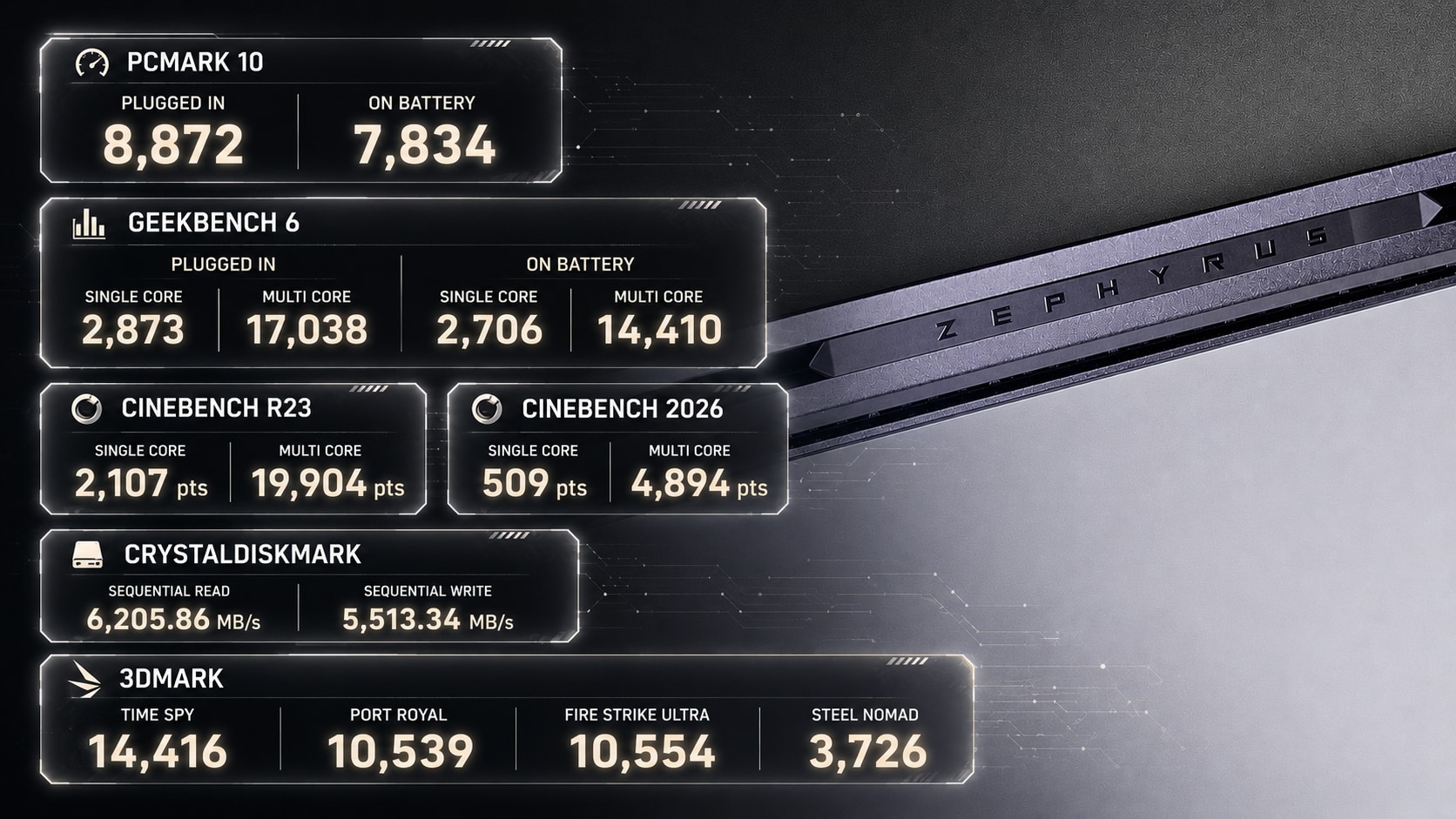
Unlike many gaming laptops that lose a huge chunk of their performance the moment you unplug the charger, the Zephyrus G16 held up surprisingly well, especially in CPU heavy workloads. That is one of the biggest strengths of Intel's Panther Lake platform.
Of course, benchmark numbers only tell half the story. The real test for any gaming laptop begins when you launch a game, and that's where the Zephyrus G16 really starts to show what it is capable of.
Asus ROG Zephyrus G16 (2026) gaming
Gaming is exactly where the Asus ROG Zephyrus G16 justifies its price tag. I tested several demanding AAA titles, including Cyberpunk 2077, Forza Horizon 6, Pragmata, Stellar Blade, Doom Eternal and Shadow of the Tomb Raider. You can check out the average frame rates in the graphic below, but the overall experience was exactly what I expected from a laptop equipped with an RTX 5070 Ti.

Most of my testing was done at the laptop's native 2.5K resolution, and I was genuinely impressed by how well it handled modern games. Doom Eternal and Stellar Blade ran exceptionally well, easily taking advantage of the 240Hz display, while Shadow of the Tomb Raider also delivered consistently smooth gameplay at the highest graphics settings. Cyberpunk 2077 remained the most demanding title I tested, especially with Ray Tracing Ultra enabled, but even there the laptop delivered a very enjoyable experience.
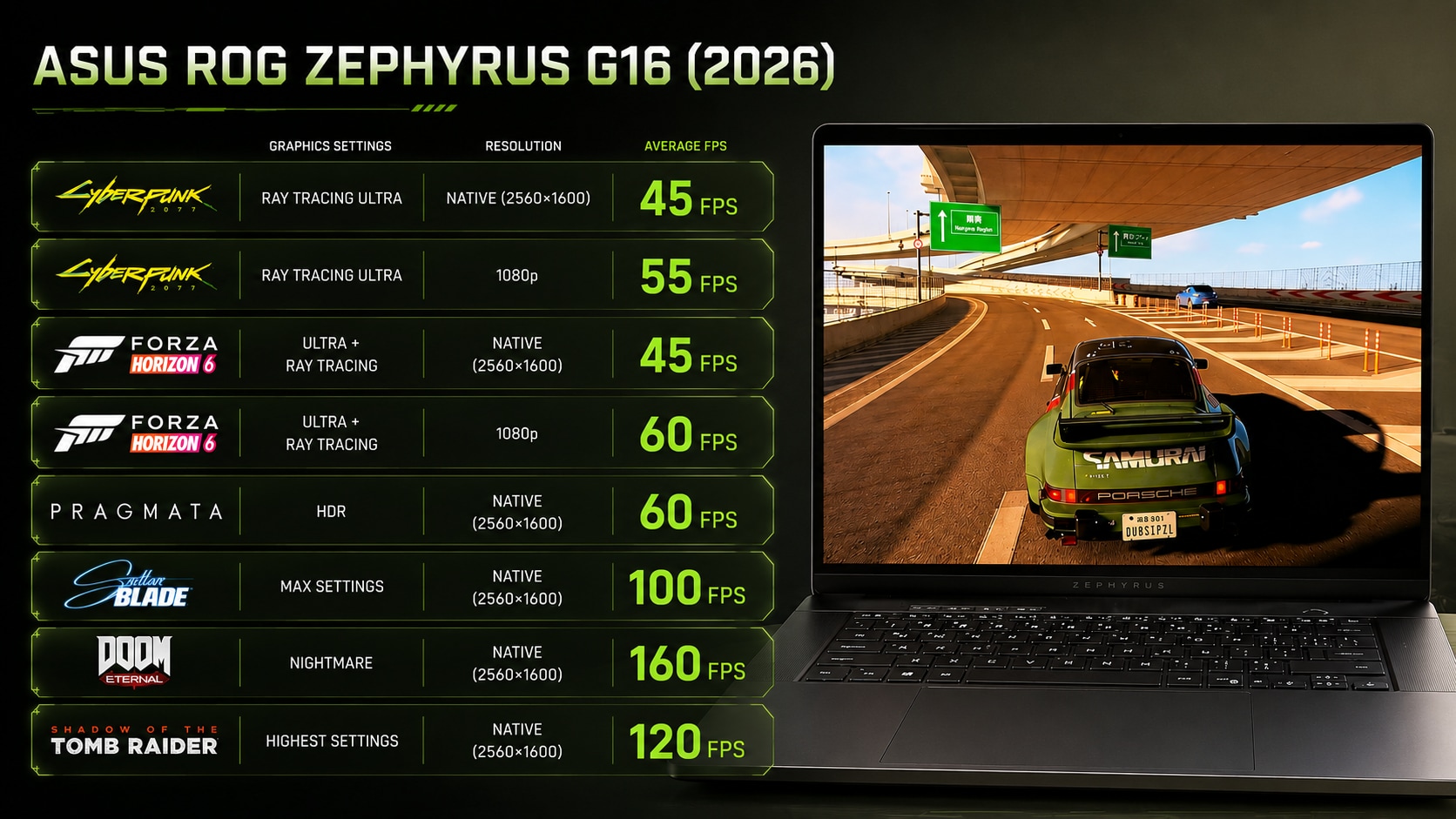
Dropping the resolution to 1080p gave me the extra performance I wanted without making the game look noticeably worse on a 16 inch display.
What I like most about the Zephyrus G16 is that it doesn't feel like a thin gaming laptop trying to keep up with larger machines. Sure, thicker gaming laptops with higher GPU power limits will squeeze out a few more frames, but this laptop strikes a balance that I think most people will appreciate. It delivers excellent gaming performance while remaining thin, relatively light, and practical enough to use as your everyday laptop, which is exactly what the Zephyrus series has always been about.
Asus ROG Zephyrus G16 (2026) thermals
Cooling is another area where Asus has done a really good job. During normal workloads like browsing, editing documents or watching videos, the fans are barely noticeable. The laptop stays quiet enough that you almost forget there are two high performance fans running inside. Things obviously change once you switch to Turbo or Manual mode for gaming, where the fans become much more aggressive, but that's expected from a gaming laptop this thin.
Since the chassis is made entirely out of metal, the deck does warm up quickly during gaming sessions. Thankfully, most of the heat stays towards the top half of the keyboard, away from where your palms usually rest. Combined with the rear exhaust design that keeps hot air away from your "mouse hand", I never found the laptop uncomfortable to use, even after extended gaming sessions.
Asus ROG Zephyrus G16 (2026) software
I have always liked Armoury Crate because it puts almost every gaming related feature in one place, but I still think Asus could simplify it. There are simply too many menus for things that should be easier to access. For example, changing the Slash Lighting takes a few clicks inside Armoury Crate, while keyboard lighting is controlled through Aura Creator. I never understood why these two lighting controls live in different apps when they could easily be managed from one screen.
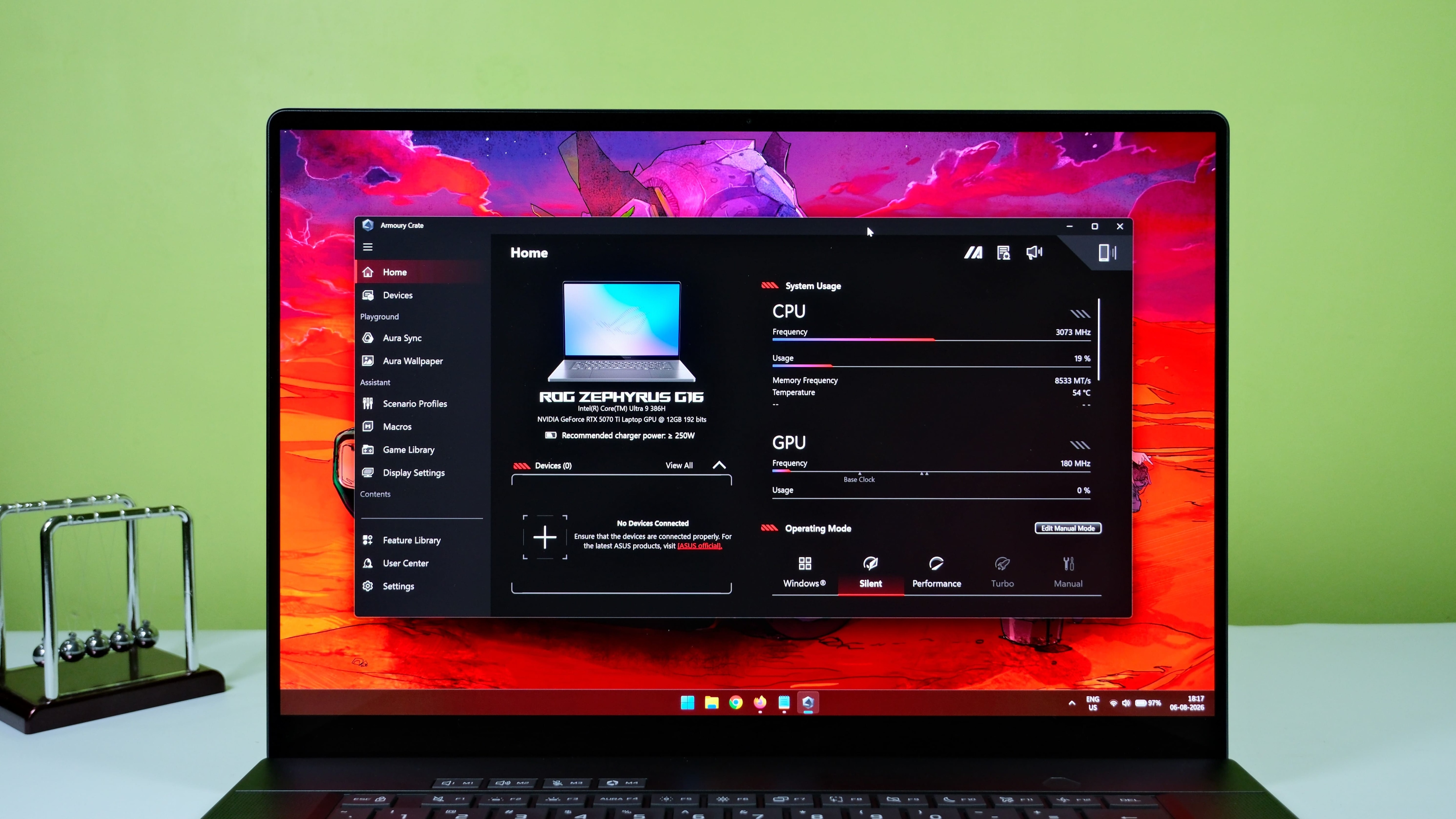
Other than that, Armoury Crate works well. Switching between performance modes is straightforward, system monitoring is useful, and once you get familiar with the layout, it becomes a handy tool. I just wish Asus would spend some time decluttering the interface instead of adding more features every year.
Asus ROG Zephyrus G16 (2026) battery
Battery life is easily one of the biggest surprises on the Asus ROG Zephyrus G16. Intel's Panther Lake processors have consistently impressed me with their efficiency, and this laptop is no different. Depending on what I was doing, I was comfortably getting anywhere between eight and ten hours of battery life, which is excellent for a gaming laptop with this kind of hardware.
Asus bundles a 300W charger with the laptop, and I'm glad it uses a proprietary connector instead of a bulky barrel plug. The laptop also showed very little battery drain while sleeping, something that still frustrates me on many Windows laptops. No one is buying the Zephyrus G16 purely for battery life, but it is nice knowing you can confidently leave the charger behind for a normal workday if gaming isn't on the agenda.
Asus ROG Zephyrus G16 (2026) pros and cons
Pros
- Premium all metal build with excellent portability
- Gorgeous 2.5K 240Hz OLED display
- Powerful gaming and creator performance
- Fantastic speaker system
- Great keyboard and huge glass trackpad
- Excellent battery life for a gaming laptop
- SD card slot makes it creator friendly
Cons
- No Thunderbolt 5 port
- No haptic trackpad
- Single zone RGB keyboard instead of per key lighting
- Armoury Crate still feels cluttered
Should you buy it?
The Asus ROG Zephyrus G16 is one of the easiest premium gaming laptops I can recommend. It delivers excellent gaming performance, a stunning OLED display, fantastic speakers, surprisingly good battery life, and a design that looks just as comfortable in an office as it does on a gaming desk. More importantly, it never feels like a laptop built only for gaming.
At nearly ₹5 lakh, I do expect features like Thunderbolt 5, a haptic trackpad and per key RGB lighting, so it isn't completely flawless. But if you want a gaming laptop that can also double as a premium creator or work machine without making compromises where it matters, the Asus ROG Zephyrus G16 is easily one of the best gaming laptops you can buy today.
Read more reviews
Samsung Galaxy Book6 Pro Review: A creator’s dream that finally matches the MacBook’s efficiency?
Asus ExpertBook Ultra 2026 review: Asus have solved the premium business laptop equation
Asus ROG Flow Z13 KJP review: A gaming tablet straight out of the Death Stranding universe
Dell XPS 16 (2026) review: The signature XPS is back but creators may want more
Disclaimer: At Hindustan Times, we help you stay up-to-date with the latest trends and products. Hindustan Times has an affiliate partnership, so we may get a part of the revenue when you make a purchase. We shall not be liable for any claim under applicable laws, including but not limited to the Consumer Protection Act, 2019, with respect to the products. The products listed in this article are in no particular order of priority.