
 E-Paper



Trump caught between Apple and Micron in fight over Chinese chips
Two of the president’s priorities—cutting prices for U.S. consumers and increasing domestic semiconductor production—come into conflict.


 Prefer HTon Google


WASHINGTON—Apple’s aggressive lobbying campaign to alleviate rising costs by using Chinese memory chips is colliding with an equally strong push by major supplier Micron Technology to block the move, putting President Trump in the middle of a clash between two of America’s biggest companies.
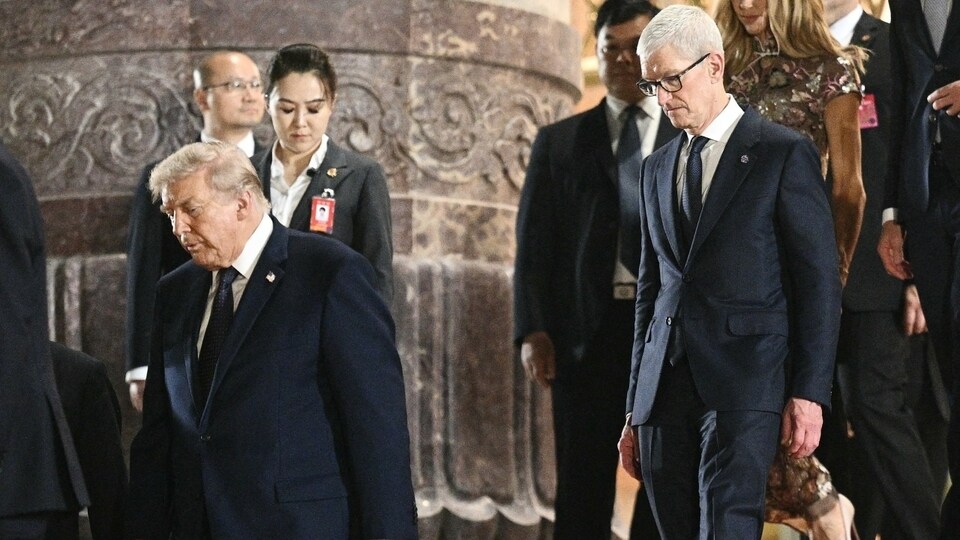
In recent weeks, Apple Chief Executive Tim Cook and top executives have pitched Trump and officials including Commerce Secretary Howard Lutnick and Treasury Secretary Scott Bessent on a plan to use memory chips from China’s ChangXin Memory Technologies and Yangtze Memory Technologies in Apple products sold outside the U.S., people familiar with the discussions said.
The move would help alleviate the global pinch on memory chips and potentially reduce prices for American consumers, Apple has argued.
Those arguments have been countered by Micron, the only sizable U.S. maker of memory chips. Micron executives including CEO Sanjay Mehrotra have warned Lutnick and other administration officials that allowing CXMT and other Chinese companies to sell to U.S. tech companies, regardless of the region of sale, could destroy the domestic industry the same way China played a role in decimating U.S. steel and manufacturing plants, the people said.
Apple and other memory chip buyers have avoided the Chinese suppliers after they were deemed Chinese military companies by the Pentagon in recent years. YMTC is also on a trade blacklist known as the entity list.
The lobbying fight will likely force Trump to choose between two of his top economic priorities: cutting prices for U.S. consumers and increasing domestic semiconductor production to reduce dependence on other countries. The president has shied away from restrictions on Chinese companies while trade negotiations continue and praised both Apple and Micron for investing in the U.S.
White House spokesman Kush Desai said the administration would pursue “investments and economic relief for the American people while safeguarding our national security.”
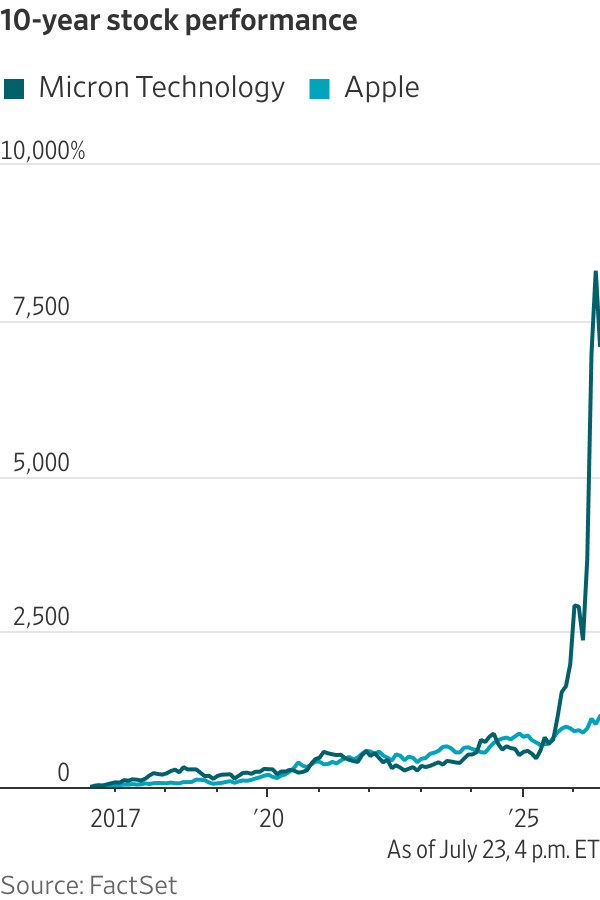
Micron executives argue the company can help address the memory squeeze by building domestic plants faster and investing more at home, the people said. The company has said price increases on consumer electronics, including Apple devices, result from more than just higher prices for memory.
Trump has said he wants to significantly increase U.S. chip production by the time he leaves office.
“The most important thing is we have to build capacity here. We obviously don’t want to be doing business with anyone that’s on the entity list,” Michael Kratsios, director of the White House Office of Science and Technology Policy, told lawmakers this week.
The battle deepens the thorny debate within the administration over Chinese technology. Chinese companies recently released powerful artificial-intelligence models, prompting some U.S. executives to call for protections from lower-cost Chinese rivals. Among their opponents are startup founders and investors who argue that lower costs spur innovation.
As one of the largest buyers of memory chips, Apple for years has hammered Micron and rival suppliers for the lowest prices on components crucial to its devices. The memory makers need Apple’s huge volumes to keep their manufacturing facilities running at capacity.
The negotiations have been so bruising that bad blood has built up. Before he was CEO of Micron, Mehrotra ran Sandisk, another supplier of memory chips to Apple. At Sandisk, his distaste for Apple was so strong that he rarely met with the company, people familiar with his career said. The antipathy remains today, the people said.
The AI revolution has reversed this dynamic and dealt Mehrotra a stronger hand. Data-center titans buy huge amounts of memory at higher prices, robbing Apple of its leverage. The resulting supply shortage has enabled the memory makers to increase prices, which have quadrupled over the past year and are expected to rise further, according to research firm TechInsights. Shares of producers have also soared.
Apple is crying foul, arguing that Micron’s gross profit margins, now surpassing 80%, are evidence of price gouging. The iPhone maker also claims that Micron isn’t reinvesting fast enough to increase supply, and that the production capacity it is adding will be disproportionately allocated to AI customers. Industries from medical devices to autos have asked the administration for help addressing the shortage.
Micron says it supplies many industries and plans to spend $250 billion in the U.S. to boost capacity. “The strategic importance of leading-edge memory and storage has never been greater,” a spokeswoman said. Apple and other customers squeezed suppliers during past downturns, sowing the seeds for current shortages, memory executives say. Chinese memory chip prices have also increased.
The Financial Times earlier reported on Apple’s request to use Chinese memory chips.
Both companies have deep lobbying connections, though Apple has a friendly relationship with Trump going back to his first term.
Lutnick regularly speaks with Cook and Mehrotra about the administration’s goals of increasing domestic investment and U.S. chip production, people familiar with the discussions said. The commerce secretary has recently attended several Micron events celebrating manufacturing progress. Both CEOs have appeared with Trump in the Oval Office and traveled with him to China earlier this year.
Both companies have contributed funding to the new White House ballroom and made public shows of supporting Trump. Last year, Cook gave Trump a plaque with a gold base in the Oval Office, part of a campaign to win tariff exemptions. Micron recently said it would invest $250 million to match federal funding for so-called Trump savings accounts for newborn children of employees and those in states where the company operates.
This isn’t the first time Apple has tried to work with Chinese memory suppliers. In 2022, Apple had gone through the painstaking engineering work with YMTC to make sure its chips could meet Apple’s exacting specifications. When word of the budding supply relationship was made public, Apple faced blowback. Marco Rubio, then a senator, told the Financial Times that Apple was “playing with fire.” Other lawmakers also criticized the move and the Biden administration added the company to the entity list.
Now secretary of state, Rubio and his office have some involvement in the continuing discussions, but Lutnick and Bessent are seen as spearheading the effort, according to people familiar with the matter.
Write to Amrith Ramkumar at amrith.ramkumar@wsj.com and Rolfe Winkler at Rolfe.Winkler@wsj.com


