E-Paper



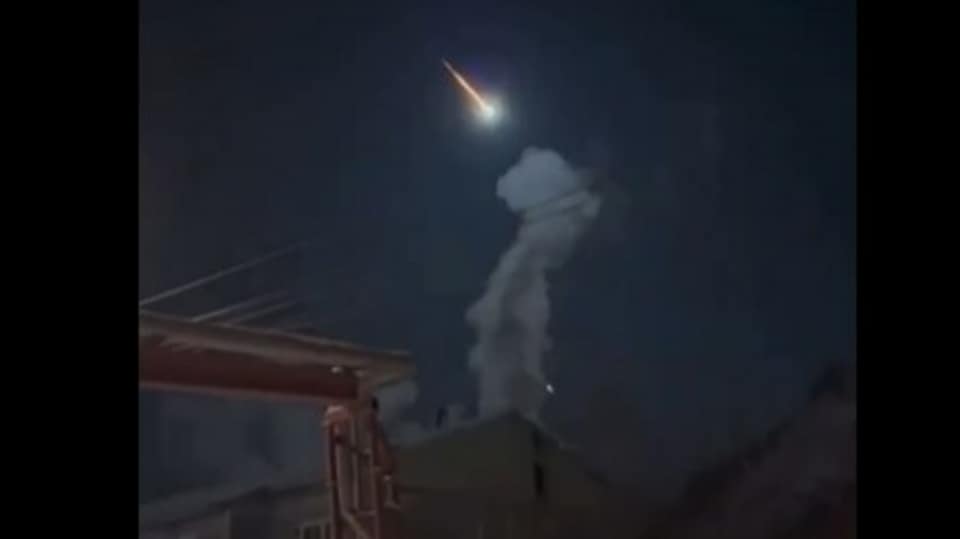
Asteroid illuminates the night sky with dazzling flash before landing in Russia’s Yakutia. Watch
An asteroid hit Earth's atmosphere over Russia's Yakutia, creating a bright flash. It disintegrated on impact, with no damage or injuries reported.

 Prefer HTon Google


An asteroid entered Earth’s atmosphere in the early hours of Wednesday, making landfall in Russia’s remote Yakutia region in the far east. The event, which occurred at approximately 1:15 a.m. local time (1615 GMT), was marked by a stunning bright flash that illuminated the night sky before disappearing in the blink of an eye.
(Also read: 'Once-in-a-lifetime event': A 'new star' will soon be seen in the night sky after 80 years)
Asteroid's size and impact
According to Reuters, the asteroid measured around 70 cm in diameter, which is similar in size to previous asteroid entries such as 2022 WJ, 2023 CX1, and 2024 BX1. These asteroids also created spectacular flashes when they entered Earth’s atmosphere. Video footage from Yakutia shows a flash-like phenomenon as the asteroid rapidly approached the ground before vanishing into the sky. Fortunately, there were no reports of damage following the event.
European Space Agency provides insight
The European Space Agency shared additional details about the asteroid's trajectory on social media platform X. The asteroid was reportedly spotted around 12 hours before it entered the atmosphere, and experts confirmed that it broke into several fragments upon atmospheric entry. The small rocks are believed to have scattered across a remote, forested area in Yakutia.
Check out the post here:
No damage or injuries reported
Despite the asteroid’s dramatic display, the Emergencies Ministry in Yakutia confirmed that all relevant authorities were alerted in advance of the event. Fortunately, no damage or injuries were reported following the asteroid’s landfall.
(Also read: Pitch black sky turns blue in Spain and Portugal as meteor crosses, netizens share videos)
What are asteroids?
Asteroids, often referred to as minor planets, are rocky remnants from the early formation of the solar system, dating back billions of years. These objects typically orbit the Sun between Mars and Jupiter in a region known as the asteroid belt. Their sizes vary significantly, from the largest, Vesta, which measures about 530 kilometres in diameter, to smaller objects that measure less than 33 feet.