
 E-Paper



Indian man shares 14-year journey to receiving US green card: 'Visa clock finally stopped'
In his post, Rajavasanth Rajasegar reflected on the hurdles, milestones, and support that made this long-awaited achievement possible.

 Prefer HTon Google


After 14 years of navigating the complex US visa system, an Indian researcher has shared his journey to becoming a permanent resident in the United States. In a detailed LinkedIn post, Rajavasanth Rajasegar reflected on the hurdles, milestones, and support that made this long-awaited achievement possible. “Green card in hand — after 14 years, the visa clock has finally stopped ticking,” Rajasegar wrote.
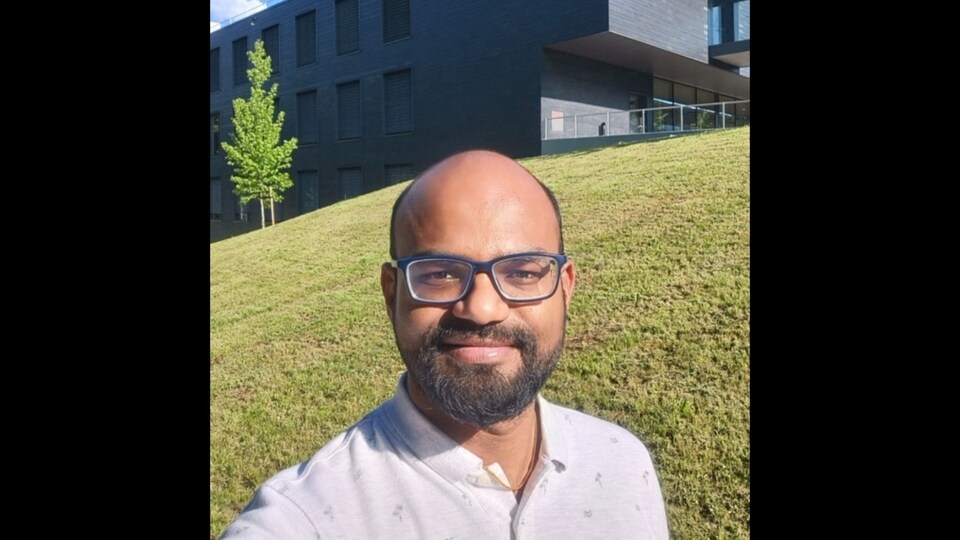
In his post, the researcher shared that his journey began in August 2011 with an F-1 visa for his MS in Mechanical Engineering at the University of Illinois Urbana-Champaign (UIUC). Over the years, he followed a “privileged, streamlined path,” including F-1 renewals, OPT plus STEM extension, a cap-gap exempt H-1B during the pandemic, and eventually transitioning into a faculty position.
How did the researcher become a permanent resident?
Along the way, Rajasegar said that he benefited from substantial institutional support. “I benefited from tremendous investment: 7 years of fully funded graduate education at UIUC and 5 years of postdoctoral training at Sandia National Laboratories. Since January 2024, I’ve had the privilege to contribute as a tenure-track faculty member at Colorado School of Mines — opportunities made possible by the incredible support of U.S. institutions, mentors, and research programs,” he said.
But despite the support, the visa process brought constant uncertainty. “Even with that support, the visa clock never felt far away. I told myself I’d try EB1A — if denied, I’d look for opportunities elsewhere,” Rajasegar recalled.
But the process has its bumps, he said. “An unexpected RFE questioning the relevance of my work, another round of letters, and then eventual approval. After two years of adjustment, piles of documents, and even one last hiccup of entering on an H-1B post-approval, I finally became a permanent resident — after a quick reset trip to Mexico,” Rajasegar wrote.
‘I hope the American Dream stays alive, accessible’
Further, the researcher shared how mentors and his professional community supported him. “I still remember asking my manager in Feb 2020, ‘Can we start H-1B just in case?’ Three months later — while the world was shutting down — I had it in hand, along with a letter affirming ‘You matter to us and to the U.S.’ I was even granted an exception to complete my H-1B stamping, thanks to mentors who believed my work mattered. But until now, the clock was always ticking,” he wrote.
Reflecting on the milestone, Rajasegar said, “Today, that clock doesn’t exist. That’s the only real difference — and it’s a big one. I hope the American Dream — whatever it truly means — stays alive and accessible for the students and professionals who, like me, come here not just for themselves, but to contribute to the future of this country.”
He concluded by expressing gratitude to the institutions and mentors who guided him. “Thank you to UIUC, Sandia National Labs, and Colorado School of Mines, and to the countless mentors and recommenders who have been nothing but supportive of my path,” he wrote.


