E-Paper



UPSC educator exposes India's shocking gender disparity in public toilets during Delhi walkthrough
A viral video by a UPSC educator exposed the gender gap in sanitation access, sparking debate on public toilet inequality and health risks for women.

 Prefer HTon Google


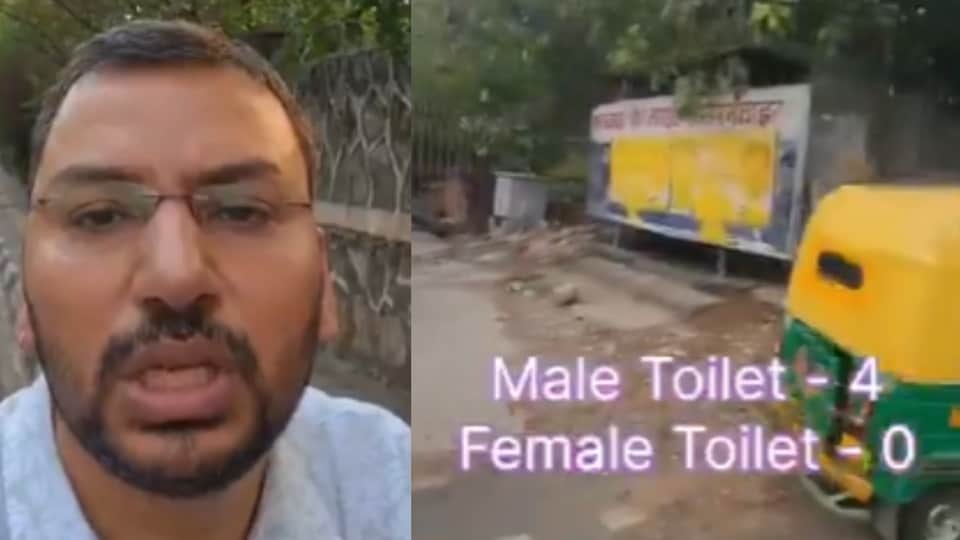
A video shared by a civil services educator and mentor has sparked widespread conversation online after he highlighted the critical shortage of public toilets for women in India. Filmed in New Delhi’s Rajendra Nagar — a bustling hub popular among UPSC aspirants — the video sheds light on a systemic oversight that continues to marginalise women in public infrastructure planning.
(Also read: 18-year-old woman rents company toilet for ₹540, cooks and eats food inside space)
A stark disparity in sanitation access
In the video, the educator, Praveen Dixit, is seen walking through the locality while conducting an informal on-ground survey. What he uncovered was deeply concerning: while ten toilets were available exclusively for men, only one was designated for women. “This reflects the plight of nearly 50% of the population who have access to less than 10% of public toilets,” Dixit remarked.
He called the situation a manifestation of the "gendered sanitation gap" — a term he used to describe how poor infrastructure planning routinely sidelines women’s needs. Dixit clarified that this isn’t a result of active discrimination, but rather the outcome of decision-making that fails to include diverse perspectives.
Connecting the issue with social theory
Drawing on sociology, Dixit compared this structural neglect to the Strain Theory, which posits that societal pressure without adequate means leads to frustration and negative outcomes.
"The problem is not just of inconvenience," he said, "it is about fairness, health, and dignity." Dixit urged viewers to discuss this reality with the women in their homes, pointing out how many are forced to control their bladders for 4–6 hours when outside, something most men never have to consider.
Watch the clip here:
Public reaction and pressing health concerns
The video has already garnered close to 8,000 views, with many users resonating with its message. One user commented, “You may be right but what about the condition of those? Is it clean? Are all maintained properly?” Another noted, “Inclusive growth is part of every government agenda, but implementation remains a dream.”
Another viewer remarked, “Dehydration is key to survival in the wild. Even when there are toilets, they’re so filthy that they’re unusable. Some are even locked. It’s a curse of this gender.” Others simply said, “Bilkul sahi baat hai sir,” echoing their agreement.