
 E-Paper



2 finds in Israel, China shed new light on our origin
In a similar breakthrough on Friday, scientists said a skull that was unearthed in China in 2018 is now known to be representing a newly discovered human species that they have named Homo longi or “dragon man”.

 Prefer HTon Google


Bones belonging to a “new type of early human” - previously unknown - have been found in Israel, researchers said on Thursday, claiming to have shed new light on human evolution.
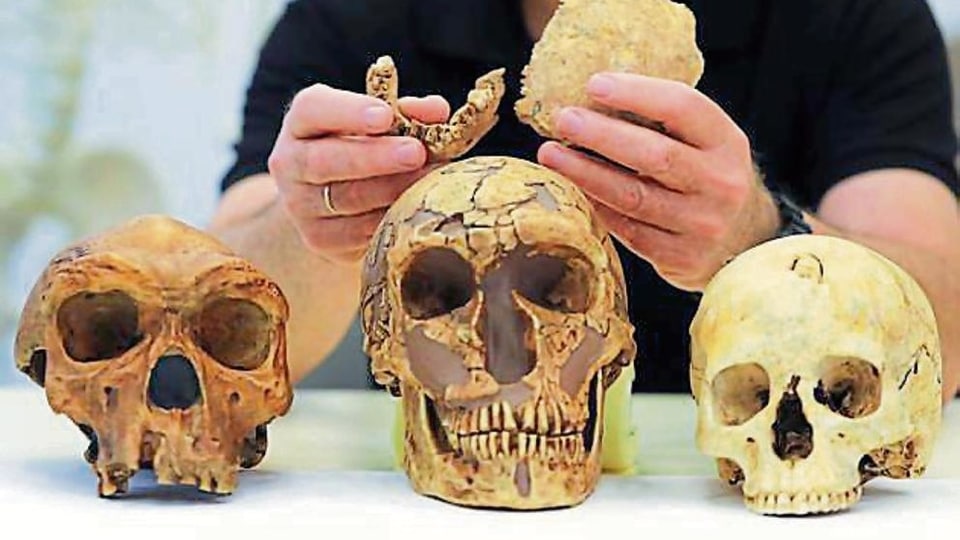
In a similar breakthrough on Friday, scientists said a skull that was unearthed in China in 2018 is now known to be representing a newly discovered human species that they have named Homo longi or “dragon man”. Crucially, they say the lineage should replace Neanderthals as our closest relatives.
In Israel, excavations in the quarry of a cement plant near the central city of Ramla uncovered prehistoric remains that could not be matched to any known species from the Homo genus. Researchers from Tel Aviv University and Hebrew University of Jerusalem dubbed the “extraordinary discovery” the “Nesher Ramla Homo type” after the site, in a study that was published in the journal Science.
The fossils date back to 140,000-120,000 years ago.
As for the other development, the “Harbin cranium” was discovered in the 1930s in the city of the same name in China’s Heilongjiang province, but was reportedly hidden in a well for 85 years to protect it from the Japanese army. The skull dates back at least 146,000 years.


