
 E-Paper



A generational upset in Los Angeles
Nithya Raman, a DSA city council member, will lead America’s second-largest city


 Prefer HTon Google


VOTES CAN take days, or weeks, to count in California. But Nithya Raman’s election night gathering on November 3rd felt like a victory party. Young voters, campaign staffers and union members flooded the courtyard of the Greek Theatre to watch returns roll in. When Ms Raman, a millennial city-council member affiliated with the Democratic Socialists of America (DSA), took the stage, cheers echoed through Griffith Park. “I’m very hopeful,” she told the crowd. “I’m also really superstitious, so we’re all just gonna be cool, OK?”
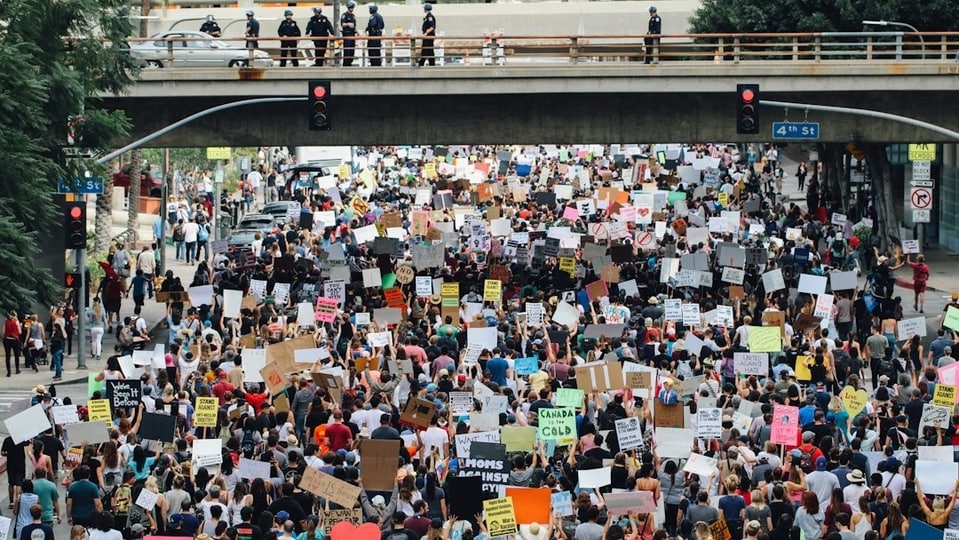
She needn’t have worried. Her lead over Karen Bass, the 73-year-old incumbent Democratic mayor who has been a fixture of Los Angeles politics for decades, grew with every ballot drop. On November 5th, Ms Bass called her erstwhile ally to concede. Ms Raman’s victory is a once-in-a-generation upset in a city where almost the entire Democratic establishment lined up behind Ms Bass. Not since 2005 has a challenger ousted an incumbent mayor in Los Angeles. It is also a win for the DSA, which can now count the mayors of America’s two largest cities—Ms Raman and Zohran Mamdani of New York—among its growing list of members.
The biggest factor driving Ms Raman’s win was her opponent’s unpopularity. Nearly two-thirds of Angelenos polled the week before the election viewed Ms Bass unfavourably. The mayor was never able to make up for her cardinal sin: being abroad when fires incinerated Pacific Palisades. “If the fire hadn’t erupted in January of 2025 I don’t think Nithya Raman or anyone else would have run against her,” reckons Zev Yaroslavsky, a former city-council member and county supervisor. It was a “stone around her neck”, he adds. Her handling of a warehouse fire in Boyle Heights, a Latino neighbourhood, weeks after the primary election in June also drew criticism. Early returns suggest that voters in heavily Latino areas of the city, including Boyle Heights, defected to Ms Raman in the months following the blaze.
Voters reeling from the fires were disillusioned by their government’s response to homelessness and poor public services, too. In the 2022 mayoral race Rolando Cuevas, a 58-year-old in government affairs, voted for Rick Caruso, a billionaire developer and Republican-turned-Democrat, whose campaign focused on crime and quality of life issues. This year he veered left and picked Ms Raman. “We just need new ideas in LA,” he says. “Everything is wrong in the city.” At Ms Raman’s party he ran into his young neighbours, whom he called “hard-core DSA”. “We were opposites but now we’re on the same side!” he told them.
Ms Raman will be sworn into office next month. What can Angelenos expect? Though she is a member of the DSA’s LA chapter, her relationship with the organisation has been rocky. She is more of a wonk than an ideologue and years on city council have familiarised her with the torpid nature of municipal government. She gestures at big ideas, such as expanding publicly funded child care. Yet her immediate plans favour incremental progress, such as speeding up the permitting process for new day-care centres—as well as for housing and film shoots. Initially, at least, she will have to triage mounting problems. A bloated budget and massive liability settlements have led to structural deficits; it can take a year, on average, for the city to replace a streetlight; and Pacific Palisades is in the midst of rebuilding.
Ms Raman’s biggest trial will be readying Los Angeles for the 2028 Olympics. The City of Angels hopes its turn in the global spotlight will be more like Paris’s 2024 triumph than Athens in 2004, when the Games were so costly that they helped trigger the Greek debt crisis. Los Angeles has a record of success. The last time it hosted the Games, in 1984, it became the first host city in decades to turn a profit. Unlike in the 1980s, however, Los Angeles taxpayers are on the hook for any cost overruns should LA28, the Games’ private non-profit organising committee, fail to make money. Outside of the competition, local leaders often use the Olympics to hasten big infrastructure projects. Los Angeles is racing to build a $10bn subway expansion. An attempt to ease public transit to the airport with a “people mover”—a driverless electric-train system—has been plagued by costly delays.
Despite running against a Democrat, Ms Raman tied the result in Los Angeles to Democrats’ success against Republicans in midterm elections around the country. “All across America voters demanded change,” she told her supporters. “They are angry about a broken status quo and the politicians who failed them over and over again.” It’s easy enough to promise that she won’t be one of those do-nothing establishment types. Now she has to prove it.


