
 E-Paper



A Japanese mayor’s maternity leave was called ‘vacation’ by a man. Why is its gender problem this stark?
From rigged medical school admissions to norms mandating heels for women in workplaces, Shoko Kawata’s leave has reopened a debate Japan has long avoided.

 Prefer HTon Google


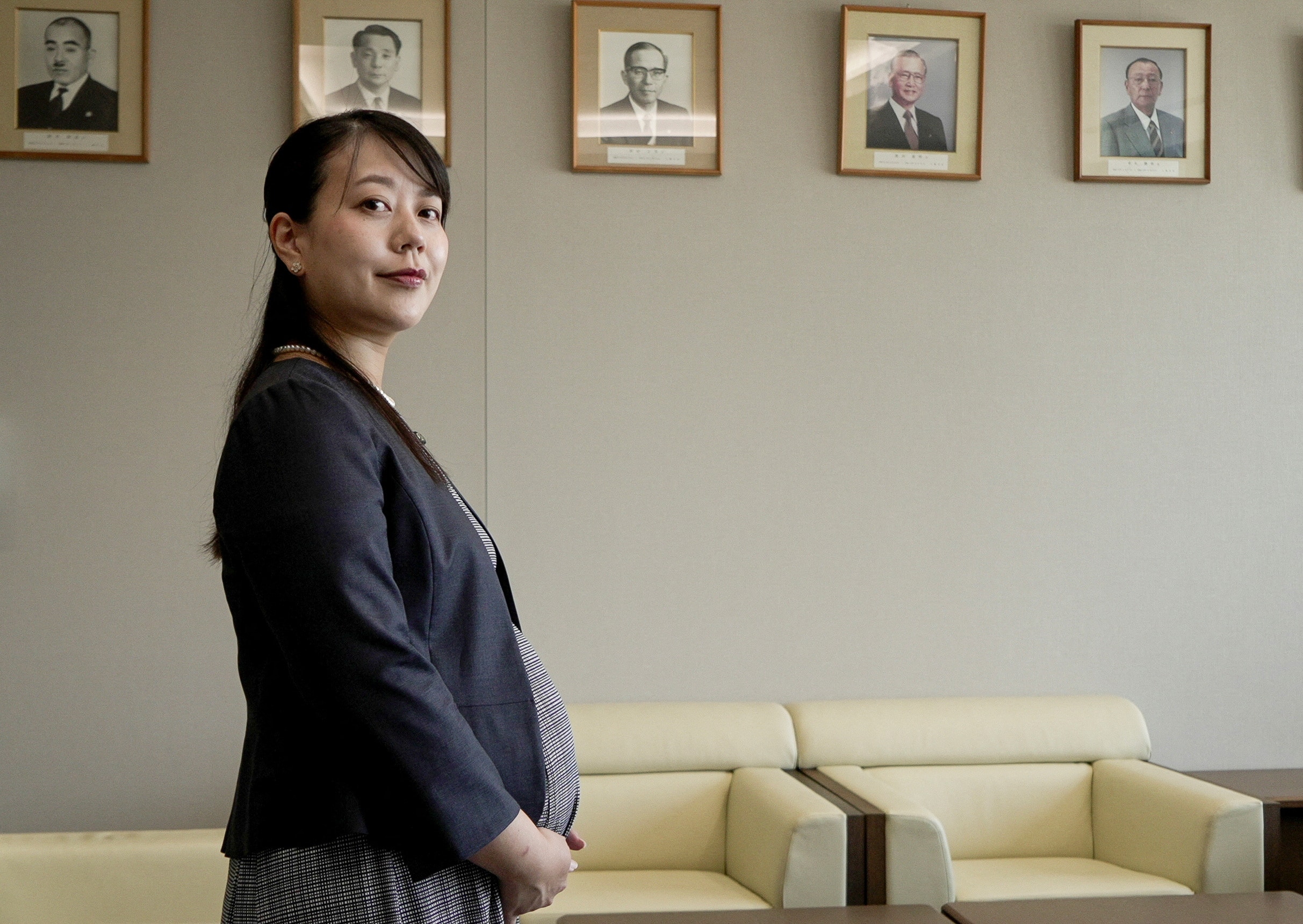
Shoko Kawata, 35, will become the first serving Japanese mayor to take maternity leave when she steps back from her duties in the town of Yawata this September. Her plan — two months off from work around the birth of her first child — has drawn both public support and sharp criticism from senior male politicians.
Kawata announced her decision in May, saying she would take time off before and after the delivery, expected in mid-September. She spoke to her staff first, and arranged for her deputy, Shigeto Nose, to run day-to-day affairs. She will stay involved in big decisions, according to local media.
“I hope my planned leave contributes to a society in which both men and women can participate fully,” she said.
The response, she admitted, caught her off guard. Yawata residents said they were proud of her for starting a family while in office. The criticism came from prominent men — chief among them Toshio Tamogami, the nationalist politician and former chief of staff of Japan's Air Self-Defense Force.
On X, Tamogami said he felt “a great sense of discomfort about someone in public office taking such a long vacation”. He went further, arguing that women planning children should not seek office at all. “Unlike people in ordinary jobs, a mayor is, so to speak, irreplaceable. To say, ‘It’s my right, so I'm running regardless’ — I feel it would be better if they refrained from doing so,” he was quoted as saying by the New York Times.
The debate unfolded under Japan's first-ever woman Prime Minister, Sanae Takaichi.
Kawata told the BBC she was “so surprised because the reaction was so big”.
“If we were to criticise politicians taking maternity leave, it means we are effectively excluding all women in their 20s through 40s — women who are capable of becoming pregnant — from public office,” she said.
“I somehow realised for the first time just how much discrimination still exists,” she added in another interview to NYT.
A mayor of many firsts
Elected in 2023, she became Yawata’s first woman mayor and, at 33, the youngest mayor ever elected in Japan. She succeeded a 71-year-old politician.
Kawata holds an economics degree from Kyoto University, and is among the roughly 4% of women municipal leaders across Japan’s 1,720 local governments, according to last year’s data.
What Japan's maternity rules actually say
Japan has no exact legal framework for local elected officials to take leave for childbirth.
But the General Union, a registered labour union in Japan, says all employees are entitled to pre- and post-natal leave and childcare leave, along with childbirth allowances and childcare benefits.
Women can take six weeks of maternity leave before the expected birth and eight weeks after — 14 weeks in total. Fathers, too, are entitled to four weeks of paternity leave, taken flexibly within the first eight weeks after childbirth.
Nonetheless, awareness about this right may be lacking among Japanese workers.
The persistent pay gap
Japan is one of the world’s largest economies, but its gender wage gap does not reflect that status. As of 2022, the median wage gap between men and women stood at 24.3 percentage points — double the Organisation for Economic Co-operation and Development (OECD) average, according to a World Economic Forum (WEF) report.
"One of the reasons for this disparity is the high proportion of women working as non-regular employees and a significant wage gap between regular and non-regular workers. Surveys have shown that the proportion of non-regular employment among workers in 2022 was 22.1% for men and 53.2% for women," the report said.
Japan ranked 118th out of 146 countries in the WEF’s 2025 Global Gender Gap Report, the worst-performing G7 nation. For comparison, the United Kingdom (4th) and Germany (9th) were both in the top ten.
Claudia Goldin, the Harvard economic historian who won the 2023 Nobel Prize in Economics for her work on the gender wage gap, pointed to Japan’s labour structure as a core problem. Women in Japan tend to work shorter hours and are shut out of the lifetime-employment jobs offered to men, she had said, adding: “Simply bringing women into the labour market is not enough to solve the problem.”
Why the numbers stay stuck
Japan’s Cabinet Office survey, released in July 2025, lists the obstacles women face in entering politics: harassment, the assumption that politics is a man's job, and pregnancy too.
The deeper roots are cultural. The ideal of ryosai kenbo — “good wife, wise mother” — remains a persistent template for womanhood in Japan.
“Historically, after World War Two, the combination of a hardworking husband who devotes his life to his company, and a stay-at-home mother, was encouraged,” Hiroki Komazaki, chief executive of Florence, a non-profit that campaigns for working parents, told the BBC in 2021.
Women moved into the workforce, but men’s share of housework did not rise to match. Japanese wives spend between 208 and 224 minutes each day — close to four hours — on unpaid household labour, including cooking, cleaning and caregiving, according to the OECD Time Use Database. That imbalance has pushed many women to quit their jobs after having children, or accept part-time and contract roles.
In 2015, then prime minister Shinzo Abe rolled out Womenomics, a set of policies pledging to build a society where women could “shine” and to widen the pipeline of women into leadership. Critics argued the framing was economic rather than equalising, and that it left the burden of change on women themselves.
A pattern of episodes
The pay gap and household imbalance sit alongside a long line of controversies.
In 2018, a government probe found that at least nine medical schools, including the prestigious Tokyo Medical University, had rigged admissions to favour male candidates. The concern driving the practice, an unnamed source told the Yomiuri Shimbun newspaper in August 2018, was that women would leave the profession to raise families. There was, the source said, a “silent understanding” among officials to prefer men.
“Many female students who graduate end up leaving the actual medical practice to give birth and raise children,” the source said.
A year later, in 2019, actor Yumi Ishikawa's #KuToo movement — a play on the Japanese words for shoes (kutsu) and pain (kutsuu) — pushed back against workplace norms requiring women to wear high heels.
She said she had been made to wear them while working at a funeral parlour. No law followed, but protests and criticism of the rule prompted several workplaces to quietly drop the requirement.
In 2021, then Tokyo Olympic organising committee president and former prime minister Yoshiro Mori said women talked too much during meetings — remarks he made as the Japanese Olympic Committee discussed adding more women to its board. Mori was worried the change would make meetings longer.
He later apologised and stepped down from the post.
Such episodes, experts say, often survive because of the Japanese social convention of kuuki o yomu — “reading the air” — where people avoid confronting a remark to spare the room.
Against that backdrop, Kawata's two-month leave is a small departure — the first time a serving mayor has claimed the time.


