
 E-Paper



A quiet museum on China’s foot-binding culture which crippled millions of women
The Chinese Footbinding Culture Museum (CFCM) in Wuzhen, a water town close to Shanghai in eastern China, is a somber, musty place where visitors are usually an uneasy, silent trickle of domestic tourists.


The Chinese Footbinding Culture Museum (CFCM) in Wuzhen, a water town close to Shanghai in eastern China, is a somber, musty place where visitors are usually an uneasy, silent trickle of domestic tourists.
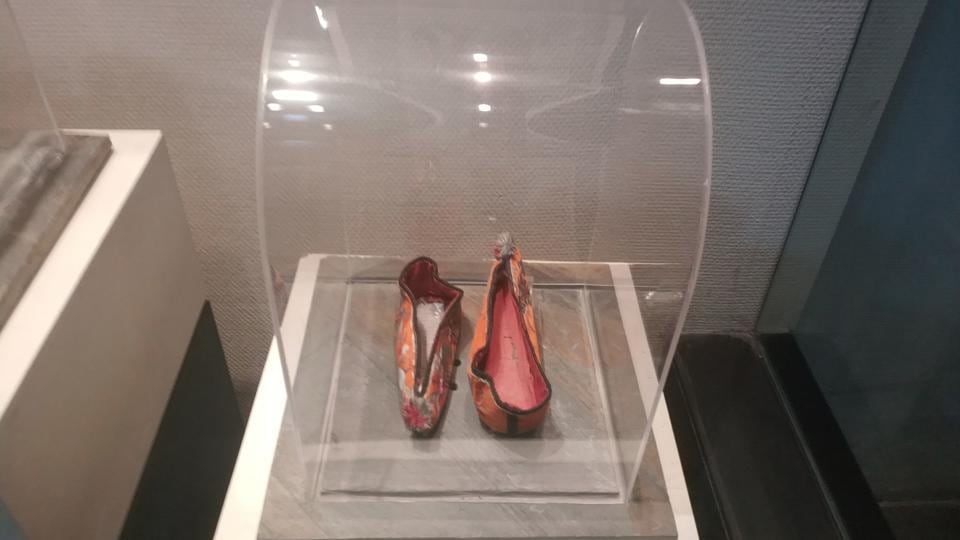
It’s because of the history it houses: The darkly lit museum, where photography is prohibited, is an authoritative stop for anyone looking to acquire some basic knowledge about the disturbing and painful history of women’s foot-binding in China.
In foot-binding culture, women’s feet were crippled during childhood to make them tiny and pointed, two physical distortions that epitomised beauty in medieval China.
For a thousand years, between periodic bans and until it was entirely abolished in the 20th century, millions of Chinese women had to bind their feet with cloth or silk to make them small, pointed and tiny, sometimes as tiny as three inches: Yes, a pair of three-inches feet was considered the hallmark of sophistication and beauty for the woman in China a few hundred years ago.
The bound feet, especially the tiniest among them, were referred to as “Golden Lotus” in the local language to signify beauty.
The process of binding the feet would begin for girls when they were between five and eight years old.
A young girl’s bones were soft and easy to bend and shape unlike the rigid bones of older ones.
“It would take three years to bind feet in the following five stages: test binding, test tightening, sharpening, slimming and bending,” wall captions explaining the history and process explained.
The shoes made for the bound feet were known by various names: coffin shoes, engagement shoes, embroidery shoes, network shoes and so on.
The shoes were delicately made with intricate embroidery depicting the social and marital status of women and even the husband’s profession.
The ‘Golden Lotus’ complex was the freakish mentality of the males at that time,” another wall caption said, adding that during one period “…bound feet became the third female characteristic, which existed as a reproductive organ”.
On display at the museum are 825 pairs of shoes designed for bound female feet, numerous pictures, and associated items, all accompanied by detailed descriptions in Chinese and English.
“It is beyond the imagination of people today, but centuries ago the beauty of a Chinese woman was judged by the size of her feet, more so than by the attractiveness of her face and body,” an introduction to the museum said.
“Without witnessing the shocking pictures (exhibits) and the Golden Lotus, we can never understand the pleasure and tears Chinese women once had”.


