
 E-Paper



After ‘mediating 8 conflicts’, Trump to settle Nile River dam dispute in Africa
Both Egypt and Sudan have called for a legally binding agreement on how the dam, located near Ethiopia’s border with Sudan, will be filled and operated.

 Prefer HTon Google


US President Donald Trump, who has claimed credit for mediating at least eight international conflicts apart from Russia and Ukraine, has now stepped into a water dispute — one that involves three countries.
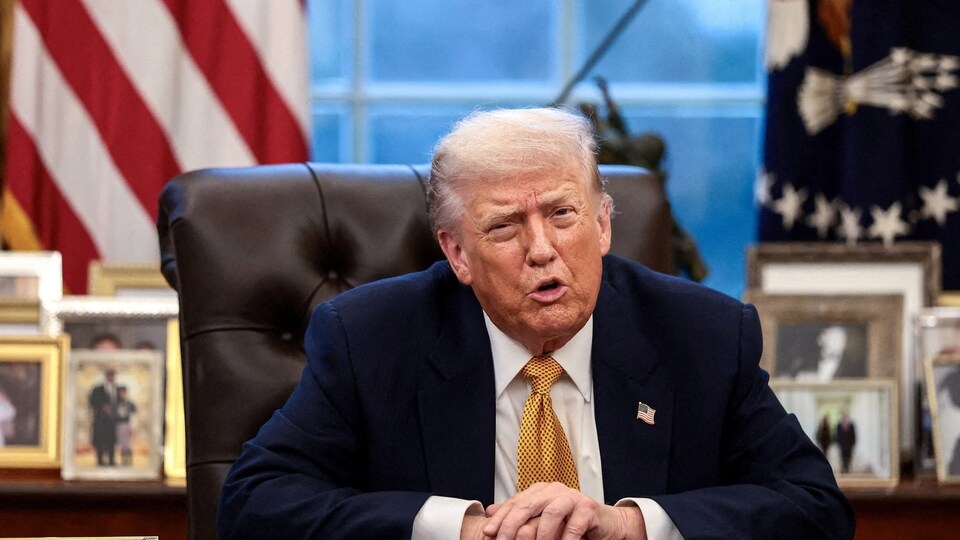
Two African countries — Egypt and Sudan — have welcomed Trump's offer to resume US mediation efforts with Ethiopia to solve the long-running Nile River water dispute after the latter decided to construct a giant dam on the world's longest river.
Trump, on Friday, posted on social media a letter he sent to Egypt's President Abdel-Fattah el-Sissi, saying: “I am ready to restart U.S. mediation between Egypt and Ethiopia to responsibly resolve the question of 'The Nile Water Sharing’ once and for all.”
To be sure, Trump began the mediation effort in his first term, but the talks collapsed in 2020 with Ethiopia withdrew. Later efforts, including by the African Union, failed to yield any headways.
Why is Egypt and Sudan against Ethiopia's dam construction?
The issue involves the construction of a giant dam, the Grand Ethiopian Renaissance Dam (GERD), which is meant to produce more than 5,000 megawatts, doubling Ethiopia’s electricity generation capacity.
However, the Africa's largest dam, with a reservoir roughly the size of Greater London, poses "an existential threat” on the flow of the river water to other African nations, including Sudan and Egypt.
River Nile, which originates in Lake Victoria in southern Africa, flows Northwards to Ethiopia and into Sudan and later entering the Mediterranean through Egypt.
Also Read: Welcome to Greenland, an Economy Reliant on Subsidies and Shrimp
Egypt, mostly a desert, depends on the Nile River to supply its booming population of 110 million with fresh water. It fears that the dam would drastically reduce the Nile’s flow, with potentially severe effects on its agriculture and other sectors. Cairo has called the dam as a “grave violation of international law."
Trump's mediation in Nile and beyond
In a social media post, Egypt's President el-Sissi has said that he valued “President Trump’s attention to the central importance of the Nile River issue for Egypt,” adding that his country is committed to “serious and constructive cooperation with the Nile Basin countries in a manner that achieves shared interests without causing harm to any party.”
Also Read: What are Greenlanders saying amid US talks of purchasing the island?
Both Egypt and Sudan have called for a legally binding agreement on how the dam, located near Ethiopia’s border with Sudan, will be filled and operated, while Ethiopia has insisted on guidelines. There was no immediate comment from Ethiopia.
The development in Africa comes amid Trump's ongoing peace plan in Gaza and Washington's tension with Iran. Meanwhile, Trump has also laid his claim on Greenland, which he has been eyeing for long, despite a pushback from Denmark and European countries.
(With agency inputs)


