
 E-Paper



After Wuhan, China conducts mass testing in the city of Mudanjiang
The city of Mudanjiang in the Heilongjiang province, home to more than 2.5 million people, is the second city after the central Chinese city of Wuhan to carry out large-scale testing of residents.

 Prefer HTon Google


Mass nucleic acid testing on more than 7.84 lakh residents in a city in northeastern China close to the Russian and North Korean borders has revealed 19 asymptomatic carriers, local officials have said.
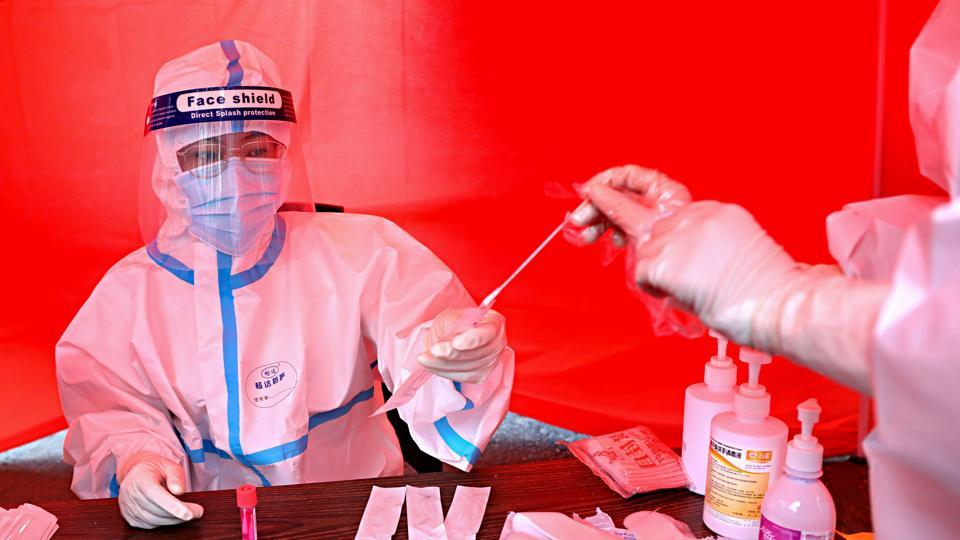
The tests were carried out in a week between June 1 and June 8.
The city of Mudanjiang in the Heilongjiang province, home to more than 2.5 million people, is the second city after the central Chinese city of Wuhan to carry out large-scale testing of residents to find silent spreaders and the incidence of Covid-19 disease in the population.
More tests on the remaining population are likely to be carried out in the coming days. Thousands of medical workers have been deployed across the city to carry out the tests.
Like in Wuhan, it is likely that medics in Mudanjiang are pooling swab samples to complete the tests in quick time.
The large-scale testing in Mudanjiang was ordered after local health authorities found 15 carriers with no outward signs of the disease in the city.
In Wuhan, 300 asymptomatic patients were found after more than 9.8 million residents were tested; the expenditure involved was around 900 million yuan ($126 million), which was borne by the Wuhan government.
With the coronavirus outbreak now under control in China, health authorities are now focusing on wide testing to find out and isolate asymptomatic carriers and those who could have been exposed to the disease.
The national health commission (NHC) said eight categories of people would have to be mandatorily tested for the disease to prevent a resurgence of the disease, which have infected more than 83000 and killed 4634 people in the country.
The list comprises overseas returnees, medical workers, patients admitted in fever clinics, new patients admitted to hospitals and their contacts, close contacts of confirmed Covid-19 patients, personnel deployed at epidemic control clinics at the border, prison staff and employees at facilities for senior citizens.
The categorisation of vulnerable groups is aimed at preventing a rebound of the outbreak in China.
It will help authorities to remain on guard against imported cases and have a monitoring system focussed on healthcare workers.
Meanwhile, the large-scale nucleic acid testing in Wuhan revealed 300 asymptomatic carriers but none of the related throat swabs and sputum samples have cultivated coronavirus, the municipal health commission has said.
Experts believe that the concentrations of coronavirus in the samples are extremely low or no pathogenic virus exists.
“Personal belongings of the asymptomatic carriers such as toothbrushes, mugs, masks and towels have shown negative Covid-19 testing results in samples collected from the surfaces,” official news agency, Xinhua reported.
A total of 1,174 close contacts of the 300 cases have also been tested negative for coronavirus, it said.


