
 E-Paper



Pharaoh's 3,000-yr-old gold bracelet goes missing from Egyptian Museum
Egyptian media reported that the loss was discovered during an inventory check in recent days.

 Prefer HTon Google


A 3,000-year-old gold bracelet has disappeared from the restoration laboratory of Cairo’s Egyptian Museum, the country's ministry of tourism and antiquities has said.
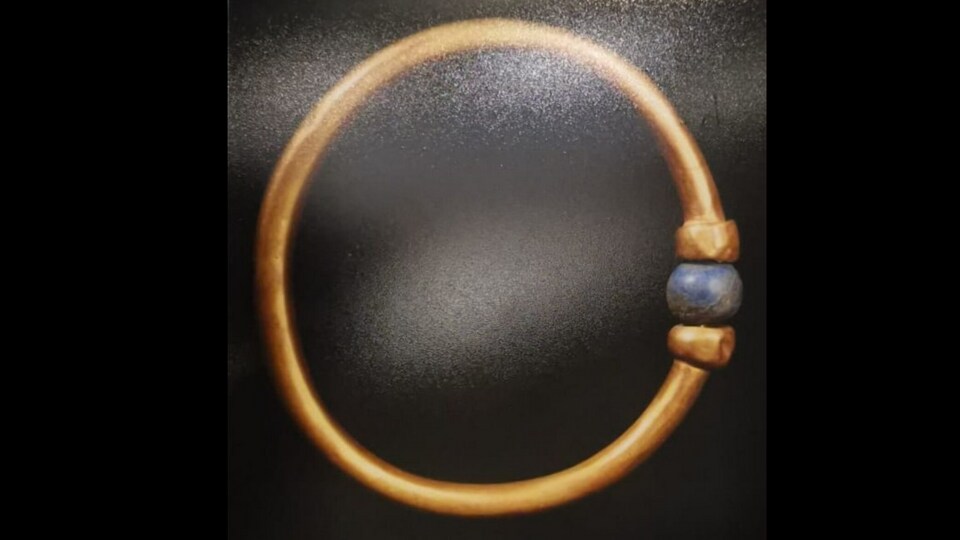
The bracelet, a golden band set with spherical lapis lazuli beads, dates to the reign of Pharaoh Amenemope of the 21st Dynasty (1070–945 BC).
The ministry said the case has been referred to the Public Prosecution and that images of the piece have been circulated to antiquities units at airports, seaports and border crossings to prevent smuggling attempts.
Egyptian media reported that the loss was discovered during an inventory check in recent days, ahead of the Treasures of the Pharaohs exhibition, which will open in Rome at the end of October.
The bracelet was discovered in Tanis, in the eastern Nile delta, during excavations in the tomb of King Psusennes I, where Amenemope had been reburied.
“It’s not the most beautiful, but scientifically it’s one of the most interesting,” Egyptologist Jean Guillaume Olette-Pelletier told AFP, noting its durable gold alloy and the symbolic use of lapis lazuli imported from Afghanistan.
While gold represented the "flesh of the gods", he said, lapis lazuli, imported from what is now Afghanistan, evoked their hair, he said.
Christos Tsirogiannis, a forensic archaeologist based at Cambridge University told CNN that news of the bracelet’s disappearance is “not surprising” given the huge market for antiquities and added that there could be several possibilities.
“The first is that it was stolen and smuggled out and so it will show up sooner or later either on an online platform or at a dealer’s gallery or auction house,” he said, adding that the item would, in that case be accompanied by “forged provenance or something vague.”
He also otherwise, the artefact could be melted down for gold or could end up in a private collection.
“Another possibility is that the appropriator will return it or it might be found in the vicinity of the museum,” he said. “There have been such cases in the past, especially in Egypt during the Arab Spring, where some of the objects taken from museums were found a couple of days later in the garden or were left at the museums.”


