E-Paper



BNP's balancing act with India: Want Sheikh Hasina back, but also improved ties
With elections due Feb 12, BNP has made Sheikh Hasina’s extradition a key issue, saying India sheltering her hurts Bangladesh’s justice and sovereignty.

 Prefer HTon Google


Bangladesh's opposition-turned-frontrunner Bangladesh Nationalist Party (BNP) has continued its attack on India over former prime minister Sheikh Hasina's continued stay in New Delhi, demanding that she be returned to face charges at home — even as the party's newly-released election manifesto calls for cooperative ties with neighbours for “collective progress”.
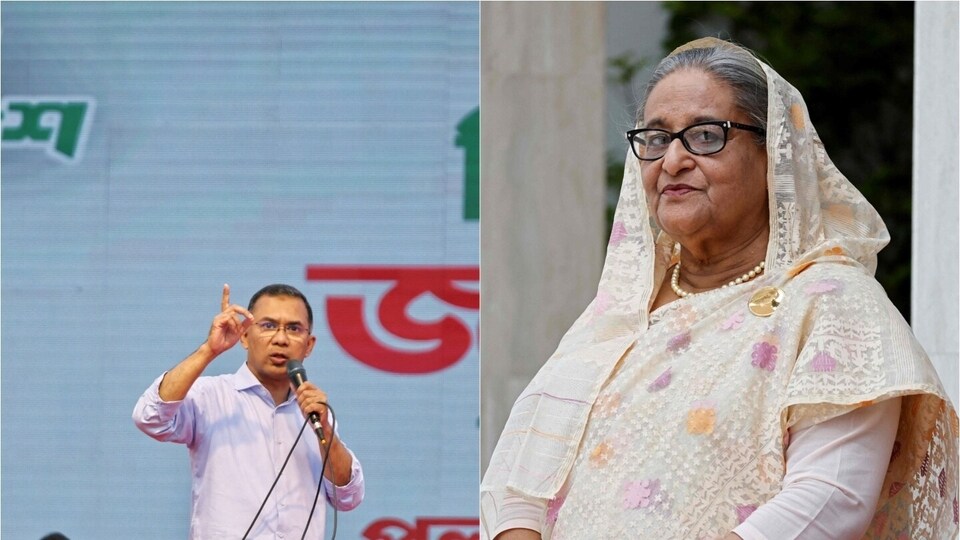
With national elections scheduled for February 12, the BNP has made Hasina's extradition a central campaign theme, arguing that India's continued sheltering of the ousted Awami League leader undermines Bangladesh's justice process and sovereignty. At the same time, the BNP, the party of the late Khaleda Zia, has a manifesto that signals that it wants structured, interest-based and mutually respectful relations with neighbouring countries..
Also read: Hindu trader stabbed to death in Bangladesh, three days before polls
Extradition demand at centre of BNP's India line
Sheikh Hasina has been living in India since August 5, 2024, after mass protests forced her resignation and exit from Bangladesh. A special tribunal in Dhaka later convicted her in absentia in a crimes-against-humanity case linked to the crackdown on the July uprising, and awarded a death sentence.
Following the verdict, Bangladeshi authorities formally moved to seek her return under the India–Bangladesh extradition framework, while BNP leaders have repeatedly said India should hand her over to face justice.
Also read: Student leaders who overthrew Sheikh Hasina set to contest Bangladesh elections
Senior BNP figures have described the matter as both a legal obligation and a sovereignty issue, saying bilateral ties should move forward “beyond Sheikh Hasina” and not be tied to any one political formation.
India has so far not publicly committed to extradition, with officials maintaining that such matters are governed by legal process and treaty provisions, and that New Delhi seeks stable ties with Bangladesh across political transitions.
Also read: Sheikh Hasina death sentence - The verdict, India's response, and what's next
Manifesto softens tone, calls for 'collective progress'
However, in a significant parallel message, the BNP’s election manifesto, released days before the February 12 polls, calls for building relations with neighbouring countries based on equality, mutual respect and shared development goals.
BNP chief Tarique Rahman, the later Khaleda Zia’s son who recently returned after years in London during Hasina’s rule, said the party would pursue relations with neighbours for “collective progress,” while firmly safeguarding Bangladesh’s independence and sovereignty.
“We will build relations with other countries maintaining my country’s interest, independence and sovereignty,” Rahman said at the manifesto launch event, according to PTI. He added that ties with neighbours would be based on “equality, cooperation and friendship,” with mutual respect and understanding as the foundation.
The manifesto adopts “Bangladesh First” as the core philosophy of governance, according to Bangladesh Sangbad Sangstha (BSS), the state-run news agency.
In a separate interview with BSS, Rahman said a BNP government would follow an “economy-based foreign policy” and prioritise safeguarding Bangladesh’s economic interests in global engagement. He told The Diplomat magazine that the party’s foreign policy would be guided by a “Bangladesh First” framework.
Border killings, river waters: Indirect India references
While the manifesto does not name India directly, several provisions are widely seen as references to long-running India-Bangladesh friction points.
According to news agency PTI's report citing the manifesto text and BSS summaries, the BNP pledged to ensure a “fair share of water” from the Padma (Ganges), Teesta and other trans-boundary rivers — a longstanding bilateral dispute area.
The manifesto also promises “strong measures” to prevent border killings and cross-border push-ins, describing such actions as unacceptable attacks on Bangladesh’s people - language widely interpreted by Dhaka-based observers as aimed at India's border management practices.
Promises to protect minorities, including Hindus
The manifesto also includes commitments aimed at reassuring minority communities, including Hindus and other religious groups.
The BNP has promised increased funding for welfare trusts serving Hindus and other minorities, along with training-based and honorarium support programmes for religious leaders across faiths.
Rahman said the party would uphold Bangladesh’s “traditional inter-faith harmony” and reiterated the principle that religion is individual while the state belongs to all citizens, PTI reported from the launch event.
“No one will be allowed to hurt any citizen’s religious beliefs,” the manifesto states.
India's balancing act
Indian authorities have so far avoided any firm public position on extraditing Hasina. As explained in earlier Hindustan Times reports on the India–Bangladesh extradition treaty, surrender is not automatic and can be denied under exceptions including political nature of offences, fair trial concerns, and death penalty exposure unless assurances are provided.
The final decision rests with the Indian government after legal review.
New Delhi has repeatedly emphasised the importance of stable ties with Bangladesh and engagement across political stakeholders, reflecting concern about being drawn into election-season contestation.
India–Bangladesh extradition treaty: What it allows
India and Bangladesh have a bilateral extradition treaty that allows each country to request the return of individuals accused or convicted of specified crimes. But, extradition is not automatic even when a treaty exists. A formal legal process must be followed, including documentation, charge details, and judicial review.
Most extradition treaties, including the one between India and Bangladesh, contain a political offence exception, allowing refusal if the requested country believes the charges are political in nature.
- If the requesting country has imposed the death penalty, the requested country can seek assurances that the sentence will not be carried out before agreeing to extradition. This could become a key negotiation point since Sheikh Hasina was reportedly sentenced to death in absentia.
- Extradition usually requires dual criminality — meaning the alleged offence must be punishable under the laws of both countries.
- Even after court review, the final decision rests with the government of the country holding the individual - in this case, India's central government.
- The requested country can deny extradition if it believes the accused will not receive a fair trial or may face persecution.
Apart from formal extradition, countries can pursue deportation or negotiated transfer, but that is a political and diplomatic decision rather than a treaty obligation.
What's at stake for India-Bangladesh ties
With the Awami League disbanded and Hasina in exile, the BNP has emerged as the principal electoral force in Bangladesh’s reconfigured political field.
By combining a hard demand on Hasina's return with manifesto language about equality-based neighbourly cooperation, the BNP appears to be signalling that relations with India would continue - but on renegotiated political terms.
As the campaign enters its final stretch, the Hasina extradition question remains the sharpest edge of BNP’s India stance - and a potential early test of how bilateral ties could evolve after the vote.