E-Paper



Student leaders who overthrew Sheikh Hasina set to contest Bangladesh elections. Here’s who they are
Several figures linked to the July uprising are preparing to enter electoral politics and are expected to contest the Bangladesh general elections.

 Prefer HTon Google


Two years ago, a group of student leaders in Bangladesh led what came to be known as the July Revolution. The movement sparked massive protests across the country and forced then prime minister Sheikh Hasina, the country’s longest-serving leader, to resign and flee to India. Now, several figures linked to that movement are preparing to enter electoral politics and are expected to contest the general elections scheduled for February 12.
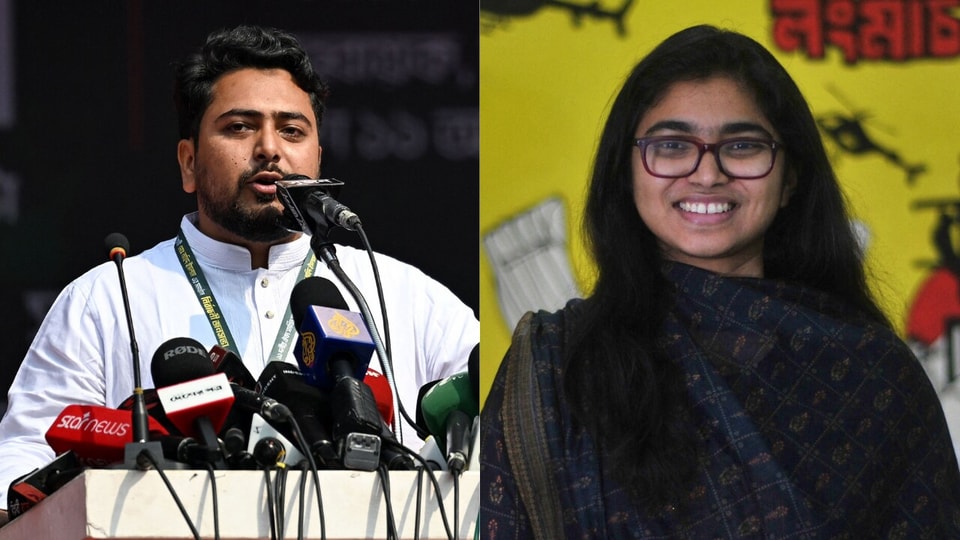
Among the most prominent faces of the uprising was Sharif Osman Hadi. He served as the spokesperson of Inqilab Moncho and was widely seen as one of the key student leaders during the protests. However, in December, while launching his campaign as an independent candidate, Hadi was shot in the head by masked attackers in Dhaka.
In this story, we look at some of the student leaders entering the electoral race, including those who were actively involved in the protests that led to Hasina’s removal from office.
Bangladesh election 2026: Key student leaders in fray
Nahid Islam
The National Citizen Party (NCP) was set up by a group of student leaders who led the July uprising. Its chief, Nahid Islam, is one of the main figures in the upcoming elections.
The party, shaped largely by Gen Z activists born after the late 1990s, says it aims to end long-standing nepotism and break the political dominance of Hasina’s Awami League and the BNP.
During Hasina’s tenure, Islam was often at the forefront of marches and protests. After her resignation, he briefly joined the interim government led by Nobel laureate Muhammad Yunus, where he served as acting head of the information and broadcasting ministry.
He will contest the elections from the Dhaka-11 constituency.
Tasnim Jara
One of the most prominent female faces among the student leaders, Jara is a doctor who returned from Britain to join the NCP but later left the party over its alliance with the Jamaat-e-Islami party.
She is now running as an independent candidate and says her goal is to build what she calls a “genuinely new political culture”.
“The July uprising created hope that people like us, who were never part of the old political guard, could finally enter politics and change how it is practised,” she told Reuters.
“I do believe there is hope for a genuine political alternative in Bangladesh. But it will not emerge overnight,” she added.
She will contest the elections from the Dhaka-9 constituency.
Hasnat Abdullah
A student activist and former convener of Students Against Discrimination, the group that led the July uprising, Abdullah is among the key leaders contesting the elections.
In December, he sparked controversy with remarks about India, saying the country’s northeastern “Seven Sisters” region could be cut off if Bangladesh were “destabilised”.
He was also injured in an attack in May 2025 while taking part in political activities.
After the uprising, Abdullah became a key organiser for the NCP. He is contesting from the Cumilla-4 (Debidwar) constituency.
Sarjis Alam
A student at the University of Dhaka, Sarjis Alam came into the spotlight after being detained along with other student leaders at the peak of the protests.
Alam, now the NCP’s chief organiser for the northern region, helped mobilise supporters, arrange rally logistics and keep the movement in public focus.
He will contest the elections from the Panchagarh-1 constituency.
Nasiruddin Patwary
Patwary, the chief coordinator of the National Citizen Party and a former student activist, is also entering the electoral contest.
He has said his priorities include education, healthcare rights, drainage infrastructure and issues related to neighbourhood kitchen markets, according to local media reports.
He will contest the elections from the Dhaka-8 constituency.
Osman Hadi killing
A prominent leader of the youth-led uprising in 2024, Hadi was shot by masked attackers in Dhaka in December. He later died of his injuries at a hospital in Singapore.
His death triggered unrest across Bangladesh, with groups of protesters attacking and setting fire to the offices of two major national newspapers.
In the days that followed, attacks targeting the country’s minority Hindu community — including the lynching of factory worker Dipu Chandra Das — led to protests in India and further strained ties between the two neighbours.
Hadi had planned to contest the elections as an independent candidate. The polls will choose the country’s first government since Hasina was removed from power.
Notably, Hadi was also an outspoken critic of India, where Hasina has been living since she fled Dhaka after the July 2024 uprising.
Supporters described him as a martyr and a symbol of the youth-driven movement challenging Bangladesh’s political order.
Bangladesh elections
More than 127 million people in Bangladesh are eligible to vote in the February 12 elections.
Questions have been raised about whether the polls will meet democratic standards and be fully inclusive following the ban on Hasina’s Awami League.
Since her removal, Bangladesh has faced a series of political and security challenges. Human rights and minority groups have accused the interim administration of failing to safeguard civil and political freedoms.
Meanwhile, the Bangladesh Nationalist Party (BNP), led by Tarique Rahman, has positioned itself as the main challenger.
Rahman, the son of former prime minister Khaleda Zia, returned to the country in December after more than 17 years of self-imposed exile and has promised to work towards stability in the South Asian nation.