
 E-Paper



‘CAB a dangerous turn in wrong direction,’ says US body
US body that monitors the state of religious freedom around the world, said the Trump administration should — not could — consider sanctioning India for the exclusion of Muslims from the Citizenship (Amendment) Bill (CAB) approved by Lok Sabha.


A US body that monitors the state of religious freedom around the world and has been critical of India said Monday the Trump administration should — not could — consider sanctioning India for the exclusion of Muslims from the Citizenship (Amendment) Bill (CAB) approved by Lok Sabha.
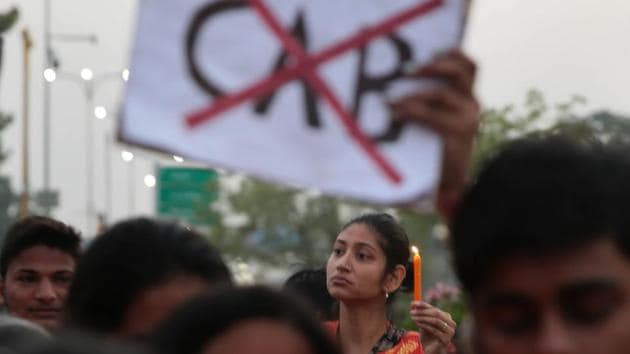
“If the CAB passes in both houses of parliament, the United States government should consider sanctions against the Home Minister and other principal leadership,” said the body, the US Commission on International Religious Freedom (USCIRF), in a statement. It describes itself as an independent, bipartisan US federal government commission.
“The CAB is a dangerous turn in the wrong direction; it runs counter to India’s rich history of secular pluralism and the Indian Constitution, which guarantees equality before the law regardless of faith,” the USCIRF added.
But it was not immediately clear if the commission’s threat of sanctions had the backing of the Trump administration, which itself has a history of statements and policies that were widely seen as deliberately anti-Muslim — such as the controversial “Muslim ban”, blocking travelers from Muslim-majority countries.
The White House declined to comment, a response was awaited from the state department.
The state of religious freedom in India has been under scrutiny of US authorities for years, but New Delhi has bristled at external interference and has disallowed the USCIRF from sending observers to study the situation in India — in 2007, under Prime Minister Manmohan Singh’s UPA-1 and then in 2016, Prime Minister Narendra Modi’s first term.
One of USCIRF commissioners, Anurima Bhargava, was a witness at a recent hearing held by a congress-sanctioned body that also monitors the state of religious freedom, the Lantos Commission. This hearing, however, was focussed on religious freedom in Jammu and Kashmir.
Bhargava had raised concerns about the ability of people to “practice their faith” and visit their places of worship and also exercise their rights. And, she had gone on to say, broadening her criticism, “Religious freedom conditions in India experienced a downward trend in 2018, a trend that unfortunately has continued and appears to be accelerating in 2019.”
“India’s religious minorities currently stand at a precipice,” she added. “If the Indian government continues on its current trajectory, their livelihood, rights, and freedoms could be in serious danger.”


