E-Paper



Cardinals, ballots, anticipation: How long does it take to elect a new pope
The secretive conclave held in the Sistine Chapel requires a two-thirds of majority and involves up to four round of voting per day.

 Prefer HTon Google


With the death of Pope Francis on April 21, the Catholic Church has entered a period of mourning and transition. The process to elect a new pope will formally begin on May 7 when cardinals gather for the Conclave.
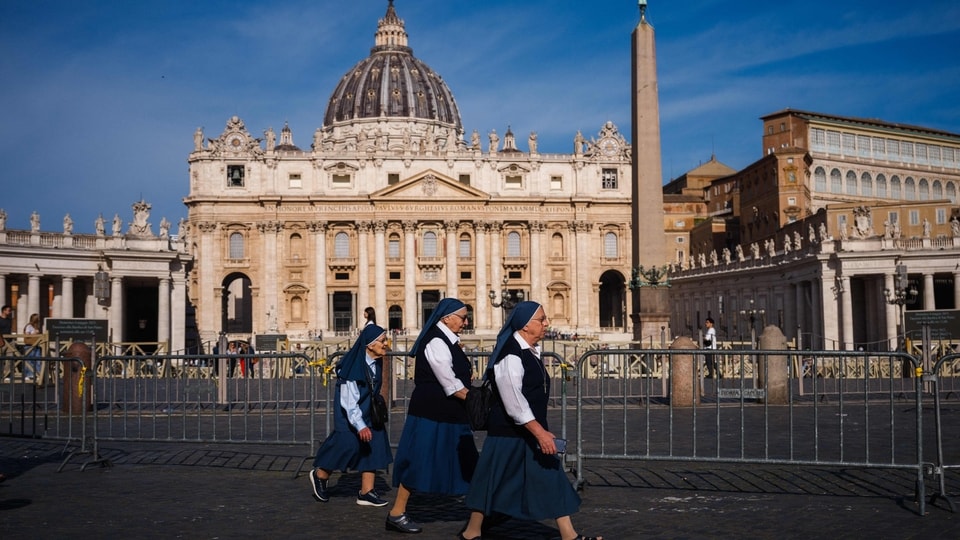
The Conclave is a secret meeting where cardinals vote to elect a new pope following the death or resignation of the current one. Voting must begin 15 to 20 days after the seat falls vacant in the Vatican City.
However, if all voting cardinals are present in Rome, they can agree to start earlier. Only cardinals under the age of 80 are eligible to vote. Currently, there are 133 eligible cardinals, as per news agency AFP.
How the voting works
Voting takes place in the Sistine Chapel. The cardinals begin with a Mass and then cast their first vote in the afternoon. After that, they vote four times per day — two in the morning and two in the afternoon — until a two-thirds majority is reached, as mandated to elect the pope.
Each cardinal writes a name on a ballot. The ballots are then taken before three cardinals responsible for the counting of votes, called scrutineers.
Once the votes are counted, all ballots are burnt. If the required majority is not reached, a chimney positioned over the Sistine Chapel emits black smoke. If the ballots are decisive, a pope is elected, and white smoke billows out of the chimney.
How long can it take to elect a pope
The length of time it takes to elect a new pope varies. The longest ever conclave was in the 13th century, when the selection process lasted nearly three years — 1,006 days.
However, in recent history, the process has been relatively fast. In 2013, Pope Francis was elected during the fifth ballot. Pope Benedict was chosen on the fourth ballot in 2005.
The duration of a papal election largely depends on how united the cardinals are in their decision.
What if the process drags on
According to “Universi Dominici Gregis”, a 1996 document regulating the conclave, if the electors fail to achieve a decisive mandate after 33 rounds of voting, the two top candidates are required to proceed to a run-off round, but still need a two-thirds majority to win.
Both top candidates are not allowed to vote in this final round.
(With agency inputs)