
 E-Paper



Children more Covid-19 infectious, vaccinate them in time: Wuhan study
Children and adolescents are less vulnerable to the Covid-19 infection-causing coronavirus but more infectious than older individuals, new research conducted on more than 20,000 families from Wuhan by American and Chinese experts have found


Children and adolescents are less vulnerable to the Covid-19 infection-causing coronavirus but more infectious than older individuals, new research conducted on more than 20,000 families from Wuhan by American and Chinese experts have found.
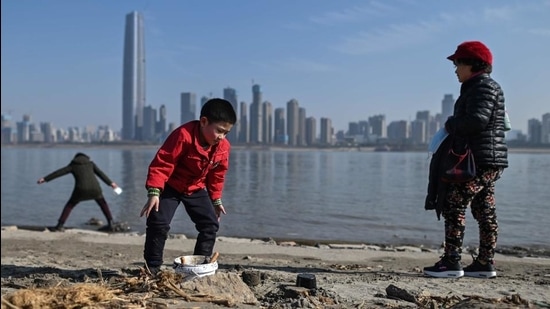
The findings of the large-scale retrospective study suggests prioritising the timely vaccination of “eligible children” and their caregivers to prevent the spread of secondary infections within households.
The level of Covid-19 infectivity in children should also be taken into account in context of reopening of schools, the researchers said.
The study has implications as countries begin mass vaccinations against the virus, which has infected more than 96 million and killed over 2 million people.
Published in The Lancet Infectious Disease journal this week, the study included the households of all lab-confirmed or clinically confirmed Covid-19 cases and lab-confirmed asymptomatic Sars-CoV-2 infections identified by the Wuhan Centre for Disease Control and Prevention between December 2, 2019, and April 18, 2020.
Wuhan was the first epicentre of Covid-19, accounting for 80% of cases in China during the first wave.
The aim of the research was to assess household transmissibility of Sars-CoV-2 and risk factors associated with infectivity and susceptibility to infection in Wuhan.
In all, the researchers covered 27,101 households with 29,578 cases and 57,581 contacts in Wuhan where the virus first emerged in late 2019.
“Within households, children and adolescents were less susceptible to Sars-CoV-2 infection but were more infectious than older individuals. Pre-symptomatic cases were more infectious and individuals with asymptomatic infection less infectious than symptomatic cases,” the researchers wrote.
“These findings have implications for devising interventions for blocking household transmission of Sars-CoV-2, such as timely vaccination of eligible children once resources become available,” they said.
Key findings include: infants aged 0-1 year were more than twice as likely to be infected than children aged 2-5 years and 53% more likely to be infected than children aged 6-12 years; children and adolescents were as likely to develop symptoms as adults were but were much less likely to develop severe disease.
“In addition, children and adolescents were more likely to infect others than were older age groups. Individuals with asymptomatic infection were less likely to infect others than were symptomatic cases. Symptomatic cases were more infectious during the incubation period than during the symptomatic period,” wrote the researchers, including from the Huazhong University of Science and Technology in Wuhan and Department of Biostatistics, University of Washington, Seattle.
“Our results show the importance of isolating cases and quarantining household contacts outside of the home to prevent onwards transmission within households.
“The relatively high infectivity of children in households should be considered carefully when making decisions around school reopenings, as infected children can pass the virus to their family members. Finally, given the vulnerability of infants to infection, their caregivers should be prioritised for vaccination,” the researchers added.


