
 E-Paper



Mystery surrounds removal of Qin Gang, Foreign Minister Wang Yi is China’s most powerful diplomat
One can only marvel at the opaqueness of the dictatorial Chinese system as no one can pin-point the real reason behind Qin Gang's fall from grace.

 Prefer HTon Google


After President Xi Jinping removed Qin Gang from the post of State Councilor and Foreign Minister on Tuesday, Wang Yi is now the most powerful diplomat in China with powerful brief spread across the party as Director, Central Foreign Affairs Commission as well as the government as State Councilor, Special Representative for India-China boundary talks and Foreign Minister of the Middle-Kingdom.
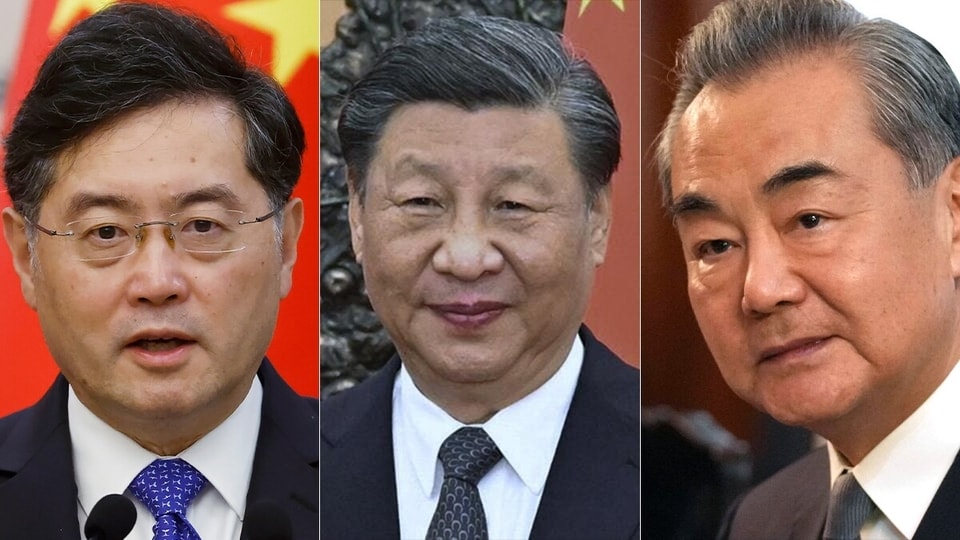
Since the removal of Qin, there has been a series of speculations surrounding his ouster including his serious foreign policy differences with Wang Yi and some salacious gossip about his extra-marital affairs. Some experts attribute Qin’s removal to his “wolf warrior” diplomacy with the US.
After talking to diplomats based in Beijing, New Delhi and the US, the Hindustan Times has learnt that no one really has any idea why the once trusted aide of President Xi Jinping was removed. And whether he will be rehabilitated or sent to the dog house permanently.
What we know is that Qin has been replaced by Wang, who can be both a charmer and blunt talker when he wants to be, with special interest in India, Japan and Asia. Qin on the other hand had served as China’s ambassador to US for two years and stoutly defended Chinese aggressive policies in Xinjiang region and against Taiwan.
Despite Qin being absent from public engagements since early July, neither India or any western power has any firm idea about the politics behind his removal. While the secret of Qin’s removal is now locked up in the vaults of Communist Party of China, one can only marvel at the opaqueness of the system as no one really has any real answer to Qin’s removal with only considered speculations doing the media rounds.
This is quite unlike a democratic India where there is an information overload if any minister is dismissed by the head of the government with minutest details appearing in the media and the dismissal dissected in news TV talk shows the same night.
Fact is that till such time as India or its allies are not able to get real answers behind any big decision made by the Chinese regime, the Quad powers will find it very difficult to fathom China what to talk about countering a rising Beijing. It is this opaqueness of the Chinese system that makes Beijing a powerful unpredictable adversary.
Rather than analysing the propaganda being dished out by the Chinese official media, India needs to invest into resources in Beijing that can at least give a fair idea behind any decision taken by the Xi Jinping regime. Do we know who took the decision to invade India in 1962?
Do we know the political reasons behind PLA belligerence in Pangong Tso in May 2020? Do we know the inside Chinese track before intrusions on Doklam plateau in 2017? Till such time that India or for that matter its allies have brain fog over how decisions are made in China, President Xi Jinping will always catch the democratic world by surprise.


