
 E-Paper



China pokes India as Chinese survey vessel Shi Yan 6 docks in Colombo
China is using this dual purpose vessel not only for maritime survey but also seabed survey for future operations of the Chinese Navy in the Indian Ocean.

 Prefer HTon Google


Chinese Survey and Research Vessel Shi Yan 6 docked at Sri Lanka's Colombo port on Wednesday despite India's objections. In August, a PLA warship Hai Yang 24 Hao had docked at Colombo port for what was described as a formal port call.
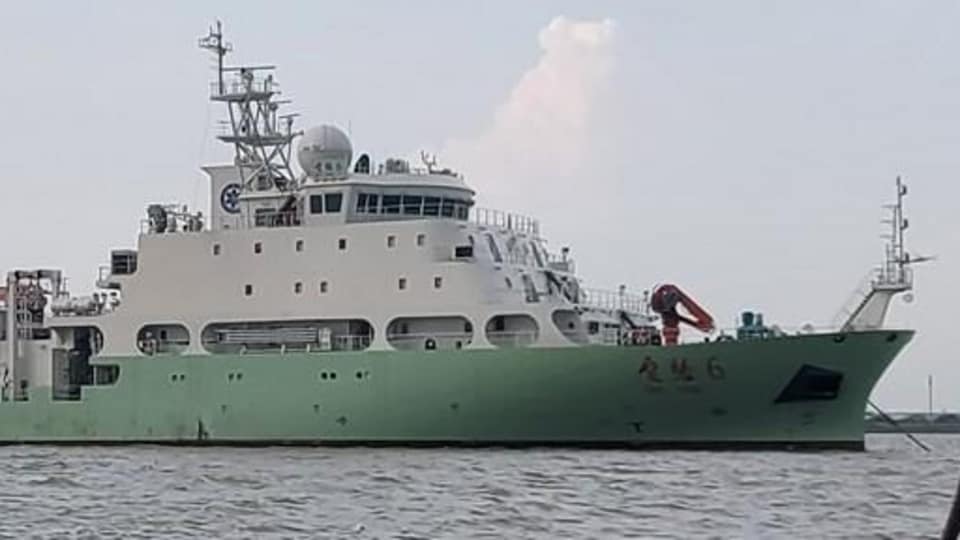
Shi Yan is docking for what is being described as amaritime survey with Sri Lanka's National Aquatic Resources Research and Development Agency (NARA) in the country's Exclusive Economic Zone.
Last year, Chinese ballistic missile and satellite tracking ship Yuan Wang 5 which had docked in the southern port of Hambantota, had triggered strong reactions from India.
In August last year, a similar visit by the Chinese ballistic missile and satellite tracking ship, ‘Yuan Wang 5’, which arrived in the southern Sri Lankan port of Hambantota.
What research is China carrying out in the Indian Ocean?
For the past decade, China has been exploring the Indian Ocean as part of its strategy to expand its sea legs all over the Indo-Pacific region. It is actually carrying out sea-bed research to ensure that sea lanes are created for future expansion of Chinese Navy and events in the Indian Ocean, much to the detriment of India.
As far as Shi Yan 6 is concerned, India had raised objections to this vessel being allowed to dock at Colombo. As mentioned earlier, the vessel is going to conduct a maritime survey in the Sri Lankan Exclusive Economic Zone with Sri Lanka's National Aquatic Resources Research and Development Agency (NARA).
But the fact is China is using this dual purpose vessel not only for maritime survey but also seabed survey for future operations of the Chinese Navy in the Indian Ocean.
Is Sri Lanka unwilling to say ‘NO’ to China on ships docking at its ports?
Sri Lanka owes some $7 billion to China. The debt-ridden country has given up its Hambantota port to China as part of the debt equity swap agreement. Sri Lanka can hardly afford to say no to China. Else, Beijing will use its economic leverage to ensure that the crisis-hit island nation will go down the drain.
What are India's concerns?
When Sri Lankan president Ranil Wickremesinghe came to India on July 20-21, Prime Minister Narendra Modi clearly told him that Sri Lanka has to take care of India's strategic interests and security concerns.
Now, for India it is a matter of serious concerns because China has a string of ports where it is actually expanding its naval footprint in the Indian Ocean. Be it the Ream naval base in Cambodia, Kyaukphyu seaport in Myanmar, Coco Island infrastructure development in the Bay of Bengal, Hambantota in Sri Lanka, Gwadar in Pakistan, Jask in Iran, Port Khalifa in UAE, Djibouti, China is all over the place. It is concerning because it harms the Indian security interests. In future, China can use these ports for sea and access denial.
What can India do?
Last year Yuan Wang 5, a ballistic missile tracker docked at Hambantota. It is a military surveillance ship and has the capacity to track inter-continental ballistic missiles. It is essentially monitoring Indian missile test firing which is happening in Odisha's Balasore.
Shi Yan 6 is monitoring and experimenting on the sea bed to see future submarine operations of the PLA Navy . It could happen as soon as 2025. This is the reason why India is worried about the expansion of Chinese PLA Navy in the Indian Ocean.


