E-Paper



COP30 ends with weak deal; Brazil to launch its own climate road maps
World governments reached a climate deal at COP30, balancing rich and developing nations' demands, yet lacking strong fossil fuel commitments and adaptation finance.

 Prefer HTon Google


World governments reached a compromise climate deal on Saturday after nearly a week of talks that pitted developed against developing countries over who should bear the burden of climate action. Rich nations resisted strong language on delivering climate finance while developing countries refused a fossil fuel phase-out roadmap without guaranteed support for transition.
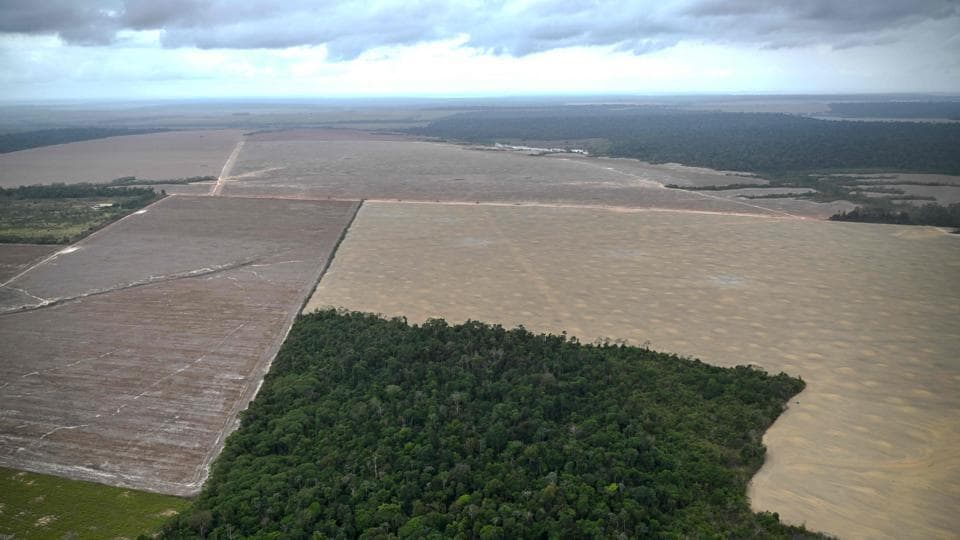
The agreement secured at COP30, which was scheduled to close midweek but dragged on until Saturday afternoon, establishes work programmes and makes aspirational calls for more climate finance but omits any mention of fossil fuels in the formal text and weakens earlier commitments on adaptation funding.
In a press briefing after the decision was gavelled, Brazil’s climate envoy André Lago announced he would independently create two roadmaps — one on halting and reversing deforestation and another on transitioning away from fossil fuels in a just, orderly and equitable manner.
“As President Lula said at the opening of this COP, we need roadmaps so that humanity in a just and planned manner can overcome its dependence on fossil fuels, halt and reverse deforestation and mobilise resources for these purposes,” Lago said.
The statement underscored the gap between what the Brazilian presidency hoped to achieve and what nearly 200 nations could agree upon. The roadmaps Lago proposes would exist outside the formal UN climate framework, raising questions about their authority and implementation.
The agreement, titled “The Global Mutirão: Uniting humanity in a global mobilisation against climate change”, delivered wins for India on three fronts: a two-year work programme on climate finance obligations, softened language on unilateral trade measures, and initiatives to keep the 1.5°C warming goal alive. However, it significantly diluted earlier commitments on adaptation finance.
“We should support it because at least it is going in the right direction,” EU climate commissioner Wopke Hoekstra told reporters — a marked shift from Friday, when he warned of a “no-deal scenario”. The United States did not send an official delegation.
Finance: Vague commitments
The text establishes a two-year work programme on climate finance, including on Article 9.1 of the Paris Agreement — the legal obligation requiring developed countries to provide financial resources to developing nations for climate mitigation and adaptation. It also convenes a high-level ministerial roundtable to reflect on implementing the New Collective Quantified Goal on climate finance agreed at COP29 in Baku.
The language on adaptation finance was significantly weakened from earlier drafts. The text now “calls for efforts to at least triple adaptation finance by 2035” and “urges developed country Parties to increase the trajectory of their collective provision of climate finance for adaptation”. An earlier version had stated directly: “Decides to establish a goal of tripling of adaptation finance [from public sources] by [2030][2035] compared to 2025 levels.”
Arunabha Ghosh, chief executive of the Council on Energy, Environment and Water and special envoy to COP30 representing South Asia, offered a pragmatic assessment. “Climate negotiations risked being disconnected from climate reality and the action that is already happening. At COP30 in Brazil, the real world finally came back into the room,” he said. “In a year where climate multilateralism has been challenged, getting a good deal was better than failing to get any deal in pursuit of the best deal.”
Ghosh noted important steps including calling for at least tripling adaptation finance (even though by 2035), recognising diverse national pathways for just transition, establishing the Article 9.1 work programme, and reaffirming that unilateral climate measures should not constitute arbitrary discrimination. “We need genuine investment pathways, honest recognition of the scale of loss and damage, adequate concessional finance, and a system that judges COPs the way company boards judge annual performance — not on plans, but on delivery,” he said. “The developing world is injecting real-world clarity — and real solutions — into a debate long stuck in abstraction. Delivery is the only currency of trust.”
However, Avantika Goswami, programme manager at the Centre for Science and Environment’s Climate Change division, was more critical. “The goal of tripling adaptation finance remains vague with no specific accountability of contributors,” she said. “Beyond talk shops however, this COP has delivered little else.”
On unilateral trade measures — a key concern for India — the text states that parties should cooperate to promote a supportive international economic system, particularly for developing countries, and “reaffirms that measures taken to combat climate change, including unilateral ones, should not constitute a means of arbitrary or unjustifiable discrimination or a disguised restriction on international trade”.
Keeping 1.5°C alive
The text acknowledges that the carbon budget for limiting warming to 1.5°C is now small and being rapidly depleted, with rich countries’ historical emissions accounting for at least four-fifths of it. It recognises that limiting warming to 1.5°C requires emissions cuts of 43% by 2030 and 60% by 2035 relative to 2019 levels, reaching net zero by 2050 — targets developed countries failed to meet previously when the IPCC indicated they must reduce emissions by 25-40% below 1990 levels by 2020.
The text launches a Global Implementation Accelerator and the “Belém Mission to 1.5” to accelerate implementation of nationally determined contributions and national adaptation plans.
Madhura Joshi, programme lead for Asia at E3G’s Global Clean Power Diplomacy initiative, said: “COP30 was labelled the COP of truth — and it delivered that truth by enabling real transitions which is extraordinarily hard. The final outcome falls short of what’s needed, but it does leave important hooks to build on.”
However, Rachel Rose Jackson, director of climate research and policy at Corporate Accountability, was scathing. “We cannot proclaim any COP a victory if it only delivers baby steps on paper that equate to leaps and bounds backwards on the ground,” she said. “The Global North should be ashamed. Yet again the EU and others, as the largest historical polluters, continue to orchestrate their great escape rather than do their fair share.”
Colombia said they object to the language on Global Goal on Adaptation and the Mitigation Work Programme. So the session had to be suspended and discussions on these documents reopened.
“Very concerned about procedural issues in this plenary. We raised point of order before MWP was gavelled and was ignored. Leaving us with no choice but to object MWP...COP of truth cannot ignore science. There can be no mitigation if we cant discuss transition away from fossil fuels. The MWP needs this space to actually talk about it,” they said.