
 E-Paper


‘Do everything to avoid another election’: Israeli President urges parties amid deadlock
Israeli Prime Minister Benjamin Netanyahu’s bloc has secured 53 seats, while the opposition alliance led by former military chief Gadi Eisenkot has won 48.

 Prefer HTon Google


Israeli President Isaac Herzog has asked political parties to work towards forming a government and avoid another election after an inconclusive vote left rival blocs short of a parliamentary majority on Wednesday. Track live updates
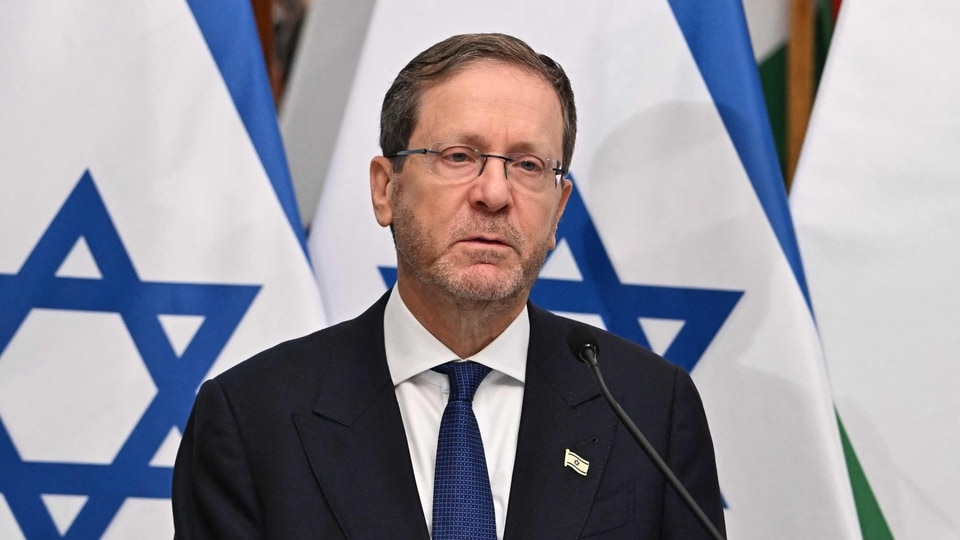
“We need to do everything, certainly after yesterday, so as not to hold another election. So I expect everyone who comes here to come here with an open mind,” Herzog said during a gathering at his residence, Al Jazeera reported.
Israeli Prime Minister Benjamin Netanyahu’s bloc has secured 53 seats, while the opposition alliance led by former military chief Gadi Eisenkot has won 48. Arab-led parties hold 19 seats, according to the latest figures reported by Israel’s Ynet news. Neither of the two main blocs has the 61 seats required for a majority in the 120-member Knesset.
Deep Dive

The count is not yet complete. Special double-envelope ballots, including votes cast by soldiers and other eligible voters outside their assigned polling stations, are still to be counted. Over 480,000 such ballots are expected, and the remaining votes could change the distribution of seats. The count could continue until Friday, according to Israel’s Central Elections Committee.
Herzog said he would receive official results next week and would begin a “consultation process” on forming the next government, as per Al Jazeera.
How Israel will choose its next prime minister
After the official results are announced, Herzog will consult party representatives before asking the lawmaker he believes has the best chance of forming a government to try to build a coalition.
The nominee will initially have 28 days to form a government, with a possible 14-day extension. If the attempt fails, another lawmaker may be given a chance. If no candidate can secure sufficient support, Israel could face another election.
Arab-led parties could hold the balance
The Arab-led parties include the Joint List and Ra’am, led by Mansour Abbas. Both have indicated they could support an Eisenkot-led government in some form, but neither has committed to joining a coalition, HT reported earlier.
ALSO READ | The options before Israel: A Netanyahu-Eisenkot deal, a minority government or no new government
The Joint List has offered to provide a “safety net” for a government that replaces Netanyahu, meaning it could support the administration from outside the coalition. Ra’am has expressed openness to working with Eisenkot’s bloc. Netanyahu, though, has ruled out relying on Arab-led parties for government support.
One possible outcome is a minority government led by Eisenkot, with Arab-led parties backing it from outside the coalition or abstaining in a parliamentary vote.
Could Netanyahu and Eisenkot form a unity government?
Another possibility is a national unity government bringing together Netanyahu’s Likud and Eisenkot’s opposition alliance. Such an arrangement would require both sides to reach an agreement despite their competing claims over Israel’s leadership.
ALSO READ | Assassination, suicide bombings and a less than 1% margin: Netanyahu's first PM win in 1996
For Netanyahu, it could mean parting ways with his far-right and ultra-Orthodox allies, who have been important partners in his previous governments. These include parties associated with far-right politicians Itamar Ben-Gvir and Bezalel Smotrich, as well as ultra-Orthodox parties that oppose ending exemptions from military service for many men in their communities.
A unity arrangement would also face resistance from opposition leaders who campaigned for Netanyahu to leave office.
What happens if no government is formed
If the parties fail to agree on a coalition, Netanyahu would remain caretaker prime minister while negotiations continue and until a new government takes office or another election is held.
Israel has held repeated elections in recent years because parties failed to secure a workable majority.


