E-Paper



Global usage of tobacco declines: WHO report
Currently, tobacco use is still estimated to kill at least eight million people each year, including an estimated 1.3 million non-smokers who are exposed to passive smoke, said the report

 Prefer HTon Google


Tobacco use has seen an overall decline globally with about 1 in 5 adults worldwide consuming tobacco in 2022 compared to 1 in 3 in 2000, according to the estimates in latest WHO (World Health Organisation) tobacco trends report released on Monday.
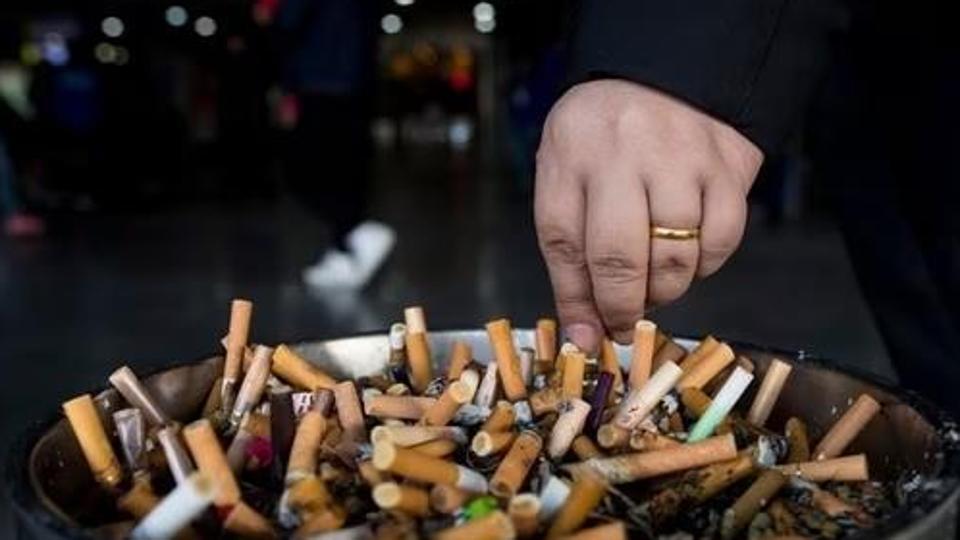
The report shows that 150 countries are successfully reducing tobacco use.
WHO, however, warned that tobacco-related deaths were expected to remain high for years to come.
Currently, tobacco use is still estimated to kill at least eight million people each year, including an estimated 1.3 million non-smokers who are exposed to passive smoke, said the report.
“Good progress has been made in tobacco control in recent years, but there is no time for complacency. I’m astounded at the depths the tobacco industry will go to pursue profits at the expense of countless lives. We see that the minute a government thinks they have won the fight against tobacco the tobacco industry seizes the opportunity to manipulate health policies and sell their deadly products,” said Ruediger Krech, director of WHO department of health promotion.
Also Read: Tobacco consumption increases the risk of head and neck cancers in youngsters
Currently the WHO South-East Asian Region has the highest percentage of population using tobacco at 26.5% with the European Region behind at 25.3%.
The report shows that by 2030 the WHO European Region is projected to have the highest rates globally with a prevalence of just over 23%.
In addition, WHO said the world was set to miss its goal of a 30% drop in tobacco use between 2010 and 2025.
“While the numbers have steadily decreased over the years, the world will make it to a 25% relative reduction in tobacco use by 2025, missing the voluntary global goal of 30% reduction from the 2010 baseline. Only 56 countries globally will reach this goal, down four countries since the last report in 2021,” read the report.
WHO urged countries to continue putting in place tobacco control policies and continue to fight against tobacco industry interference.
“Country surveys consistently show that children aged 13–15 years in most countries are using tobacco and nicotine products. To protect the future generations and ensure that tobacco use continues to decline, WHO will dedicate this year’s World No Tobacco Day to Protecting children from tobacco industry interference,” said the UN health agency in the report.
The report said that on average, around 10% of 13- to 15-year-olds globally use one or more types of tobacco. That amounts to at least 37 million adolescents, including at least 12 million who use new smokeless tobacco products.
Six countries have meanwhile seen tobacco use rise since 2010 -- the Republic of Congo, Egypt, Indonesia, Jordan, Moldova and Oman.
Overall, the world is on track to shrink tobacco use by a quarter over the 15-year period to 2025, according to the report.