
 E-Paper



Hole in ozone layer over Southern Hemisphere larger than Antarctica, scientists say
Earth’s protective ozone layer depletes and forms a hole over the South pole every Spring due to the human-made chemicals.

 Prefer HTon Google


The hole in the ozone layer over the Souther Hemisphere is now larger than Antarctica as it grew considerably in the past two weeks, scientists at the European Union's Copernicus Atmosphere Monitoring Service (CAMS) said Thursday. Earth’s protective ozone layer depletes and forms a hole over the South pole every Spring due to the human-made chemicals.
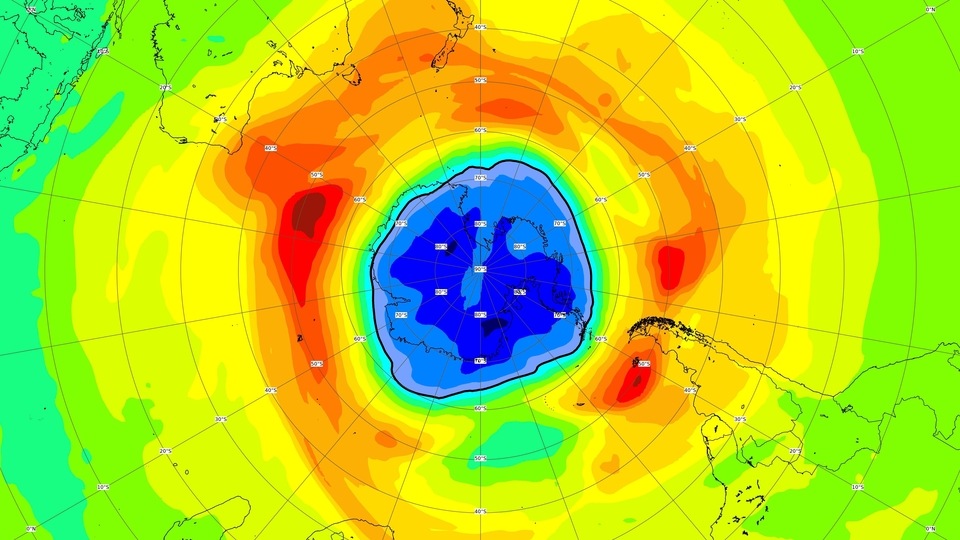
The atmospheric ozone absorbs the harmful portion of rays coming from the Sun to preserve life on the planet. The ozone hole located over regions with populations put them at risk of being exposed to unhealthy levels of ultraviolet radiation. CAMS constantly monitors the ozone layer to track the annual chemical destruction of ozone that leads to the formation of the hole.
The ozone depletion at the start of this season was similar to that of last year’s but grew considerably in the last two weeks, becoming larger than 75% of ozone holes at that stage in the season since 1979. Vincent-Henri Peuch, director of the CAMS, said in a statement that the ozone hole may continue to grow slightly over the next two or three weeks.
“This year, the ozone hole developed as expected at the start of the season. It seems pretty similar to last year's, which also wasn't really exceptional until early September, but then turned into one of the largest and longest-lasting ozone holes in our data record later in the season,” Peuch said.
“Now our forecasts show that this year´s hole has evolved into a rather larger than usual one,” he added.
In 1987, the Montreal Protocol was signed which led to a ban on a group of chemicals called halocarbons that contain bromine which has high ozone-depleting potential (ODP). A number of commonly used chemicals like chlorofluorocarbons (CFCs) and hydrochlorofluorocarbons (HCFCs) have been to be extremely damaging to the ozone layer.


