
 E-Paper



How the Unity of 9/11 Sowed the Seeds of America’s Deep Political Division
A quarter-century after terrorists struck the nation, a look back reveals how the aftermath fractured public trust and fueled today’s era of partisanship.


 Prefer HTon Google


When terrorists attacked America on Sept. 11, 2001, they provoked a response that, seen from today’s perspective, seems remarkable: The country immediately united across every political and ideological divide.
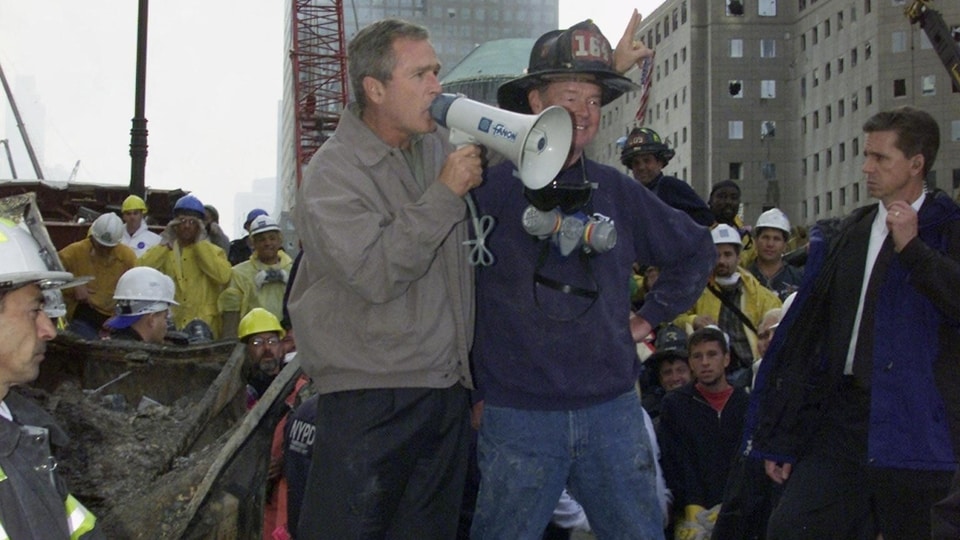
Within three days, the House and the Senate approved by a combined vote of 518 to 1 a sweeping measure endorsing the use of force against anyone deemed responsible for the attacks. In a Wall Street Journal poll taken at the time, 82% said they approved of the job being done by President George W. Bush, who hadn’t even won the popular vote in the election that brought him to office just months earlier. Almost three-quarters of Americans said that despite the attacks—or maybe because of the united response to them—the country was on the right track. In many ways, America was at its best.
Alas, that 9/11 unity didn’t last.
As it turned out, the events of that day also sowed the seeds for much of the discord and disillusionment that have plagued the American political system in the quarter-century since. The terrorist attacks led to “forever wars” in Iraq and Afghanistan that the nation’s leaders proved incapable of winning. That bred cynicism about the nation’s establishment and many of its institutions, and produced a neo-isolationist backlash in both parties.
The tactics American security officials used in the shadowy war on terror divided Americans. Heightened security measures in every corner of society added to feelings of unease. The shock of the attacks led to a higher fear of foreigners, which fed anti-immigrant sentiments.
All told, it isn’t hard to draw a line from 9/11 to the rise of the Make America Great Again movement of President Trump, who once falsely claimed that thousands of Muslims in New Jersey celebrated the terrorist attacks. The oxygen feeding the MAGA forces is precisely the anger and dissatisfaction with the political establishment that has emerged in the years since.
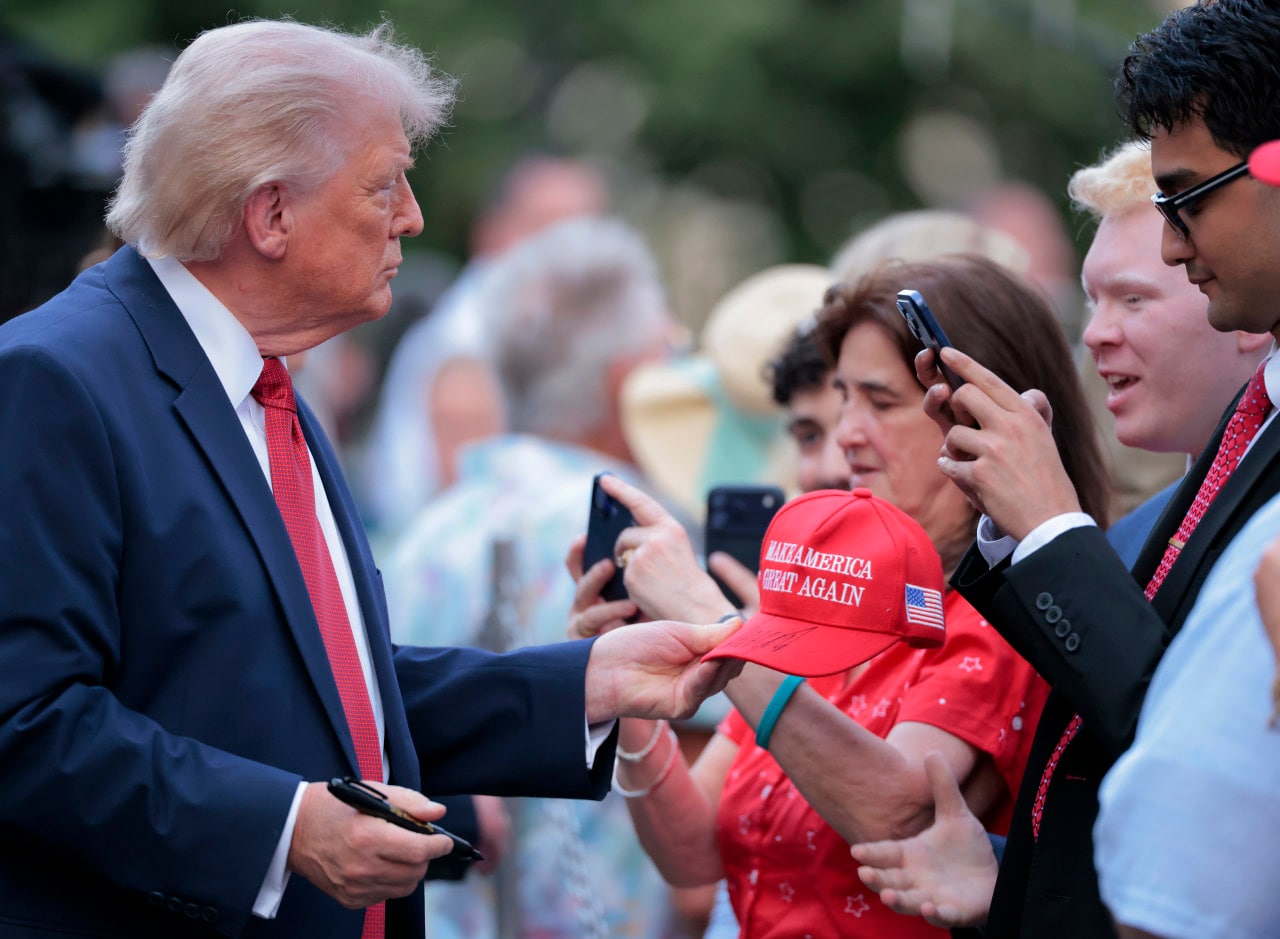
The events of Sept. 11 “set in motion a pattern of fear and anger that took us in a sad new direction,” says John Hamre, a former top defense official and longtime leader of the Center for Strategic and International Studies, a national-security think tank. Today, the share of Americans who think the country is moving in the right direction is about a third of what it was after 9/11; the job approval of President Trump now is 40 points lower than it was for President Bush then.
The good news is that America’s response did succeed in preventing a repeat of the terrorist attacks, which was far from a foregone conclusion in the days after 9/11. Today, going forward, the question is whether a country that showed it is capable of coming together when the chips are down can figure out how to rediscover that feeling—and, indeed, whether it could come together in the same way if disaster were to strike again.
The view from Sept. 10
It was far from certain the country would respond as it did after 9/11, for there was plenty of the usual political bickering going on in the nation’s capital at the time. The election that had brought Republican President Bush into office less than a year earlier, in a victory over Democrat Al Gore, was still controversial. Bush had taken office only after a Supreme Court decision gave him the Electoral College votes needed to win. Many Democrats were still seething. Congress was evenly divided between the two parties—a recipe for gridlock.
Then came disaster. A plane struck the World Trade Center in New York, which many thought initially was simply a tragic accident. Minutes later, a second airliner hit the twin towers, and a third screamed down into the Pentagon. At that point, everyone understood what had really happened. Our Wall Street Journal national-security sources—one of whom happened to be visiting the Journal’s Washington bureau at the time of the attacks—concluded instantly that the culprits had to be the Islamic terror group al Qaeda and its leader, Osama bin Laden.
The shock in the nation’s capital was complete. In the tense minutes after the initial strike, as smoke was rising from the Pentagon nearby, nearly everyone assumed that either the White House or the Capitol building had to be next on the terror target list—an assumption confirmed when another airliner went down in a field in Pennsylvania, apparently falling short of its target in Washington. President Bush was out of town and was hustled onto his plane, which was flown to a destination unknown. Vice President Dick Cheney was taken underground at the White House, literally.
The Journal’s own headquarters in New York, across the street from the World Trade Center, was knocked out of business, the fate of our colleagues there unknown for hours. From the windows of the Journal’s eighth-floor Washington bureau, a look down at the streets of the nation’s capital showed absolute gridlock in every direction as people rushed to flee downtown to a more safe locale, somewhere. Inside government and out, people were forced to think thoughts they’d never entertained before: Are my kids safe? Should we flee to the countryside? Why are jet fighters flying overhead?
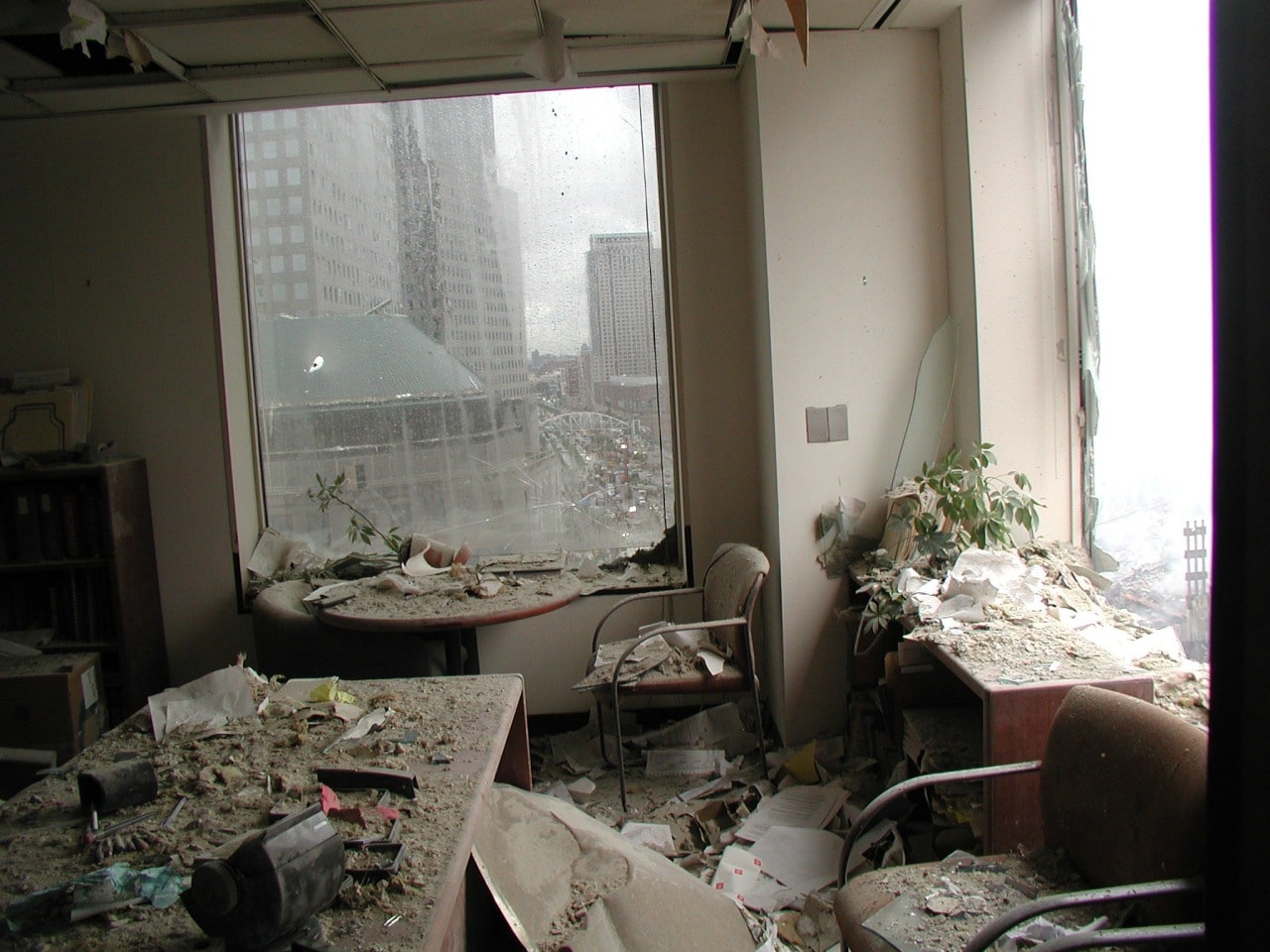
Compared with such questions, political disagreements suddenly seemed small and petty. Instead, the impulse was to unite and fight a new War on Terror, which many observers soon likened to pulling together to fight World War II. Within hours of the attacks, on the evening of Sept. 11, dozens of members of Congress from both parties gathered on the steps of the Capitol and sang “God Bless America” in a nationally televised show of unity.
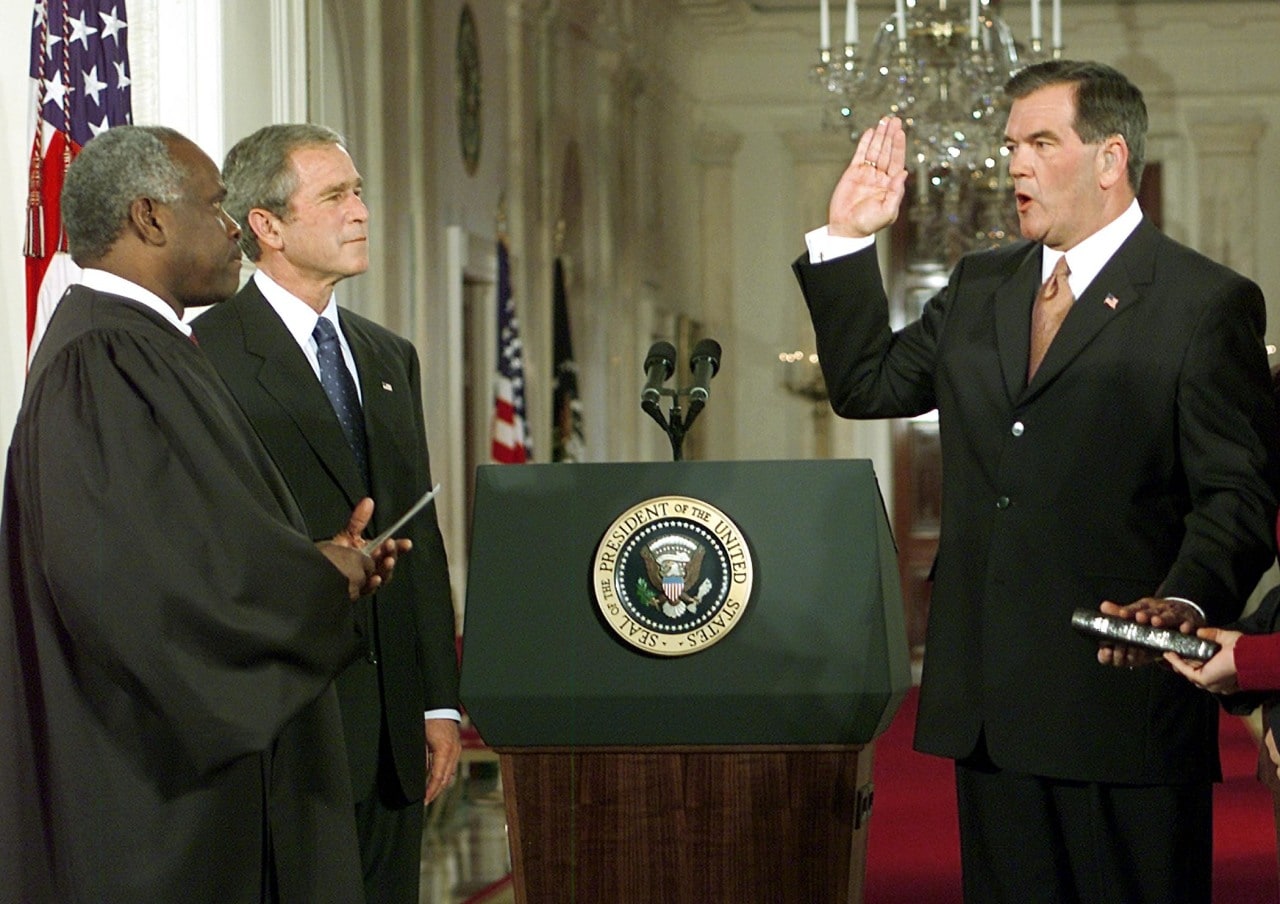
A mere 11 days later, the White House created an entirely new position, Director of the Office of Homeland Security in the White House, designed to pull together intelligence and national-security agencies under one roof to lessen the chances the country again would be taken by surprise. Republican and Democratic lawmakers united to create a bipartisan commission to investigate the causes of the attack. Young Americans enlisted in the military to help fight that war on terror.
And it wasn’t just the U.S. that pulled together, but also the world. America’s North Atlantic Treaty Organization allies, for the first and only time in the alliance’s existence, invoked Article five of the NATO charter, which deemed the attack on the U.S. an attack on all member states. Russian leader Vladimir Putin sent the U.S. a gift, a sculpture, as a memorial in the fight against terror.
Enter politics
Slowly, though, the unity began to fray around the edges. The effort to turn that new White House Office of Homeland Security into a giant new cabinet agency coordinating the work done in 22 separate agencies and departments turned partisan and political. Democrats wanted employees of the new agency to be able to unionize; Republicans didn’t, and their campaign consultants crafted ads accusing Democrats of being opposed to national security.
The harsh interrogation techniques the Bush administration authorized for use against terror suspects became a source of division. Republicans tended to consider them essential given the threats the country was facing and the shadowy nature of the opponent; Democrats tended to see them as excessive and a violation of the standards of behavior to which America should aspire.
Then, when President Bush proposed moving beyond the widely supported incursion into Afghanistan, which was designed to root out the specific terror cells behind the strikes, into a frontal attack on the nation of Iraq to destroy the weapons of mass destruction it allegedly housed, many Democrats balked. They charged that Republican hawks were using the terrorist threat as a pretext for launching a war against Iraqi strongman Saddam Hussein they had been itching to fight for years. When a resolution authorizing use of force against Iraq came to the House for a vote, 126 Democrats voted against it.
The war on terror was becoming a partisan issue rather than a unifying force. That became even more true after President Bush declared victory after just six weeks of fighting in Iraq, only to concede later that the claims Iraq held weapons of mass destruction were wrong. U.S. forces remained engaged in a low-level fight against Islamic terrorists there that persisted for two decades. President Barack Obama couldn’t figure out a suitable exit strategy from Afghanistan, nor could President Trump in his first term. President Joe Biden finally pulled the plug on the Afghan adventure—and the exit was widely seen as an embarrassment.
“If there are remnants” of 9/11 embedded in the American political consciousness, “they are the memories of what happened in Iraq and Afghanistan, the fatigue of no more endless wars,” says Republican pollster Bill McInturff.
Declining confidence
Those unsatisfying wars weren’t the only reasons Americans grew more disillusioned as the years unfolded, of course. A mortgage-industry meltdown, a resulting financial crisis, a ballooning national debt and a failure to come to terms with a surge of illegal immigration all played a part as well.
Still, a look back at Gallup polling shows that confidence in both the presidency and the Congress began a steady decline in the years after 9/11, a decline that continues today. Now, just 27% say they have a great deal or quite a lot of confidence in the presidency, compared with 55% in 2003. Congress fares much worse; just 9% of Americans express confidence, down from 29%. Even the military, normally immune from political currents, has seen a decline in public confidence over the last two decades.
The heightened mood of cynicism affects both of the main political parties, which have found it hard over the last quarter-century to build a sturdy base of support with the American public. Instead, the political system has experienced an unprecedented period of instability as voters waver between Democrats and Republicans. In 10 of the 12 national elections held since 9/11, control of at least one of the main political institutions in Washington—the House, the Senate and the White House—has changed partisan hands. By contrast, only five of the previous 12 elections were “change” elections.
The war on terror has brought another notable knock-on effect to the nation’s capital. The political class now has a significant number of veterans of those “forever wars” in Afghanistan and Iraq who exert increasing influence over the system. Today, as the fight against Islamic extremism takes on new fronts in Iran and in Africa, those veterans tend to be the most skeptical about taking on new international military adventures.
Vice President JD Vance, to cite the most prominent example, served with the Marines in Iraq, and was among the senior Trump administration aides least convinced about the wisdom of the current conflict with Iran. On the other side of the aisle, Rep. Pat Ryan, a Democrat from New York state who served two combat tours in Iraq, recently led a group of 10 House veterans in taking a stand against the Iran campaign. After “trillions of dollars and countless deaths” in the earlier Middle East fights, “I refuse to let the country I love make those same mistakes again,” Ryan said in a statement.
The path American politics has taken in the past quarter-century raises the question of whether it could again find the kind of unity felt immediately after 9/11, either in general or in a time of threat. Charlie Cook, a longtime, nonpartisan political analyst, isn’t so sure. “I don’t know what any president could do to get a job approval rating in the 70s,” he says. “There are too many partisans in either party who wouldn’t give a president of the opposition party the time of day.”
In a sense, there was a kind of test run of whether the country would pull together in a time of crisis six years ago, when the Covid outbreak struck. There was a rallying together, and then, again, the crises brought out bitter partisanship and division.
Still, American politics moves in cycles, and there is ample reason to believe that the current phase of divisiveness will give way to a new spirit of unity, perhaps under some leader yet to be determined. Few would have guessed that Abraham Lincoln, or Franklin Roosevelt, or Ronald Reagan were capable of unifying Americans as they did, so it would be a mistake to say it isn’t possible. “Never say never about America,” says McInturff.
Write to reports@wsj.com


