
 E-Paper



Imran Khan feels the bite, asks parliament to decide French envoy’s expulsion
Pakistan’s National Assembly will vote on a resolution moved by Imran Khan ‘s government to expel the French ambassador

 Prefer HTon Google


Prime Minister Imran Khan’s government decided to convene an early sitting of Pakistan’s National Assembly on Tuesday to decide on the expulsion of the French ambassador, a signal that PM Khan was trying to appease the Islamic extremist group that it had banned just last week.
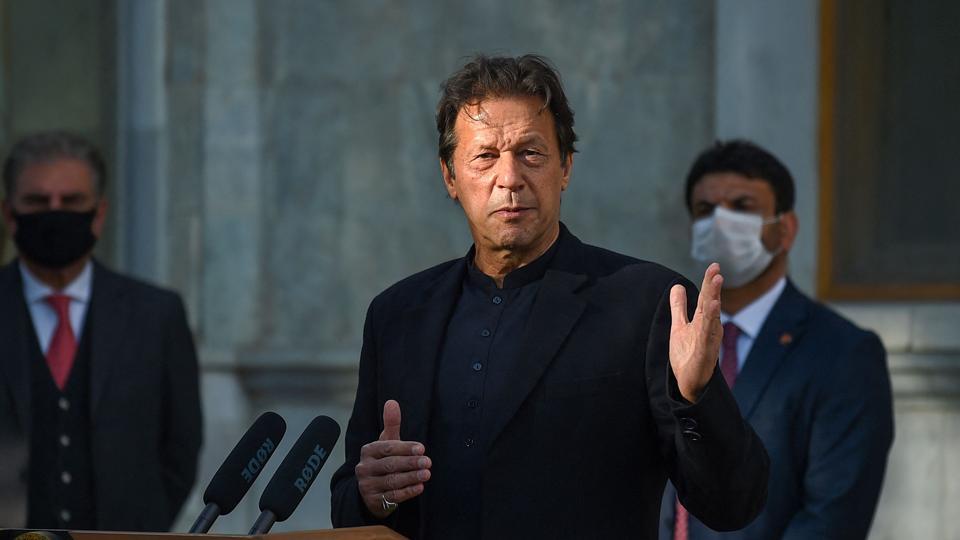
Interior minister Sheikh Rashid Ahmed announced the decision to advance the sitting of the National Assembly by two days from Thursday, adding that the decision was taken after another round of talks with the proscribed Tehreek-i-Labbaik Pakistan (TLP). The extremist group has been leading an anti-France campaign for months over President Emmanuel Macron’s defence of the right of Charlie Hebdo magazine to republish cartoons depicting the Prophet Muhammad, an act considered blasphemous by Muslims.
Pakistan watchers in India said the National Assembly’s recommendation to expel the French ambassador was a foregone conclusion since the political class in Islamabad would not want to anger the TLP.
The radical group, formed in 2016, has emerged as one of Pakistan’s most hardline Islamist parties and has been pushing for strict implementation of Islamic sharia laws and death for blasphemers. PM Khan banned the group after it led street protests against the arrest of their leader, cleric Saad Rizvi. News agency AP said the TLP wants the government to expel the French ambassador under an agreement signed between the government and Rizvi’s party in February.
To be sure, PM Khan sought to reach out to the protesters on Monday, underlining that he and the TLP shared the ultimate objective to end incidents of blasphemy across the world but had adopted a different approach. He tried to reason that expelling the French envoy would hurt Pakistan and would not help stop such incidents.
“When we send the French ambassador back and break relations with them it means we break relations with the European Union,” he said in a televised address, according to a Pakistani newspaper, Dawn. “Half our textile exports go to the EU, so half our textile exports would be gone.”
That appeal, which was also aimed at clarifying his government’s stand to the international community, however, couldn’t convince the TLP to back down. Over the last few weeks, the group has blocked highways, railways and access routes to major cities.
Four police officers were killed, almost a dozen were taken hostage and more than 800 wounded, many of them seriously, during the clashes that followed.
But Pakistan watchers in New Delhi said it was Imran Khan who lit the fire last October that had singed PM Khan’s credibility and encouraged groups that are challenging his authority. PM Khan was one of the few leaders in Muslim-majority countries to lead a campaign against President Macron for comments defending the “right to blaspheme” under freedom of expression; Turkey’s Recep Tayyip Erdogan was another.
PM Khan, who was then seen to be aspiring for a leadership position in a new alliance of Islamic countries along with Turkey and Malaysia, wrote to leaders of Muslim-majority countries, asking them “to act collectively to counter growing Islamophobia in non-Muslim states”.
Analysts said this initiative to placate the ultra-conservative groups in Pakistan and project himself as a defender of Islam abroad started to boomerang on him soon after.
“I think the prime minister has realised that appeasing the radical forces isn’t an easy task because when you try to please them they demand more and more,” security analyst Amir Rana told news agency AFP. “So far he has failed to maintain the balance.”
PM Khan, Indian officials suggest, isn’t the first one to play to the hardline extremist groups. Back in the eighties, military dictator President Zia-ul-Haq who ruled Pakistan for a decade tried the same strategy with equally disastrous results.
“The Pakistani state has, over decades, actively fostered the ideology that led to the TLP and that leads many in the population to sympathise with the TLP,” said Madiha Afzal, a Brookings Institution fellow, said, according to AFP.


