
 E-Paper



Imran Khan: From a flamboyant cricketer to conservative politician
Once a popular ‘playboy’ cricketer, Imran Khan now cuts a more conservative persona as a devout Muslim, often carrying prayer beads and nurturing beliefs in living saints.

 Prefer HTon Google


Pakistan’s Imran Khan, who took over as the country’s 22nd prime minister on Saturday, has near-mythical status in the country for his achievements as cricketer but now has to deal with myriad problems.
Khan’s victory in elections that came two decades since he entered politics was coloured by allegations that the country’s powerful military helped him behind the scenes. Khan, as well as the military, denied the claim.
The election was largely seen as a head-to-head clash between Khan’s party and arch-rival Sharif’s PML-N, with election analysts saying the contest was still too close to call. The PML-N complained it was the result of military pressure, with party activists calling out “blatant” attempts to manipulate the polls.
Former prime minister Sharif was ousted last year and has been behind bars since returning to the country earlier this month to face a corruption conviction, removing Khan’s most formidable foe from the contest.
In contrast, Khan has cut a relaxed image on the campaign trail, looking increasingly confident of his chances.
Khan has sought to lead Pakistan as a populist, religiously devout, anti-corruption reformist.
Playboy image
In the West, the man who led Pakistan’s 1992 World Cup champion cricket team is typically seen through the prism of his celebrity and memories of his high-profile romances, including a nine-year marriage to British socialite Jemima Goldsmith.
Back home the thrice-married 65-year-old cuts a more conservative persona as a devout Muslim, often carrying prayer beads and nurturing beliefs in living saints.
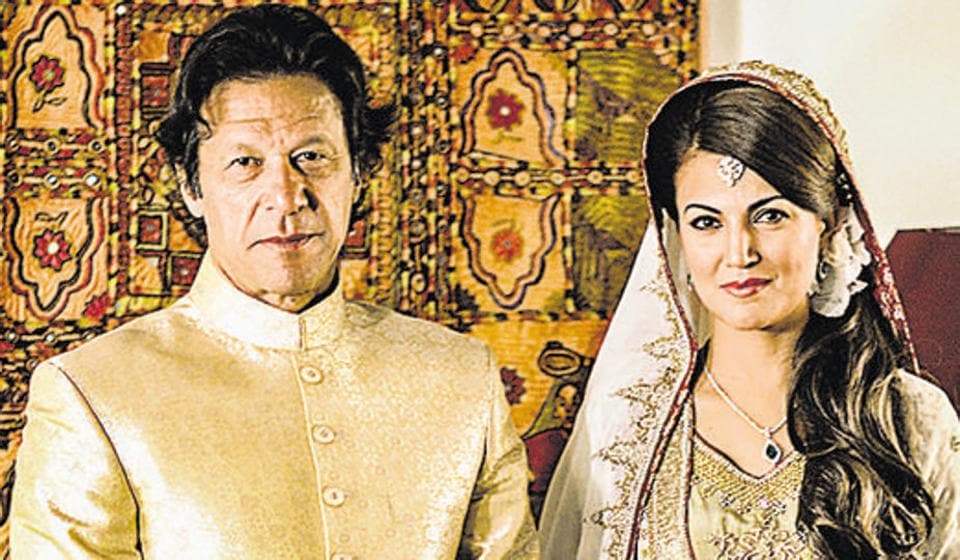
Earlier this year, he married his spiritual advisor Bushra Maneka, with wedding photos showing the new bride clad in an ultra-conservative veil -- an astronomical departure from his days plastered in the British tabloids.
And just last month he roused the ire of women after saying feminism has “degraded the role of a mother”.
Khan is also described as impulsive and brash, too tolerant of militancy and fostering close links to Islamists, amid speculation over his ties to Pakistan’s military establishment.
But to his legions of fans, he is uncorrupted and generous, spending his years off the pitch building hospitals and a university.
‘Not a straight line’
Khan entered Pakistan’s chaotic politics in 1996 promising to fight graft. For his first decade and a half as a politician, he sputtered, with his party never securing more than a few seats in the national assembly.
“Sports teaches you that life is not in a straight line,” he told AFP earlier this year. “You take the knocks. You learn from your mistakes.”
In 2012, his party’s popularity surged with hordes of young Pakistanis who grew up idolising Khan as a cricket icon reaching voting age.
Khan has admitted his party was ill-prepared to capitalise on the gains during the 2013 election. But that was then.
“For the first time, we’ll be going into elections prepared,” he has said previously of 2018.
To shore up its chances of winning, PTI allegedly lured candidates away from Sharif’s party, stirring controversy among long-time party loyalists who said Khan was relying on the same corrupt politicians he once denounced.
Some fear Khan’s mercurial nature is unsuited to being prime minister.
He raised eyebrows by increasingly catering to religious hardliners, particularly over the hugely inflammatory charge of blasphemy, spurring fears his leadership could embolden extremists.
“It’s hard to judge anyone when they’re in opposition because the real challenge is when you take over,” said journalist Arifa Noor. “On the downside, he’s playing up the religion card.”
Khan has also been attacked for his repeated calls to hold talks with militants and for his party’s alliance with Sami ul Haq, the so-called Father of the Taliban whose madrassas once educated Taliban stalwarts Mullah Omar and Jalaluddin Haqqani.
And earlier this month, the al Qaeda-linked Harkat-ul-Mujahideen announced their support for Khan’s party, with pictures of the US-designated terrorist group’s leader posing with PTI hopefuls posted online.
Now that he has won, Khan will face a mounting and urgent in-tray, from a brewing economic crisis to worsening relations with on-off ally the United States to deepening cross-country water shortages.
(With inputs from agencies)


