E-Paper



India resumes travel visas for Bangladeshi citizens: Why were they frozen for nearly 2 years?
The resumption comes after visa had remained suspended for nearly two years due to security concerns and worsening relations between India and Bangladesh.

 Prefer HTon Google


India’s newly appointed High Commissioner to Bangladesh, Dinesh Trivedi, on Thursday announced the resumption of travel visas for Bangladeshi citizens, signalling a possible step towards improving ties between the two neighbours after a prolonged period of strain.
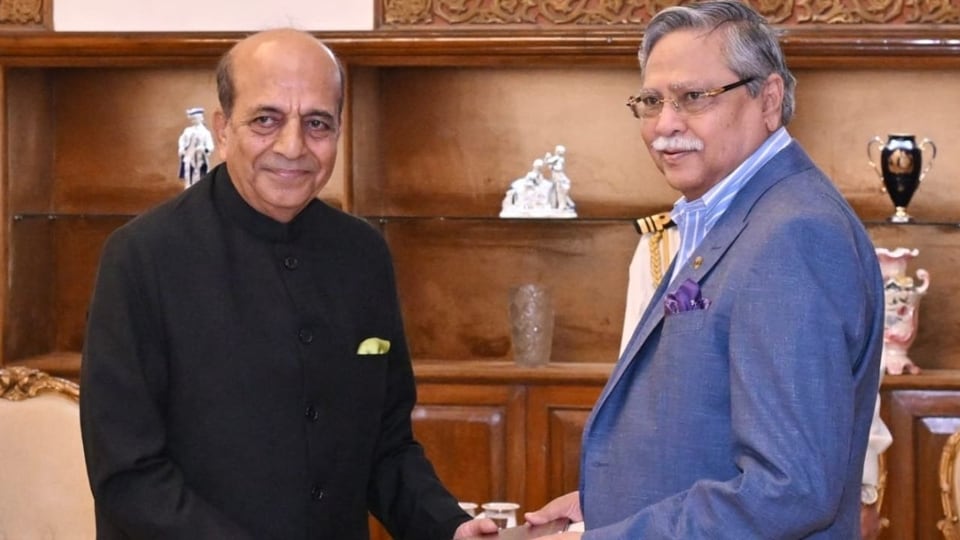
Trivedi made the announcement shortly after presenting his credentials to Bangladesh President Mohammed Shahabuddin at the Bangabhaban presidential palace, formally beginning his diplomatic assignment in Dhaka.
"I am very happy to be able to announce the launch of general travel visas again. Visa applications can be submitted starting June 28," he was quoted as saying by news agency PTI.
Why were Indian visas for Bangladesh nationals suspended?
The resumption comes after travel visa services had remained suspended for nearly two years due to security concerns and worsening relations between India and Bangladesh during the Muhammad Yunus-led interim regime.
Indian visa centres in Bangladesh had halted operations as tensions increased following political changes in the country. Relations between the two nations had deteriorated after the ouster of former Bangladesh Prime Minister Sheikh Hasina, who left for India following protests in July 2024.
The situation further worsened after the death of student leader Sharif Osman Hadi, which triggered protests in Bangladesh that later took on anti-India overtones.
Rebuilding ties
The return of travel visa services comes at a time when India and Bangladesh are attempting to reset their relationship after months of diplomatic tension.
The move could help restore people-to-people connections between the two countries, with travel visas generally allowing Bangladeshi citizens to visit India for tourism, medical treatment, government work, business assignments and transit to third countries.
Trivedi said visa services would restart through all five centres — Dhaka, Rajshahi, Chattogram, Sylhet and Khulna — and the process would be expanded further in the future. Urgent medical visas, he added, would continue for humanitarian reasons.
Dinesh Trivedi - first politician envoy
The 76-year-old Bharatiya Janata Party leader was appointed India’s High Commissioner to Bangladesh on April 27, becoming the first politician to hold the position.
He was granted the status equivalent to a Union minister for ceremonial functions by the Centre a day before taking charge through an official memorandum issued by the Ministry of Home Affairs.
Trivedi succeeded career diplomat Pranay Kumar Verma and reached Bangladesh through the Benapole-Petrapole land border on June 12.
At the credential ceremony, a contingent of the President Guard Regiment offered him a guard of honour before he presented his diplomatic papers.
Strained India-Bangladesh relations
Pranay Kumar Verma’s four-year tenure witnessed major political developments in Bangladesh, including the fall of Sheikh Hasina’s government during a student-led uprising in August 2024 and the subsequent decline in bilateral ties under the interim administration led by Muhammad Yunus.
A Hindu garment worker who was lynched in December 2025 over allegations of blasphemy, with the killing triggering widespread protests and fresh political unrest across the country.
Elections were later held in Bangladesh, with Awami League being barred from contesting. On February 17, Bangladesh Nationalist Party leader Tarique Rahman took oath as prime minister.
The latest visa decision comes as both countries look to move beyond the tensions of the previous period and rebuild engagement under the new political circumstances.
Bangladesh had also earlier restricted visa issuance for Indian nationals, limiting services at its missions in Kolkata, Mumbai and Chennai. The restrictions suspended all categories except business and employment visas after protests near the Bangladesh High Commission in New Delhi.
(With inputs from PTI)