
 E-Paper



Lula and Milei's rivalry spills into Spain as Pedro Sánchez faces crucial election battle against right
Brazil's Lula is visiting Spain to support Sánchez ahead of the November 29 election, as Argentina's Milei backs the far-right Vox party.

 Prefer HTon Google


Latin America’s fiercest political rivalry, between Argentina’s Javier Milei and Brazilian President Luiz Inácio Lula da Silva, is playing out in Spain, where an election at the end of the month has become a battle of competing ideologies.
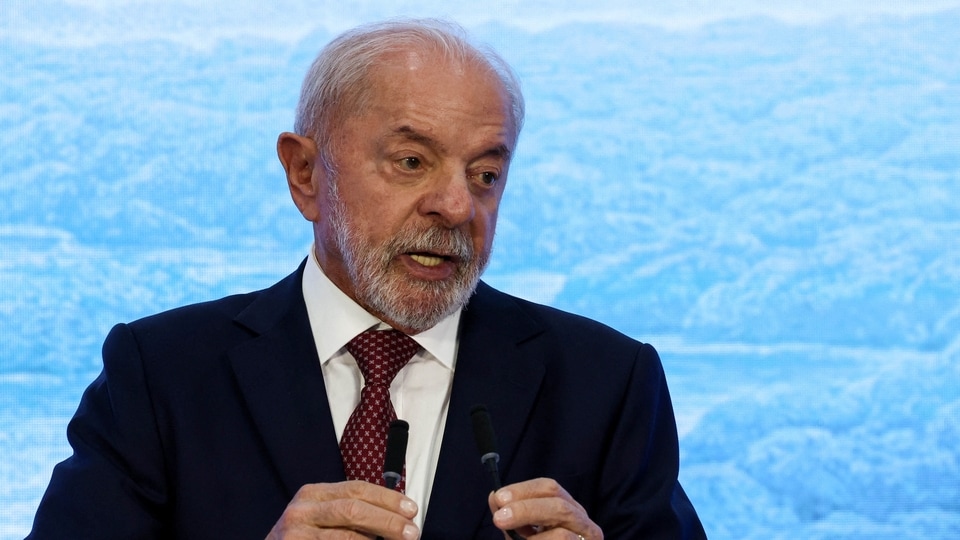
At stake is whether Spanish leader Pedro Sánchez, one of the last Socialists governing in Europe, will pull off the kind of miraculous comeback Lula did last month or whether, after almost a decade in power and numerous comebacks of his own, his time is up.
Milei has also been a frequent presence in Madrid, unleashing his brand of chainsaw populism to attack Sanchez, going as far as calling his wife “corrupt” in 2024. Despite accusations of meddling, he’s made eight trips to Spain as part of his international crusade to vanquish the left. He’s specifically backed the far-right Vox rather than the People’s Party, the establishment conservative party.
Also Read: Spanish PM Sanchez gambles on November 29 snap election to end parliament deadlock
Now it’s Lula’s turn to enter the ring, when he lands in the Spanish capital on Monday to visit an embattled Sánchez, lagging in the polls ahead of the Nov. 29 vote. The hope is that some of his shine will rub off on his fellow leftist. He will be accompanied by André Janones, the architect of the successful social media campaign that Spanish Socialists might look to emulate.
However, a planned party rally has been scrapped on account of the octogenarian Brazilian leader having lost his voice.
Leftist leaders worldwide have long looked up to Lula for what he has achieved and what he represents, now more than ever following the midterm elections that were interpreted as a rejection of US President Donald Trump and his policies, from punitive tariffs to a war in Iran. Both Sanchez and Lula have made attacks on Trump a key part of their political messaging.
Spain has become the first important test of whether a right-wing populist wave will sweep in Europe — with elections also due next year in France, Italy and Poland — or be stopped as it was in Latin America. After Lula won, Sánchez said “the comeback of the global left has just begun.”
Politics in Spain, which in the past colonized much of Latin America, have been as divisive as in Brazil and Argentina. It’s now a stage for an ideological proxy war playing out between Milei and Lula. One is a radical libertarian intent on slashing spending, the other an old school trade unionist seeking to raise welfare spending.
Indeed, Milei’s most intense spat is with his neighbor. The two never had a bilateral, they ignore each other at summits and don’t have ambassadors in each other’s countries. After seven back-to-back right-wing victories in Latin America, Milei was positively gloating at the prospect of Brazil being added to the list.
It wasn’t to be. Though Milei refused to recognize Lula’s victory and tensions flared after his defeated rival, Flávio Bolsonaro, fled Brazil through Argentina for the US days after the election, with aid from Milei’s government, despite a Brazilian court order barring him from leaving the country.
Now that toxic Lula-Milei dynamic is playing out in the Iberian Peninsula.
Lula’s comeback has made Brazil a case study for a global left that has spent years trying to counter the right’s dominance of a particularly potent form of online politics. Right-wing populists like Milei have proved especially successful at producing provocative and emotionally charged content that thrives on engagement-driven platforms.
Also Read: Who is Javier Milei, Argentina's new 'shock therapy' libertarian President?
‘Lula’s Army’
Joining Lula is the Millennial lawmaker who largely took it upon himself to reinvent Lula’s digital campaign. Janones got nearly 11 million people to join his WhatsApp channel dubbed ‘Lula’s Army,’ where he gave algorithm-breaking marching orders like commenting on a specific post at the same time and reclaiming colors and hashtags used by the right-wing. He even helped convince the president to get a cell phone for the first time in his life.
Janones’ guerrilla-like digital strategy paid off, and now France’s far-left candidate Jean-Luc Mélenchon, who’s trailing Marine Le Pen in the presidential race, has gotten his own social media army.
Sanchez is a confident speaker and charismatic campaigner, but even a last-minute social-media push seems unlikely to resuscitate his political fortunes. Few polls show him and his Socialist party having a path to forming a government after the Nov. 29 election.
Also Read: Spain’s election ends in deadlock
His latest term has been particularly difficult, from the migration crisis in the city of Ceuta in North Africa to the two rail disasters that killed 115 people in total. The October accident in Toledo forced the resignation of his transport minister, also one of his closest allies.
Meanwhile, corruption scandals have engulfed his closest party allies, his government and his family. No budget has been passed since the last election in 2023.
Yet in spite of all this, Spain remains the fastest-growing major economy in Europe boasting of employment levels not seen since before the financial crisis that began almost two decades ago.
At rallies, the Spanish premier has leaned heavily on foreign policy, an area where his anti-Trump rhetoric and criticism of Israel’s policies in Gaza resonate with domestic voters.
Four years ago, when many had written him off, he clung to power by striking controversial deals with more than eight parties. Can he deliver another upset, a la Lula?
The campaign itself, much like the one in Brazil, could be decided in the final days in the run-up when many voters, particularly on the left, will make up their mind.
That is what Sánchez is betting on. “They know that, as in Brazil and the US, in Spain there are more of us, many more, who want four more years of progress rather than regression,” he said Thursday at his first official rally in Seville.


