
 E-Paper



Monitoring Pakistan’s use of our army hardware to defy appeal for peace: US
Indian defence officials said while speaking to reporters on Thursday that Pakistan used American-made F-16s and Advanced Medium-Range Air-to-Air Missiles (AMRAAMs) in a raid into India in retaliation for its air strikes against a terrorist camp run by Jaish-e-Mohammad in Balakot, Pakistan.

 Prefer HTon Google


The US has been “monitoring closely” Pakistan’s use of American-made defence equipment in an air strike it carried out on Indian defence facilities on Wednesday disregarding appeals to avoid military actions that could exacerbate tensions and imperil its future arms purchases.
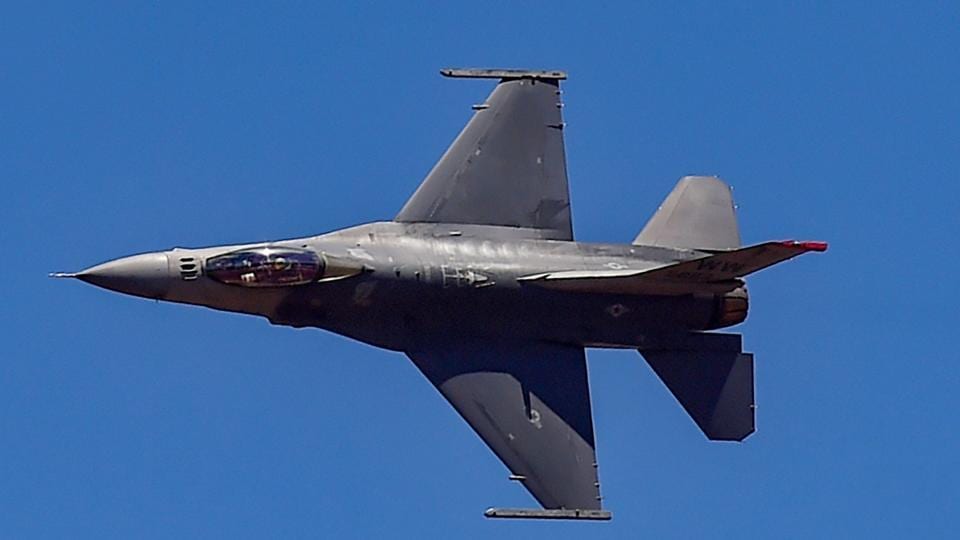
Indian defence officials said while speaking to reporters on Thursday that Pakistan used American-made F-16s and Advanced Medium-Range Air-to-Air Missiles (AMRAAMs) in a raid into India in retaliation for its air strikes against a terrorist camp run by Jaish-e-Mohammad in Balakot, Pakistan. The Pakistan-based outfit had claimed responsibility for the killing of 40 CRPF personnel in a suicide bombing in south Kashmir’s Pulwama.
Watch: IAF displays part of AMRAAM missile as proof Pakistan used F-16 jets
India presented parts of an American-made AMRAAM missile used in the raid to reporters at a rare joint defence briefing as evidence that Islamabad was allegedly violating contractual obligations with its chief supplier of subsidised military hardware, apart from flagrantly disregarding an appeal to avoid a military response to Balakot.
Read more| MiG 21 pilot took out Pak’s F16 before capture, says IAF at joint briefing
“We are aware of the reports and (are) closely monitoring events,” a United States state department official told Hindustan Times, in response to a question if Pakistan was in violation of conditions under purchase agreements for using the American-made fighter jets and air-to-air missiles against India.
US lawmakers, cutting across party lines, had successfully blocked a sale of eight — not new, but refurbished — F-16 fighter jets to Pakistan in 2016, proposed by the then Obama administration, because among other reasons, they had feared Pakistan would use them against India.
These fighter jets were meant to be used, according to Pentagon’s Defense Security and Cooperation Agency (DSCA), to “enhance Pakistan’s ability to conduct counter-insurgency and counterterrorism operations”. DSCA is the department that oversees the sale of US military equipment to foreign governments that are funded partly or wholly by America.
Read more| Parts of Pak’s AMRAAM missile found in J&K: Proof shown at defence briefing
The sale, to be subsidised by the US federal government, was unpopular with lawmakers.
“Many members of Congress, including me, seriously question the judgement and timing of such a sale. Additionally, Indo-Pak tensions remain elevated and some question whether the F-16s could ultimately be used against India or other regional powers, rather than the terrorists as Pakistan as asserted,” Matt Salmon, a Republican member of the House of Representatives, had said at a congressional hearing then.
Brad Sherman, a Democrat, had added, “We need to offer to Pakistan those weapon systems well- crafted to go after terrorists and not crafted for a war with India.”
Predictably, therefore, the sale did not go through. And its collapse was celebrated then as proof of the growing clout of India and the Indian community.
As proposed by the Obama administration, a subsidised transaction, Pakistan was free to pay for the eight F-16 fighter jets in full, $699 million, and take them home. It never did.
And now, Pakistan might just have put in peril its access, with the offensive strike into India, to US military hardware, specially those it acquired at subsidised costs — the “high quality stuff it got compared to the substandard alternatives it might have to bank on from China”, according to a US defence expert.
But a long-time observer of the US’ ties with Pakistan and the transfer of security and non-security aid, including defence equipment, had doubts if defence purchases were tied to country-specific non-use compliance clauses.
Citing an official close to these transactions, the observer said, “As a rule, US arms sales contracts do not contain provisions limiting how the recipient sovereign state can deploy purchased equipment”.


