
 E-Paper



Nepal floods: Death toll exceeds 150, schools closed amid torrential rains | Latest updates
Nepal floods: Witnesses reported that they had not seen flooding and devastation of this scale in the valley in the past 40-45 years.

 Prefer HTon Google


Nepal floods: The death toll from floods and landslides caused by heavy rainfall in Nepal has risen to 151, with 56 people still missing as of Sunday, Reuters reported, citing police sources. The government has announced a three-day closure of schools in response to the disaster.
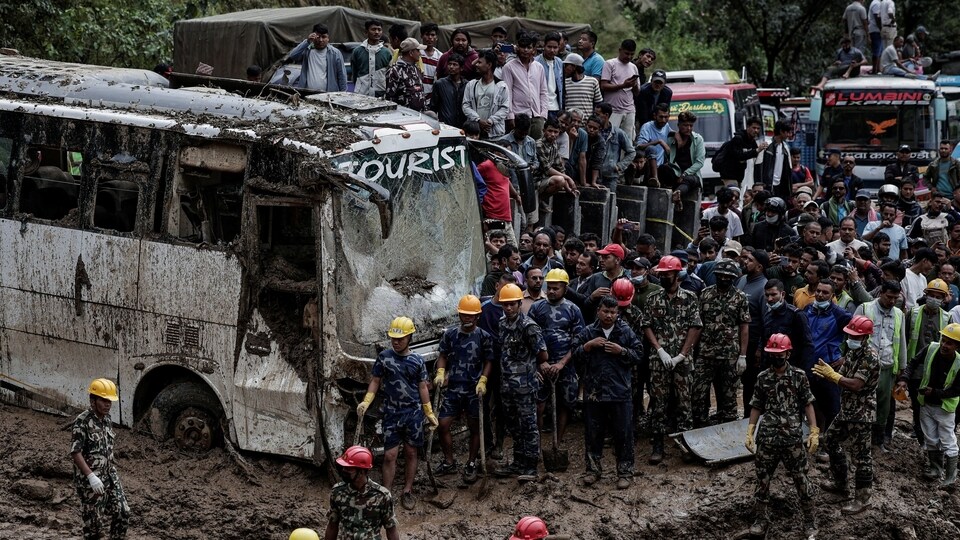
Since Friday, large areas of eastern and central Nepal have been flooded, with flash floods affecting various regions.
In the Kathmandu Valley, where 37 people have died, floods have brought traffic and daily life to a halt. Witnesses reported that they had not seen flooding and devastation of this scale in the valley in the past 40-45 years.
Here are the latest updates
- National highways have been blocked since Saturday, causing hundreds of people to be stranded due to landslides in Nepal. At least 322 houses and 16 bridges have been destroyed, with over 20,000 security personnel deployed for rescue efforts, PTI reported. So far, around 3,626 people have been rescued, and the operation is ongoing.
- Home Ministry spokesperson Rishiram Tiwari mentioned that all available resources are being used to reopen highway sections affected by landslides.
- On Saturday, 19 people died when a bus was buried by a landslide in Dhading district, near Kathmandu, while five more were killed in Bhaktapur when a house collapsed. Television footage showed police in knee-high boots using tools to clear mud and recover 16 bodies from two buses that had been swept away by a landslide on a major route to Kathmandu.
- Weather officials attributed the severe rainstorms to a low-pressure system in the Bay of Bengal, which impacted parts of Nepal and nearby regions in India.
Climate experts from the International Centre for Integrated Mountain Development (ICIMOD) warn that unplanned development in Nepal is worsening the risks posed by climate change. Arun Bhakta Shrestha, an environmental official at ICIMOD, was quoted by Reuters as saying that this level of flooding in Kathmandu was unprecedented.
- ICIMOD has urged the government and urban planners to invest quickly in infrastructure improvements like stormwater drainage and sewage systems, including both engineered (grey) and nature-based (green) solutions.
- The Bagmati River in Kathmandu was reported to be above dangerous levels after heavy rainfall hit eastern and central Nepal on Friday and Saturday.
- The intense rainfall on Saturday was attributed to the unusual positioning of the monsoon trough and the low-pressure system in the Bay of Bengal.
- While water levels in the Koshi River in southeastern Nepal have begun to drop, the river had been flowing at nearly three times its normal level, posing flood risks in Bihar, India.
- Scientists believe climate change is altering rainfall patterns in Asia, but unregulated construction, particularly on floodplains, is a major reason for increased flood impacts, as it leaves insufficient space for water drainage and retention.
- Floods and landslides have caused widespread disruption, damaging highways, homes, and bridges, and displacing hundreds of families. Road disruptions have left thousands of passengers stranded in various parts of the country.


