
 E-Paper



New Oxford method to count Asiatic lions in India
Experts at the University of Oxford have devised a new method to count Asiatic lions in India using a case study in Kenya.


Using a case study of the Maasai Mara National Reserve and other conservancies in Kenya, experts at the University of Oxford have devised a “most robust” method that can be immediately used to count Asiatic lions in India.
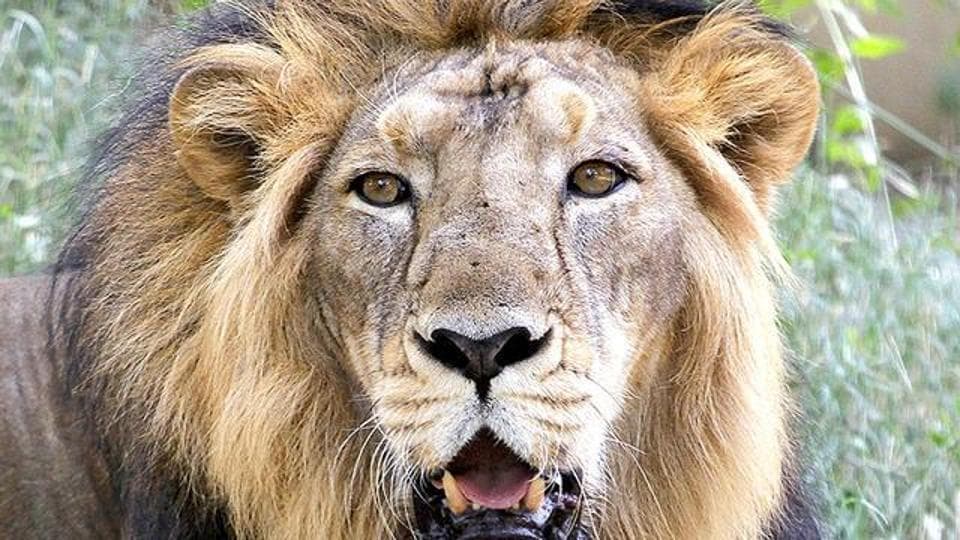
Accurate estimates are crucial to conservation success. The new method has a combination of approaches used so far, and sheds new light on uncertain attempts that make it notoriously difficult to estimate the number of lions in Africa and elsewhere.
The method, published in the journal Conservation Biology, was devised by Arjun Gopalaswamy and Nic Elliot of the department of zoology at Oxford. It adapts methodologies that have successfully been used by scientists to count other big cats, such as tigers and cheetahs.
Gopalaswamy said: “Good estimates of big cat abundance can only be obtained when a rigorous field method is combined with a tailor-made statistical method. This study demonstrates the power of such a combined approach.
“Think of it this way: a survey might reveal there are 200 identified lions, but it will tell you nothing about how many were missed and where. Our method crucially corrects for this problem that existed in previous methods by estimating density at a very fine scale so that we can produce a map to show which areas have high or low density”.
He added, “What's more, because we identify individuals, in time we will be able to estimate vital rates such as survival, additions to the population, and mortality for different demographics. As such, I can see this methodology being immediately applicable to count Asiatic lions in India.”
The new survey, which circumvents previous problems by using a “spatially explicit” approach, involved five field teams systematically searching the Maasai Mara National Reserve and surrounding conservancies for lions.
They carefully logged their search effort during the 90-day survey and drove just under 8,400 km while searching for lions. By taking close-up, high-resolution photographs of individual lions, researchers were able to log their unique whisker spots.
A total of 203 lions were identified within the 2,400-square-kilometre survey area. The data was analysed with powerful computers, using a tailor-made “Bayesian spatially explicit capture-recapture” model that corrects for the bias that some lions may not have been identified during the survey.


