
 E-Paper



Pak Army's threat to Imran for May 9 violence signals power rise of Gen Munir
Pakistan military vowed to tighten the "noose of law" around “planners and masterminds” of May 9 violence.

 Prefer HTon Google


Although General Asim Munir’s tough statement at the end of the formation commanders meeting in Rawalpindi on Wednesday targeted PTI chief Imran Khan Niazi for his role in instigating May 9 insurrection against Pakistan Army, there was an oblique message to civilian political leadership that no one is above “Fauj (army)” in the Islamic Republic.
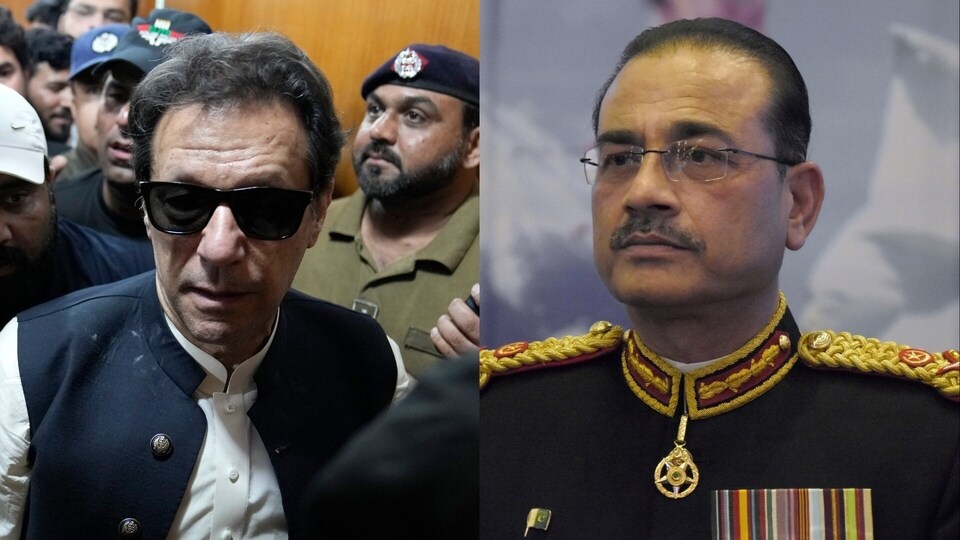
The statement released by Pakistan Army said: “It is time that the noose of law is also tightened around the planners and masterminds (of May 9 events) who mounted the hate-ripened and politically driven rebellion against the state and state institutions to achieve their nefarious design of creating chaos in the country. Forum also resolved that endeavours by any quarter to create obstructions and stymie the conclusive defeat of ill design of inimical forces will be dealt with iron hands.”
With Pak Army applying the Army Act and the Official Secret Act on the May 9 instigators, planners, and executors, it is quite evident that the politics of former cricketer, who could swing the ball on both sides, is over for the present and near future with senior PTI leaders abandoning the Niazi bandwagon after pressure from the Army. But the big picture is that Army Chief General Asim Munir will grow in stature and will exercise more power over the civilian leadership led by PM Shehbaz Sharif. This also means that the return of Nawaz Sharif to Pakistan will become all the more difficult as Gen Munir would prefer an amiable Shehbaz instead of the former PM who got him appointed as the Army Chief. It is learnt that Gen Sahir Shamshad Mirza, current Chairman, Joint Chiefs of Staff Committee, was the choice of former Pak Army Chief Gen Qamar Jawed Bajwa but got overruled in London.
Gen Munir was appointed by the Sharif government on the grounds that he would take on Imran Niazi as the latter had humiliated him by shunting him out as DG (ISI) and replacing him with his favourite General Faiz Hameed. A powerful Gen Munir could cause the same problems to Nawaz Sharif as his other two appointees---Gen Qamar Jawed Bajwa and Gen Pervez Musharraf—as the former ensured the rise of Imran Niazi and the latter dethroned him in October 1999 after Kargil war.
While Niazi is now seeking protection from the same US that he had accused of removing him from the PM job, his statements attacking the Pak Army post-May 9 have ensured that Gen Munir will drive him into political oblivion for the present and for time to come.
Fact is that a powerful Army Chief is even in the interest of Pakistan allies like China, Saudi Arabia, UAE and even the US State Department as Rawalpindi GHQ is a single window clearance for the Islamic Republic. For India, be it civilian leadership or military, it does not matter as hatred against Hindustan is a vital ingredient for political or military survival in Pakistan.


