
 E-Paper



Pak-Afghan skirmish will consolidate Munir and decimate elected leadership in Islamabad
Taliban is a formidable adversary on ground and has made US and USSR eat dust in past decades

 Prefer HTon Google


Pakistan's bombing of Kabul and declaring an open war on Taliban-ruled Afghanistan reveals that the Islamic Republic has now become a security state which uses military might rather than political dialogue to resolve situations with its neighbors. Clearly, democratic parties have taken a back seat in Pakistan with Field Marshal Asim Munir consolidating his power by using terrorism against India in Kashmir and blaming the Taliban for its home grown TTP problem.
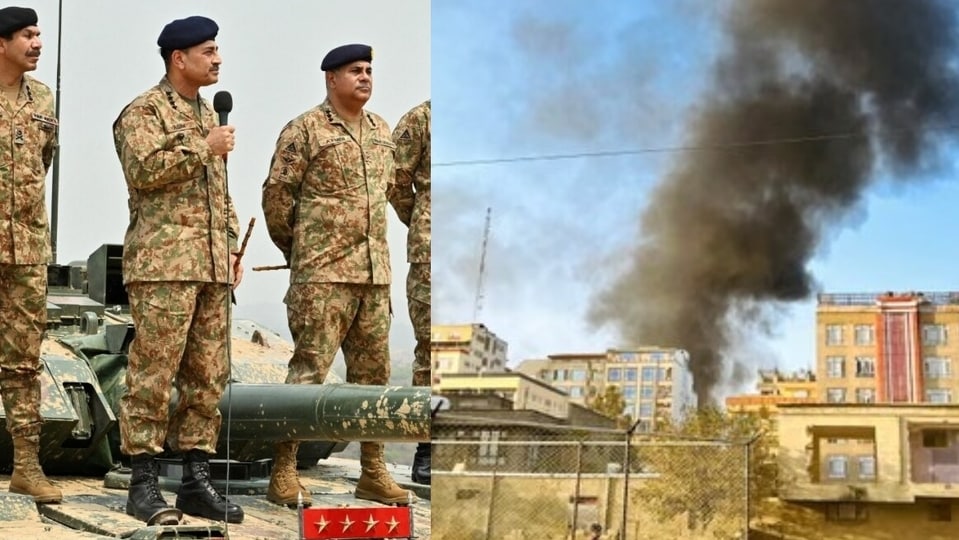
Given that Taliban or the Pashtun community had taken refuge in Pakistan during, first the erstwhile Soviet occupation, and then the US occupation post 9/11, it would have been easier for a political leader to reach out to the Taliban to sort out the TTP issue rather than taking the military step of bombing Kabul, Nangarhar and Paktika provinces.
But the weak coalition government headed by Shehbaz Sharif has clearly yielded all ground to Munir, who is relevant to the Islamic Republic till such time that war like situation or fear of threat from adversaries prevails in Pakistan.
What happened in Afghanistan today?
Pakistan launched Operation 'Ghazab lil-Haq' in the early hours of Friday in alleged retaliation to unprovoked firing by Afghanistan's Taliban on multiple locations along the border in Khyber Pakhtunkhwa’s in Chitral, Khyber, Mohmand, Kurram and Bajaur sectors on Thursday. State broadcaster PTV News reported that the armed forces of Pakistan carried out air strikes and targeted Afghan Taliban’s important military installations in Kabul, Kandahar and Paktia.
Two security personnel lost their lives in the ongoing clashes while 133 Afghan Taliban operatives have been killed, Pakistani news portal The Dawn reported.
Blame game
While Pakistan may accuse the Taliban of promoting and harbouring TTP, the fact is that these Sunni militants (as Pakistan calls Kashmiri terrorist militants) were born, brought up and indoctrinated by Pakistan's deep state. It is another matter that TTP have now decided to bite the hand that once fed them.
Even though the Pakistan Air Force dominates the Afghan skies, the Taliban Pashtun is a formidable adversary on ground with the illustrious history of militarily throwing out first the Soviets and then the Americans in a span of 45 years. While Rawalpindi GHQ has used Afghan Pashtuns as cannon fodder over the past decades for pelf and power, the policy has now turned on Pakistan as the Taliban will not take things lying down and will end up exacerbating the ethnic fault-lines in the Islamic Republic.
Pakistan may have thousands of times more bombs, bullets and missiles as compared to Afghanistan, but the Pashtuns have shown that they are no afraid of turning themselves into missiles in a worst case scenario.
Today, Pakistan has military pressure on both its eastern as well as western borders. This helps only in FM Munir’s longevity but sounds a death knell for multi-party democracy in Pakistan.
That the Taliban have chosen to retaliate against Pakistan across the illegal Durand Line shows that Pakistan ISI’s policy of viewing Afghanistan as strategic depth against India has been finally buried as Pashtuns no longer want to be foot soldiers of Punjabi Muslims of Lahore and Rawalpindi. Taliban projects itself as a nationalistic force of Afghanistan who has no qualms of taking on the ISI and bringing the fight to Rawalpindi.
By bombing Kabul and Kandahar, Pakistan has created a long-term security problem for itself, as its generals are known to be strategically blind since the Islamic state was formed in 1947.
While the generals may survive the Taliban relentless military offensive in future, Pakistan and its civilians will bleed in future.
This is the new war of a thousand cuts. And this time the target is Pakistan.


